









speak در ۳۰ ثانیه
- Speak is a fundamental verb used to describe the act of vocal communication and the ability to use a specific language effectively in various situations.
- It is more formal than 'talk' and is the standard word for referring to language proficiency, such as saying 'I speak English fluently.'
- The verb is irregular, with the past tense being 'spoke' and the past participle being 'spoken,' which are essential for accurate communication in English.
- It appears in many common idioms and phrasal verbs, such as 'speak up,' 'speak your mind,' and 'actions speak louder than words,' adding depth to the language.
The verb speak is a cornerstone of human communication, representing the physical and cognitive act of using one's voice to produce language. At its most basic level, it describes the mechanism of vocalization—the way we move our lips, tongue, and vocal cords to form sounds that others recognize as words. However, its utility extends far beyond mere mechanics. When we say someone can speak, we are often referring to their linguistic proficiency. For instance, 'She speaks three languages' implies a level of mastery and the ability to navigate complex social and cultural landscapes through verbal exchange. This distinction is vital for learners to grasp: speak is both an action and a capacity. It is used in formal contexts more frequently than its cousin 'talk,' suggesting a one-way delivery of information or a more serious tone of interaction. When a president addresses a nation, they speak to the people; they do not merely talk to them. This inherent gravity makes the word indispensable in professional, academic, and official settings.
- Vocal Production
- The physical process of articulating sounds to form words and sentences.
- Linguistic Ability
- The proficiency or knowledge required to communicate in a specific language or dialect.
- Formal Address
- The act of delivering a speech or formal presentation to an audience.
Could you please speak a little louder? I cannot hear you at the back of the room.
Furthermore, the word carries a metaphorical weight. We often say that actions speak louder than words, suggesting that behavior communicates intent more effectively than verbal promises. In literature and art, a painting might speak to a viewer's soul, indicating a profound, non-verbal connection. This versatility allows the word to transition from the playground—where a child learns to speak—to the highest courts of law, where a witness must speak the truth. Understanding the nuances of this word involves recognizing when the context demands a formal tone. While you might 'talk' with a friend over coffee, you would 'speak' with your supervisor about a promotion. This subtle shift in register is a key marker of advanced language use. In the realm of technology, we now speak to our devices, using voice commands to interact with artificial intelligence, further expanding the word's domain into the digital age. The evolution of the word mirrors the evolution of human connection itself, moving from primal grunts to sophisticated, multi-layered discourse.
He was so nervous that he could hardly speak when it was his turn to present.
In social dynamics, the power to speak is often equated with the power to influence. To 'speak up' is to advocate for oneself or others, while to 'speak out' implies a public stand against injustice. These phrasal verbs transform the basic action into an act of courage or social responsibility. Conversely, being 'spoken for' suggests a lack of autonomy or a pre-existing commitment. The word is also deeply tied to identity; the way we speak—our accent, our choice of words, our rhythm—tells the world where we come from and who we are. It is a tool for building bridges and, unfortunately, sometimes for building walls. As you master this word, consider not just the sounds you make, but the impact your voice has on those around you. Whether you are speaking a second language or giving a toast at a wedding, you are participating in the most human of all activities: the sharing of thought through sound.
Does anyone here speak French? We need help translating this document.
The facts speak for themselves; there is no need for further explanation.
Finally, the word speak appears in numerous idiomatic expressions that enrich the English language. To 'speak your mind' is to be honest and direct, even if it is uncomfortable. To 'speak of the devil' is a playful way to acknowledge someone's arrival just as they were being discussed. These idioms show how deeply the concept of speaking is woven into the fabric of daily life. Even in silence, we might say that someone's eyes speak volumes, proving that the essence of communication—the transmission of meaning—is what truly defines the word. As a learner, focusing on the various contexts of speak will help you transition from basic fluency to a more nuanced and expressive command of English. It is not just about saying words; it is about finding your voice in a new world.
I need to speak with you privately after the meeting concludes.
Using the verb speak correctly requires an understanding of its grammatical patterns and the prepositions that typically follow it. Unlike 'tell,' which usually requires a direct object (you tell someone something), speak is often used intransitively or with a prepositional phrase. The most common patterns involve 'speak to' and 'speak with.' In many contexts, these are interchangeable, but 'speak to' can sometimes imply a more one-sided communication (like a lecture or a reprimand), while 'speak with' suggests a more balanced conversation or a collaborative discussion. For example, 'The manager spoke to the employees about the new policy' suggests a formal announcement, whereas 'I need to speak with my colleague about the project' implies a two-way exchange of ideas. Understanding these subtle differences helps in choosing the right tone for your communication.
- Speak To
- Used for formal addresses, one-way communication, or when the direction of the message is emphasized.
- Speak With
- Used for conversations, discussions, and interactions where both parties are expected to contribute.
- Speak About
- Used to identify the topic or subject matter of the communication.
She spoke to the audience for nearly an hour about climate change.
Another critical aspect of using speak is its role in describing language proficiency. This is one of the few instances where speak takes a direct object. You 'speak a language,' you don't 'talk a language' or 'say a language.' This usage is universal across all levels of English. Whether you are an A1 learner saying 'I speak a little English' or a C2 expert saying 'He speaks Mandarin with native-like fluency,' the structure remains the same. Additionally, speak is used to describe the manner or quality of vocalization. Adverbs often accompany it to provide more detail: 'speak clearly,' 'speak softly,' 'speak fluently,' or 'speak rapidly.' These modifiers are essential for providing context about the physical act of speaking and the effectiveness of the communication.
If you speak too quickly, the students might not understand the instructions.
The verb is also irregular, which can be a hurdle for many learners. The past tense is spoke, and the past participle is spoken. Mastering these forms is necessary for accurate storytelling and reporting. For example, 'They have spoken about this issue many times before' uses the present perfect to indicate a recurring action. In passive constructions, 'spoken' is used to describe the form of the language itself, as in 'spoken English' versus 'written English.' This distinction is vital in academic and linguistic discussions. Furthermore, the present participle 'speaking' is used in continuous tenses and as a gerund. 'Speaking in public is my greatest fear' uses the word as a noun-like subject, highlighting the activity itself rather than a specific instance of it.
We haven't spoken since the argument we had last month.
Generally speaking, the results of the experiment were quite positive.
Finally, consider the use of speak in formal settings like meetings or phone calls. Phrases like 'May I speak to...?' or 'Who is speaking, please?' are standard etiquette. In these cases, speak maintains a level of professional distance and politeness that 'talk' might lack. In academic writing, speak is often used to refer to the evidence or data: 'The statistics speak to a growing trend in urban migration.' Here, the word is used figuratively to mean 'provide evidence for' or 'indicate.' This high-level usage shows how the word transitions from a basic A1 verb to a sophisticated tool for analysis. By practicing these different structures, you will become more comfortable using speak in any situation, from a casual chat to a formal presentation.
The witness was asked to speak into the microphone so the jury could hear.
In the real world, the word speak is ubiquitous, appearing in contexts ranging from the most intimate conversations to the most public of stages. One of the most common places you will encounter it is in educational environments. Teachers frequently use it to manage the classroom: 'Please do not speak while I am talking,' or 'It is your turn to speak.' In these instances, the word is a tool for social order and participation. In the world of business and professional networking, speak is the standard for formal interaction. You will hear it in meetings ('Who would like to speak first?'), on conference calls ('Is that John speaking?'), and in presentations ('Our guest speaker today is...'). The word signals a structured and purposeful exchange of information, distinguishing it from the more casual 'chat' or 'talk' that might happen during a coffee break.
- Public Media
- News anchors, politicians, and commentators use 'speak' to describe official statements and public addresses.
- Telecommunications
- Standard phrases used when answering the phone or identifying callers in a professional manner.
- Legal and Official
- Courts, government proceedings, and formal documents use 'speak' to denote the act of giving testimony or making a declaration.
The Prime Minister is expected to speak at the international summit tomorrow morning.
Public media is another arena where speak is constantly heard. News reports often mention that a spokesperson 'spoke on condition of anonymity' or that a celebrity 'spoke out' about a particular cause. In these cases, the word carries a sense of authority and public record. It is not just about the act of talking; it is about the act of making a statement that matters. On television and in films, you will hear characters use speak in moments of high drama or formal resolution. 'Speak now or forever hold your peace' is a famous line from wedding ceremonies, highlighting the word's role in pivotal life events. This cultural presence reinforces the idea that speaking is an act with consequences, a way of asserting one's presence and beliefs in the world.
I'm sorry, I didn't mean to interrupt; please continue to speak.
In everyday life, you will hear the word in more mundane but equally important ways. When you call a customer service line, you might hear an automated voice say, 'Please speak your account number.' In a crowded room, someone might ask, 'Can you speak up? It's very noisy in here.' These practical applications show how the word is integrated into our daily routines. Furthermore, the word is central to the experience of language learners. In language cafes, classrooms, and online forums, the question 'Do you speak...?' is the universal icebreaker. It is the gateway to new friendships and cultural understanding. Whether it is a child's first word or a diplomat's carefully chosen speech, speak is the primary vehicle for human connection.
The professor speaks with such passion that all the students are captivated.
He doesn't speak much, but when he does, everyone listens carefully.
Finally, the word is found in the digital realm. Voice-activated assistants like Siri or Alexa are designed to 'speak' to us, and we are encouraged to 'speak' our queries. This technological shift has made the word even more common in our daily vocabulary. We 'speak' to our cars, our phones, and even our appliances. This modern usage maintains the core meaning of the word—the transmission of information through sound—while applying it to non-human entities. As technology continues to evolve, the ways in which we speak and the things we speak to will likely expand, but the fundamental importance of the word will remain unchanged. It is the bridge between thought and action, between the individual and the world.
You need to speak clearly into the microphone for the voice recognition to work.
One of the most frequent challenges for English learners is distinguishing between speak, 'talk,' 'say,' and 'tell.' While they all relate to communication, they are not interchangeable, and using the wrong one can lead to confusion or sound unnatural. The most common mistake is using 'talk' when 'speak' is required, particularly when referring to languages. You should always say 'I speak English,' never 'I talk English.' Another common error involves the prepositional use. Learners often say 'speak me' instead of 'speak to me' or 'speak with me.' Unlike 'tell,' speak cannot take a person as a direct object. You 'tell someone,' but you 'speak to someone.' This distinction is crucial for grammatical accuracy and is a common point of correction in language proficiency exams.
- Speak vs. Talk
- 'Speak' is more formal and used for languages; 'talk' is more casual and implies a two-way conversation.
- Speak vs. Say
- 'Say' focuses on the words themselves; 'speak' focuses on the act of using the voice or the ability to communicate.
- Speak vs. Tell
- 'Tell' requires an object (someone) and usually involves giving information or instructions.
Incorrect: I talk Spanish fluently.
Correct: I speak Spanish fluently.
Another area of confusion is the irregular conjugation. Many learners mistakenly use 'speaked' instead of the correct past tense spoke. For example, 'I spoke to him yesterday' is correct, while 'I speaked to him' is a common error. Similarly, the past participle spoken is often replaced with 'spoke' in perfect tenses, such as saying 'I have spoke' instead of 'I have spoken.' These errors are particularly noticeable because speak is such a high-frequency word. Mastering the irregular forms early on will significantly improve the perceived quality of your English. Additionally, learners sometimes struggle with the difference between 'speak to' and 'speak with.' While often interchangeable, using 'speak with' in a very formal, one-way situation might sound slightly off, just as using 'speak to' in a very collaborative, friendly chat might sound a bit too stiff.
Incorrect: He has spoke to the manager already.
Correct: He has spoken to the manager already.
There is also a subtle mistake related to the use of 'speak' in the passive voice. While you can say 'English is spoken here,' you cannot easily use 'speak' in other passive constructions that work for 'tell' or 'say.' For instance, you can say 'I was told to wait,' but you cannot say 'I was spoken to wait.' This is because speak does not take an infinitive object in the same way. Understanding these structural limitations is part of moving toward a more advanced level of English. Finally, be careful with phrasal verbs. 'Speak up' means to talk louder, but 'speak out' means to express an opinion publicly, often in opposition to something. Mixing these up can change the entire meaning of your sentence. By paying close attention to these common pitfalls, you can avoid the most frequent errors and communicate more effectively.
Incorrect: Please speak out, I can't hear you.
Correct: Please speak up, I can't hear you.
Incorrect: I want to speak you about the party.
Correct: I want to speak to you about the party.
In summary, the most important things to remember are: use speak for languages, always use a preposition like 'to' or 'with' when talking to a person, and memorize the irregular forms spoke and spoken. Avoiding the use of 'talk' in formal situations will also help you sound more professional. As you practice, you will start to develop an intuitive feel for which word is appropriate in a given context. Don't be afraid to make mistakes—they are a natural part of the learning process—but do try to learn from them and refine your usage over time. The more you use speak correctly, the more confident you will become in your overall English communication skills.
He spoke so quietly that I had to lean in to hear him.
While speak is a versatile and essential word, the English language offers a wealth of alternatives that can provide more precision, variety, and nuance to your communication. Choosing the right synonym depends heavily on the context, the register (formal vs. informal), and the specific aspect of speaking you want to emphasize. For example, if you want to describe a casual, two-way exchange, 'talk' or 'chat' are often better choices. 'Talk' is the most common alternative and is used in almost all informal situations. 'Chat' implies a friendly, lighthearted conversation, often about unimportant things. On the other hand, if you are in a formal setting and want to describe a more structured or authoritative delivery, words like 'address,' 'lecture,' or 'orate' might be more appropriate.
- Talk
- The most common, informal alternative for 'speak,' emphasizing conversation and interaction.
- Converse
- A more formal term for having a conversation, often used in academic or literary contexts.
- Articulate
- Focuses on the clarity and effectiveness of the speech, often used to praise someone's communication skills.
Instead of just speaking, she managed to articulate her complex ideas very clearly.
For describing the physical manner of speaking, there are many descriptive verbs. 'Whisper' and 'mutter' describe speaking very quietly, while 'shout,' 'yell,' or 'bellow' describe speaking very loudly. 'Stutter' or 'stammer' describe a lack of fluency due to nervousness or a speech impediment. 'Mumble' describes speaking unclearly, often with the mouth nearly closed. These words allow you to paint a much more vivid picture of a scene than the simple verb speak. In professional contexts, you might use 'present' or 'report' to describe a specific type of speaking that involves sharing information or findings. 'Discuss' is another vital alternative, emphasizing the collaborative nature of the exchange and the focus on a specific topic.
The children were whispering in the back of the classroom so the teacher wouldn't hear them.
In more literary or old-fashioned contexts, you might encounter 'utter' or 'vocalize.' 'Utter' is often used to describe the production of any sound, not just words, as in 'she didn't utter a sound.' 'Vocalize' is more technical and often used in music or linguistics. For describing a long, often boring speech, you might use 'ramble' or 'drone on.' These words carry a negative connotation and are useful for expressing frustration. Conversely, 'eloquent' is an adjective often used with speak to describe someone who speaks beautifully and persuasively. By expanding your vocabulary to include these alternatives, you can tailor your language to fit any situation and express yourself with much greater precision and flair.
He tended to ramble when he was nervous, often losing his train of thought.
The guest lecturer addressed the students on the importance of ethics in science.
Finally, consider the use of 'voice' as a verb, which means to express an opinion or feeling: 'She voiced her concerns about the new project.' This is a sophisticated alternative to 'speak about' or 'say.' Similarly, 'state' is a formal way to express a fact or opinion clearly and definitely. By learning these synonyms and understanding their nuances, you will not only improve your comprehension but also your ability to communicate effectively in a wide range of social and professional settings. The goal is not just to be understood, but to use the full power of the English language to express your thoughts and ideas exactly as you intend. The word speak is your starting point, but the world of English vocabulary is vast and waiting to be explored.
The president stated his position on the new trade agreement during the press conference.
چقدر رسمی است؟
نکته جالب
The 'r' in the original Old English 'sprecan' was lost over time, leading to the modern English 'speak.'
راهنمای تلفظ
- Pronouncing it like 'speck' with a short 'e' sound.
- Adding an extra vowel sound at the end, like 'speaka'.
- Not making the 'k' sound clear enough.
- Confusing the 'ee' sound with the 'i' sound in 'pick'.
- In the past tense 'spoke', not making the 'o' sound long enough.
سطح دشواری
The word is very common and easily recognized in text.
Irregular forms (spoke, spoken) require some memorization.
The pronunciation is straightforward for most learners.
The word is high-frequency and usually clear in speech.
بعداً چه یاد بگیریم؟
پیشنیازها
بعداً یاد بگیرید
پیشرفته
گرامر لازم
Irregular Verb Forms
I speak (present), I spoke (past), I have spoken (present perfect).
Prepositional Use
Always use 'to' or 'with' when 'speak' is followed by a person.
Adverb Placement
Adverbs usually follow 'speak' (e.g., speak clearly).
Modal Verbs
Use 'can' or 'could' to describe the ability to speak a language.
Gerund as Subject
Speaking in public can be very stressful.
مثالها بر اساس سطح
I speak English.
I use the English language.
Present simple tense, first person.
Do you speak Spanish?
Are you able to use Spanish?
Question form with 'do'.
Please speak slowly.
Talk at a lower speed.
Imperative form for a request.
He does not speak French.
He doesn't know the French language.
Negative form in present simple.
Can you speak louder?
Increase your volume.
Using 'can' for ability or request.
We speak every day.
We talk to each other daily.
Present simple for a habit.
She speaks very well.
Her speaking ability is good.
Third person singular adds 's'.
They speak at school.
They talk in the school building.
Present simple with a location.
I spoke to my mom yesterday.
I had a conversation with her.
Past simple tense of 'speak'.
Who is speaking, please?
Who am I talking to on the phone?
Present continuous for the current action.
She spoke with the manager.
She had a discussion with the boss.
Past simple with the preposition 'with'.
He speaks three languages fluently.
He is very good at three languages.
Using an adverb to describe the action.
We need to speak about the plan.
We must discuss the plan.
Using 'need to' followed by the infinitive.
Could I speak to Mr. Smith?
Is it possible for me to talk to him?
Polite request using 'could'.
They were speaking when I arrived.
They were in the middle of a conversation.
Past continuous tense.
Don't speak with your mouth full.
Finish eating before you talk.
Negative imperative.
I have spoken to him about the issue.
I already discussed it with him.
Present perfect tense with 'spoken'.
Generally speaking, the weather is nice here.
In most cases, the weather is good.
Introductory phrase using the gerund.
He spoke out against the new rules.
He publicly disagreed with the rules.
Phrasal verb 'speak out'.
The results speak for themselves.
The evidence is very clear.
Idiomatic use meaning 'to be obvious'.
She was spoken of as a potential leader.
People talked about her as a leader.
Passive voice construction.
He speaks as if he knows everything.
He talks like he is an expert.
Using 'as if' with the present simple.
I'd like to speak with you in private.
I want to talk where others can't hear.
Formal request for a private conversation.
They haven't spoken for years.
They have not had a conversation in a long time.
Present perfect for a duration of time.
His actions speak louder than his words.
What he does is more important than what he says.
Common proverb/idiom.
She spoke at length about her travels.
She talked for a long time about her trips.
Prepositional phrase 'at length'.
The witness was asked to speak up.
The witness needed to talk louder.
Phrasal verb 'speak up' in a formal context.
Strictly speaking, that is not allowed.
According to the rules, it's forbidden.
Adverbial phrase for precision.
He spoke his mind during the meeting.
He said exactly what he thought.
Idiom 'speak one's mind'.
The book speaks to the heart of the matter.
The book addresses the most important part.
Figurative use meaning 'to address directly'.
She has a very distinctive way of speaking.
Her voice or style is very unique.
Using 'speaking' as a gerund/noun.
We are on speaking terms again.
We are friendly enough to talk to each other.
Idiom 'on speaking terms'.
The architecture speaks volumes about the city's history.
The buildings tell us a lot about the past.
Idiom 'speak volumes'.
He spoke with such eloquence that the audience was moved to tears.
His speech was so beautiful and powerful.
Using 'eloquence' to describe the quality of speaking.
The data speaks to a significant shift in consumer behavior.
The information indicates a big change.
Academic use meaning 'to provide evidence of'.
She spoke in hushed tones so as not to wake the baby.
She talked very quietly.
Descriptive phrase 'in hushed tones'.
His silence spoke more than any words could.
His not talking was very meaningful.
Metaphorical use of 'speak'.
The report speaks of a future where technology is integrated into everything.
The report describes or predicts a future.
Formal use meaning 'to describe or mention'.
He was, so to speak, the architect of his own downfall.
In a way, he caused his own problems.
Parenthetical phrase 'so to speak'.
She spoke from the heart, without any notes.
She was very sincere and didn't use a script.
Idiom 'speak from the heart'.
The ornate carvings bespeak a bygone era of craftsmanship.
The decorations show a past time of great skill.
Using the formal/archaic 'bespeak'.
He spoke with a gravitas that commanded immediate respect.
He talked with a seriousness that made people listen.
Using 'gravitas' to describe the manner of speaking.
The nuances of the dialect are only understood by those who speak it natively.
Only native speakers get the small details.
Using 'speak' in a highly specific linguistic context.
She spoke to the inherent contradictions in the policy.
She addressed the internal conflicts of the rules.
High-level analytical use of 'speak to'.
His reputation as a speaker of truth preceded him.
People knew he was honest before they met him.
Using 'speaker' as a noun in a moral context.
The silence in the room was so thick it almost spoke.
The quietness felt very meaningful and heavy.
Personification of silence using 'speak'.
He spoke with a level of technical jargon that left the laypeople baffled.
He used so many difficult words that normal people didn't understand.
Describing a specific register of speaking.
To speak of his achievements is to speak of the history of modern physics.
His work is essentially the same as the history of the field.
Using 'to speak of' as a rhetorical device.
ترکیبهای رایج
عبارات رایج
— Used when someone appears just as you were talking about them.
Speak of the devil! We were just wondering where you were.
— Used to tell someone that their opinion is not shared by others.
You think the movie was boring? Speak for yourself; I loved it!
— To talk louder or to express your opinion more forcefully.
Could you speak up? I can't hear you at the back.
— To publicly express an opinion, especially in opposition to something.
She decided to speak out against the unfair treatment of workers.
— Being friendly enough with someone to talk to them.
After their big fight, they are finally on speaking terms again.
— To convey a lot of information or meaning without using words.
The look on his face spoke volumes about how he was feeling.
— Used to show that you are using a word or phrase in a metaphorical way.
He is the captain of the ship, so to speak, in this project.
— To say what you want to say, often in a formal or final way.
I've let you speak your piece; now it's my turn to talk.
— To talk about something based on what you have personally done or seen.
I speak from experience when I say that traveling alone is great.
— To say bad things about someone, especially when they are not there.
It's not polite to speak ill of the dead.
اغلب اشتباه گرفته میشود با
Talk is more casual and implies a conversation; speak is more formal and used for languages.
Say focuses on the words used; speak focuses on the act of vocalizing.
Tell requires an object (someone) and involves giving information.
اصطلاحات و عبارات
— What people do is more important than what they say they will do.
He says he loves me, but actions speak louder than words.
Neutral— To have similar ideas, tastes, or ways of thinking.
We both love old movies, so we really speak the same language.
Informal— To tell lies or say things that are not true or consistent.
Don't trust him; he speaks with a forked tongue.
Literary/Old-fashioned— Something that is so small or unimportant that it is not worth mentioning.
Did it rain yesterday? Nothing to speak of, just a few drops.
Neutral— To talk to someone who is not listening or to express ideas that are ignored.
I feel like I'm speaking into the void when I try to explain the rules.
Literary— The full version of 'speak of the devil,' used when someone arrives unexpectedly.
Speak of the devil and he shall appear! Hi, Mark!
Informal— To talk in a way that is confusing or difficult to understand.
I wish you would just say what you mean instead of speaking in riddles.
Neutral— To be so clear or obvious that no further explanation is needed.
The quality of the product speaks for itself.
Neutral— To talk about something in a way that someone else understands or appreciates.
If you want to sell to him, you need to speak his language—talk about profits.
Informal— Talking in a direct and honest way, without trying to hide the truth.
I appreciate your plain speaking; it helps us solve the problem faster.
Neutralبهراحتی اشتباه گرفته میشود
Both mean verbal communication.
Speak is formal and used for languages; talk is informal and implies interaction.
I need to speak to the director. vs. Let's talk about our weekend.
Both involve using the voice.
Say is used for direct or indirect speech (the words); speak is for the ability or act.
He said 'hello'. vs. He speaks very loudly.
Both involve sharing information.
Tell always needs a listener as an object; speak uses prepositions like 'to'.
Tell me the truth. vs. Speak to me.
Both relate to making sounds.
Pronounce is specifically about how a word is sounded out; speak is the general act.
How do you pronounce this? vs. Can you speak more slowly?
Both mean to make a sound.
Utter is very formal and can refer to any sound, not just words.
She didn't utter a single word all night.
الگوهای جملهسازی
I speak [language].
I speak English.
Do you speak [language]?
Do you speak German?
I spoke to [person] [time].
I spoke to him yesterday.
Can I speak to [person]?
Can I speak to the doctor?
I have spoken about [topic].
I have spoken about this before.
Generally speaking, [sentence].
Generally speaking, I like my job.
[Something] speaks for itself.
His success speaks for itself.
[Something] speaks volumes about [something].
Her silence spoke volumes about her anger.
خانواده کلمه
اسمها
فعلها
صفتها
مرتبط
نحوه استفاده
Extremely high; one of the top 500 words in English.
-
I talk English.
→
I speak English.
We always use 'speak' for language proficiency.
-
I speaked to him.
→
I spoke to him.
'Speak' is an irregular verb; the past tense is 'spoke'.
-
I want to speak you.
→
I want to speak to you.
'Speak' needs a preposition like 'to' or 'with' before a person.
-
He has spoke to me.
→
He has spoken to me.
The past participle 'spoken' must be used with 'has/have'.
-
Please speak out, I can't hear.
→
Please speak up, I can't hear.
'Speak up' refers to volume; 'speak out' refers to expressing an opinion.
نکات
Irregular Forms
Memorize 'speak, spoke, spoken'. This is a very common verb, so getting the forms right is important for your fluency.
Languages
Always use 'speak' when talking about languages. 'I speak Japanese' is correct; 'I talk Japanese' is not.
Politeness
Use 'May I speak to...' when calling someone on the phone. It sounds much more professional and polite than 'Can I talk to...'.
Speak Your Mind
Use this phrase when you want to encourage someone to be honest about their thoughts or feelings.
Formal Tone
In academic writing, use 'speak to' to mean 'address' or 'provide evidence for' a particular topic.
Long Vowel
Make sure to stretch the 'ee' sound in 'speak'. If it's too short, it might sound like a different word.
Identify Callers
When someone says 'Speaking!' on the phone, it means 'This is the person you are asking for.'
Speak vs. Say
Remember: you speak *to* someone, but you say *something* to someone.
Speak Up
If you can't hear someone, say 'Could you speak up, please?' It's a very common and useful phrase.
Public Speaking
Being a 'good speaker' is a highly respected skill in many professional fields. Practice whenever you can!
حفظ کنید
روش یادسپاری
Think of a **S**peaker **P**roducing **E**very **A**rticulate **K**nowledge. (S-P-E-A-K)
تداعی تصویری
Imagine a large microphone on a stage with a bright spotlight, representing the act of speaking to an audience.
شبکه واژگان
چالش
Try to use the word 'speak' in three different tenses (present, past, and present perfect) in a single paragraph about your day.
ریشه کلمه
Derived from the Old English word 'specan' or 'sprecan,' which meant to speak or to utter words.
معنای اصلی: To make vocal sounds or to use language to communicate thoughts.
Germanic origin, related to the Dutch 'spreken' and the German 'sprechen.'بافت فرهنگی
Be aware that some people may have speech impediments or difficulties speaking; use terms like 'non-verbal' or 'speech-impaired' with care and respect.
In English-speaking countries, 'speaking your mind' is generally seen as a positive trait of honesty and transparency.
تمرین در زندگی واقعی
موقعیتهای واقعی
At School
- May I speak?
- Speak louder, please.
- Don't speak during the test.
- He speaks in class.
On the Phone
- Who is speaking?
- May I speak to John?
- Speaking!
- I can't hear you, speak up.
At Work
- I'll speak to the boss.
- We spoke about the budget.
- She is a great speaker.
- Let's speak in private.
Traveling
- Do you speak English?
- I don't speak the language.
- Can someone speak for me?
- Please speak slowly.
Socializing
- We haven't spoken in ages.
- Speak your mind.
- Generally speaking...
- Nice speaking with you.
شروعکنندههای مکالمه
“How many languages do you speak fluently?”
“Do you find it difficult to speak in front of a large audience?”
“Who was the last person you spoke to on the phone?”
“What is the most difficult language to speak, in your opinion?”
“If you could speak any language perfectly, which one would it be?”
موضوعات نگارش
Write about a time when you were too nervous to speak up.
Describe a person you know who speaks very eloquently.
How does the way you speak change depending on who you are with?
What does the phrase 'actions speak louder than words' mean to you?
Write a short story about a character who suddenly loses the ability to speak.
سوالات متداول
10 سوالBoth are correct. 'Speak to' is more common in British English and can be more formal or one-way. 'Speak with' is common in American English and suggests a two-way conversation.
No, you should always say 'I speak English.' We use 'speak' for languages.
The past tense is 'spoke.' For example: 'I spoke to him yesterday.'
'Speak up' means to talk louder so people can hear you. 'Speak out' means to publicly express an opinion, usually against something.
Yes, 'speak' is generally considered more formal and is used in professional or official contexts.
'Spoken' is the past participle. Use it with 'have' (e.g., 'I have spoken to her') or as an adjective (e.g., 'spoken English').
It is an idiom used when someone you were just talking about arrives unexpectedly.
No, 'speak' is a verb. The noun form is 'speech' or 'speaking' (as a gerund).
It means that what you do is more important and more believable than what you say you will do.
Use it at the beginning of a sentence to show that you are making a general statement that is usually true.
خودت رو بسنج 200 سوال
Write a sentence using 'speak' in the present tense.
خوب نوشتید! تلاش خوبی بود! پاسخ نمونه را ببینید.
Write a sentence using 'spoke' in the past tense.
خوب نوشتید! تلاش خوبی بود! پاسخ نمونه را ببینید.
Write a sentence using 'spoken' in the present perfect tense.
خوب نوشتید! تلاش خوبی بود! پاسخ نمونه را ببینید.
Write a sentence using the phrasal verb 'speak up'.
خوب نوشتید! تلاش خوبی بود! پاسخ نمونه را ببینید.
Write a sentence using the phrase 'generally speaking'.
خوب نوشتید! تلاش خوبی بود! پاسخ نمونه را ببینید.
Write a sentence using the idiom 'actions speak louder than words'.
خوب نوشتید! تلاش خوبی بود! پاسخ نمونه را ببینید.
Write a sentence using 'speak' to describe a language ability.
خوب نوشتید! تلاش خوبی بود! پاسخ نمونه را ببینید.
Write a sentence using 'speak' in a formal context.
خوب نوشتید! تلاش خوبی بود! پاسخ نمونه را ببینید.
Write a sentence using 'speak' to ask for a private conversation.
خوب نوشتید! تلاش خوبی بود! پاسخ نمونه را ببینید.
Write a sentence using 'speak' to describe how someone talks (using an adverb).
خوب نوشتید! تلاش خوبی بود! پاسخ نمونه را ببینید.
Write a short paragraph about your language skills using 'speak'.
خوب نوشتید! تلاش خوبی بود! پاسخ نمونه را ببینید.
Write a dialogue between two people on the phone using 'speak'.
خوب نوشتید! تلاش خوبی بود! پاسخ نمونه را ببینید.
Write a sentence using 'speak your mind'.
خوب نوشتید! تلاش خوبی بود! پاسخ نمونه را ببینید.
Write a sentence using 'speak volumes'.
خوب نوشتید! تلاش خوبی بود! پاسخ نمونه را ببینید.
Write a sentence using 'so to speak'.
خوب نوشتید! تلاش خوبی بود! پاسخ نمونه را ببینید.
Write a sentence using 'speak out against'.
خوب نوشتید! تلاش خوبی بود! پاسخ نمونه را ببینید.
Write a sentence using 'speak from experience'.
خوب نوشتید! تلاش خوبی بود! پاسخ نمونه را ببینید.
Write a sentence using 'on speaking terms'.
خوب نوشتید! تلاش خوبی بود! پاسخ نمونه را ببینید.
Write a sentence using 'speak for itself'.
خوب نوشتید! تلاش خوبی بود! پاسخ نمونه را ببینید.
Write a sentence using 'strictly speaking'.
خوب نوشتید! تلاش خوبی بود! پاسخ نمونه را ببینید.
Say 'I speak English' out loud.
این را بلند بخوانید:
تو گفتی:
تشخیص گفتار در مرورگر شما پشتیبانی نمیشود. از کروم یا اج استفاده کنید.
Ask 'Do you speak Spanish?' to a partner.
این را بلند بخوانید:
تو گفتی:
تشخیص گفتار در مرورگر شما پشتیبانی نمیشود. از کروم یا اج استفاده کنید.
Say 'Please speak more slowly' clearly.
این را بلند بخوانید:
تو گفتی:
تشخیص گفتار در مرورگر شما پشتیبانی نمیشود. از کروم یا اج استفاده کنید.
Tell someone 'I spoke to my friend yesterday.'
این را بلند بخوانید:
تو گفتی:
تشخیص گفتار در مرورگر شما پشتیبانی نمیشود. از کروم یا اج استفاده کنید.
Practice saying 'Who is speaking, please?' as if on the phone.
این را بلند بخوانید:
تو گفتی:
تشخیص گفتار در مرورگر شما پشتیبانی نمیشود. از کروم یا اج استفاده کنید.
Say 'Could you speak up? I can't hear you.'
این را بلند بخوانید:
تو گفتی:
تشخیص گفتار در مرورگر شما پشتیبانی نمیشود. از کروم یا اج استفاده کنید.
Explain what 'actions speak louder than words' means in your own words.
این را بلند بخوانید:
تو گفتی:
تشخیص گفتار در مرورگر شما پشتیبانی نمیشود. از کروم یا اج استفاده کنید.
Say 'Generally speaking, I like to travel.'
این را بلند بخوانید:
تو گفتی:
تشخیص گفتار در مرورگر شما پشتیبانی نمیشود. از کروم یا اج استفاده کنید.
Practice saying 'I have spoken to the manager about it.'
این را بلند بخوانید:
تو گفتی:
تشخیص گفتار در مرورگر شما پشتیبانی نمیشود. از کروم یا اج استفاده کنید.
Say 'Don't be afraid to speak your mind.'
این را بلند بخوانید:
تو گفتی:
تشخیص گفتار در مرورگر شما پشتیبانی نمیشود. از کروم یا اج استفاده کنید.
Tell a short story about a time you spoke in public.
این را بلند بخوانید:
تو گفتی:
تشخیص گفتار در مرورگر شما پشتیبانی نمیشود. از کروم یا اج استفاده کنید.
Say 'The results speak for themselves.'
این را بلند بخوانید:
تو گفتی:
تشخیص گفتار در مرورگر شما پشتیبانی نمیشود. از کروم یا اج استفاده کنید.
Ask 'May I speak to you in private?' politely.
این را بلند بخوانید:
تو گفتی:
تشخیص گفتار در مرورگر شما پشتیبانی نمیشود. از کروم یا اج استفاده کنید.
Say 'Strictly speaking, that's not allowed.'
این را بلند بخوانید:
تو گفتی:
تشخیص گفتار در مرورگر شما پشتیبانی نمیشود. از کروم یا اج استفاده کنید.
Practice saying 'She speaks four languages fluently.'
این را بلند بخوانید:
تو گفتی:
تشخیص گفتار در مرورگر شما پشتیبانی نمیشود. از کروم یا اج استفاده کنید.
Say 'Speaking of the devil, here he comes!'
این را بلند بخوانید:
تو گفتی:
تشخیص گفتار در مرورگر شما پشتیبانی نمیشود. از کروم یا اج استفاده کنید.
Say 'Her silence spoke volumes.'
این را بلند بخوانید:
تو گفتی:
تشخیص گفتار در مرورگر شما پشتیبانی نمیشود. از کروم یا اج استفاده کنید.
Say 'I speak from experience.'
این را بلند بخوانید:
تو گفتی:
تشخیص گفتار در مرورگر شما پشتیبانی نمیشود. از کروم یا اج استفاده کنید.
Say 'Who is the guest speaker today?'
این را بلند بخوانید:
تو گفتی:
تشخیص گفتار در مرورگر شما پشتیبانی نمیشود. از کروم یا اج استفاده کنید.
Say 'I'll speak to you later.'
این را بلند بخوانید:
تو گفتی:
تشخیص گفتار در مرورگر شما پشتیبانی نمیشود. از کروم یا اج استفاده کنید.
Listen to the sentence: 'I speak English.' What language is mentioned?
Listen to the sentence: 'I spoke to him yesterday.' When did the speaking happen?
Listen to the sentence: 'Please speak up.' Does the person want you to talk louder or quieter?
Listen to the sentence: 'She speaks very fast.' How does she speak?
Listen to the sentence: 'Have you spoken to the boss?' Who is the person being asked about?
Listen to the sentence: 'Generally speaking, it's a good idea.' Is the person being specific or general?
Listen to the sentence: 'Who is speaking?' What is the person asking?
Listen to the sentence: 'He spoke his mind.' Did he tell the truth about his thoughts?
Listen to the sentence: 'They aren't on speaking terms.' Are they friends right now?
Listen to the sentence: 'The evidence speaks for itself.' Is the evidence clear or confusing?
Listen to the sentence: 'She spoke with an accent.' What did she have?
Listen to the sentence: 'I'll speak to you later.' When will they talk?
Listen to the sentence: 'May I speak to John?' Who does the caller want?
Listen to the sentence: 'He spoke out against the plan.' Did he like the plan?
Listen to the sentence: 'Speaking of travel, have you been to Paris?' What is the topic?
/ 200 درست
نمره کامل!
Summary
The verb 'speak' is essential for describing both the physical act of talking and the intellectual ability to use a language. Remember to use 'speak' for languages and formal situations, and always use 'to' or 'with' when talking to a person (e.g., 'I spoke to her').
- Speak is a fundamental verb used to describe the act of vocal communication and the ability to use a specific language effectively in various situations.
- It is more formal than 'talk' and is the standard word for referring to language proficiency, such as saying 'I speak English fluently.'
- The verb is irregular, with the past tense being 'spoke' and the past participle being 'spoken,' which are essential for accurate communication in English.
- It appears in many common idioms and phrasal verbs, such as 'speak up,' 'speak your mind,' and 'actions speak louder than words,' adding depth to the language.
Irregular Forms
Memorize 'speak, spoke, spoken'. This is a very common verb, so getting the forms right is important for your fluency.
Languages
Always use 'speak' when talking about languages. 'I speak Japanese' is correct; 'I talk Japanese' is not.
Politeness
Use 'May I speak to...' when calling someone on the phone. It sounds much more professional and polite than 'Can I talk to...'.
Speak Your Mind
Use this phrase when you want to encourage someone to be honest about their thoughts or feelings.
مثال
I speak with my parents on the phone every Sunday.
محتوای مرتبط
در ویدیوها ببینید
 5:15
5:15
The First 5 Minutes of The Office - The Office US
"I speak with my parents on the phone every Sunday."
 3:03
3:03
The Soup Nazi (Part 1/5) | Seinfeld S07E06
"I speak with my parents on the phone every Sunday."
 2:33
2:33
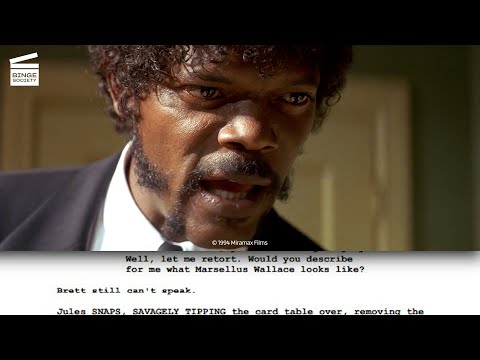
Samuel L. Jackson's famous Bible verse in Pulp Fiction | Ezekiel 25:17 scene vs. original script
"I speak with my parents on the phone every Sunday."
آن را در متن یاد بگیرید
این کلمه در زبانهای دیگر
عبارات مرتبط
واژههای بیشتر Communication
rumors
B1شایعات اطلاعاتی هستند که بدون مدرک پخش می شوند.
links
B1لینکهای موجود در این سایت به منابع معتبری ختم میشوند.
contradict
B2تناقض داشتن / رد کردن. ادعای خلاف آنچه گفته شده است.
thanks
A1یک بیان مودبانه از قدردانی که برای نشان دادن تشکر استفاده می شود.
talking
B1عمل صحبت کردن برای برقراری ارتباط.
they’re
B1آنها هستند. این شکل کوتاه شده 'they are' است.
view
B1منظره چیزی است که از یک مکان دیده می شود. همچنین به معنای نظر یا دیدگاه در مورد یک موضوع است.
request
B1درخواست عمل مودبانه پرسیدن برای چیزی است. 'او درخواستی برای مرخصی داد.'
demands
B1چیزی را با قاطعیت خواستن.
hey
A1یک سلام غیررسمی رایج که برای گفتن سلام یا جلب توجه کسی استفاده میشود.
