Explanation at your level:
Soap is something you use to wash your hands. It makes bubbles in water. You use it in the shower to get clean. It smells very good!
You use soap every day to keep your skin clean. When you wash your hands, you put soap on them and rub them under the water. It removes dirt and germs easily.
Soap is a common household product. It is used to clean your body, clothes, or dishes. Most people prefer scented soap because it leaves a nice smell on the skin after washing.
Soap is a surfactant used for personal hygiene and cleaning surfaces. It works by emulsifying oils and grease, allowing them to be washed away. It is essential for maintaining a healthy environment.
Beyond its literal function, 'soap' appears in various cultural and idiomatic contexts. From the 'soap opera' genre to the metaphorical 'soapbox' used for public discourse, the term has evolved significantly in the English language.
Etymologically linked to ancient Germanic roots, soap represents a fundamental advancement in human sanitation. Its chemical properties are a staple of industrial chemistry, yet its usage remains deeply ingrained in daily life, appearing in literature and idioms that reflect its long-standing societal importance.
30秒でわかる単語
- Soap is a cleaning agent.
- It is usually uncountable.
- It removes grease and dirt.
- It has many cultural idioms.
Hey there! Let's talk about soap. At its most basic level, soap is a cleaning agent. Whether you are washing your hands before dinner or scrubbing the dishes, soap is the hero that helps water do its job better.
Without soap, water alone often struggles to remove oily grime or stubborn dirt. Soap molecules have a clever structure: one end loves water, and the other end loves oil. This allows it to grab onto grease and lift it away from your skin or clothes, making it easy to rinse off. It is a staple in every household around the world!
The word soap has a long and fascinating history. It traces back to the Old English word sāpe, which is related to similar words in Germanic languages like the Dutch zeep and German Seife. These roots go back even further to a Proto-Indo-European base meaning 'to drip' or 'to flow'.
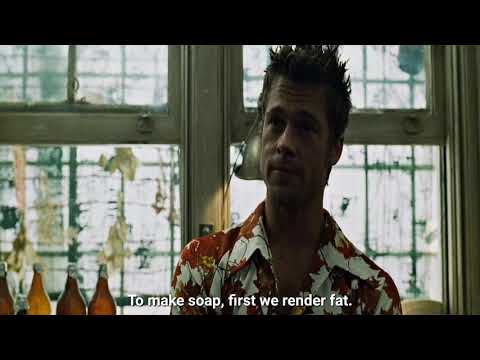
Legend has it that soap was discovered on Mount Sapo in ancient Rome, where the fat from animal sacrifices mixed with wood ashes in the rain, creating a slippery substance that cleaned clothes well. While that might be a myth, the chemistry of mixing fats and ashes has been used for thousands of years. From the ancient Babylonians to modern factories, we have been perfecting this simple but essential invention for ages.
You will hear soap used in many daily contexts. In casual conversation, we often talk about a bar of soap or liquid soap. It is a very common, neutral word that fits perfectly in both formal instructions and casual chats about hygiene.
When you are being specific, you might use collocations like scented soap, antibacterial soap, or mild soap. It is important to note that 'soap' is usually an uncountable noun when referring to the substance in general. If you want to count it, you must use a quantifier like 'a bar of' or 'a bottle of'.
English is full of fun idioms involving soap! Here are a few to spice up your vocabulary:
- Soap opera: A dramatic television series with exaggerated emotions.
- Wash your mouth out with soap: A humorous way to tell someone they used bad language.
- Soapbox: To stand on a soapbox means to express your strong opinions publicly.
- Soft soap: To use flattery to persuade someone to do something.
- No soap: An old-fashioned way of saying 'no way' or 'that won't work'.
Pronouncing soap is straightforward. In both British and American English, it is pronounced /soʊp/. It rhymes with words like hope, rope, cope, slope, and dope. The 'oa' creates a long 'o' sound.
Grammatically, remember that 'soap' is typically uncountable. You don't say 'I bought three soaps' unless you mean three specific bars of soap. Instead, say 'I bought three bars of soap'. It is a simple noun that doesn't usually take a plural 's' unless you are referring to different types or brands in a very specific context.
Fun Fact
The word has Germanic roots shared by many European languages.
Pronunciation Guide
Long 'o' sound followed by a soft 'p'.
Similar to UK, clear 'o' glide.
Common Errors
- Pronouncing it like 'sop'
- Ignoring the long 'o' vowel
- Adding an extra syllable
Rhymes With
Difficulty Rating
Very easy to read.
Very easy to write.
Very easy to pronounce.
Very easy to hear.
What to Learn Next
Prerequisites
Learn Next
上級
Grammar to Know
Uncountable Nouns
I need some soap.
Imperative Mood
Use the soap!
Quantifiers
A bar of soap.
Examples by Level
I use soap to wash my hands.
Use = employ, wash = clean
Subject + verb + object
The soap is in the bathroom.
Bathroom = room for washing
Simple sentence
I need more soap.
Need = require
Uncountable noun
This soap smells nice.
Smell = scent
Linking verb
Wash with soap.
Imperative
Command
Where is the soap?
Question
Interrogative
Buy some soap.
Buy = purchase
Imperative
The soap is blue.
Blue = color
Adjective usage
I bought a new bar of soap.
My liquid soap smells like lavender.
Don't forget to use soap.
The soap makes many bubbles.
I prefer mild soap for my face.
Is there any soap left?
Please pass the soap.
The soap is very slippery.
I need to pick up some antibacterial soap from the store.
Soap and water are the best way to prevent germs.
She uses a special soap for her sensitive skin.
The soap dispenser is empty again.
I love the smell of this organic soap.
Make sure to rinse the soap off completely.
He dropped the bar of soap in the shower.
This soap is gentle enough for babies.
The soap effectively removes grease from the kitchen counters.
Many people prefer liquid soap over bar soap for hygiene reasons.
He stood on his soapbox to complain about the new policy.
The chemical composition of soap has remained largely unchanged for centuries.
She is addicted to watching her daily soap opera.
Using harsh soap can dry out your skin.
The soap lather felt rich and creamy.
We need to restock our supply of hand soap.
The candidate used the rally as a soapbox to voice his controversial views.
The brand markets its soap as a luxury item for the discerning consumer.
The scandal was so dramatic it could have been a scene from a soap opera.
Soap is a fundamental tool in the history of public health.
He tried to soft soap the manager into giving him a raise.
The soap left a residue that was difficult to wipe away.
She was caught soaping the windows as a prank.
The soap manufacturing process is quite fascinating.
The etymology of soap provides a unique window into ancient Germanic domestic life.
The soap-making tradition has been artisanal for generations in this region.
His speech was nothing more than a soapbox sermon meant to incite the crowd.
The soap opera format has influenced narrative structures in modern television.
She used a soft-soap approach to navigate the delicate negotiation.
The soap film on the bubble displayed a beautiful iridescence.
He was soaping up his hands before the surgery.
The soap industry has faced criticism for its environmental impact.
よく使う組み合わせ
Idioms & Expressions
"Soap opera"
A dramatic, emotional TV show.
Their lives are like a soap opera.
neutral"Wash your mouth out with soap"
Punishment for bad language.
If you swear again, I'll wash your mouth out with soap!
casual"Soapbox"
A platform for expressing opinions.
He loves to get on his soapbox about politics.
neutral"Soft soap"
To flatter someone to get what you want.
Don't try to soft soap me with those compliments.
casual"No soap"
No way or impossible.
I asked for a raise, but it was no soap.
dated/slang"Soap up"
To apply soap to your body.
Make sure to soap up thoroughly in the shower.
neutralEasily Confused
Both clean things.
Soap is natural-based; detergent is synthetic.
Use detergent for laundry.
Both make bubbles.
Shampoo is for hair.
Wash your hair with shampoo.
It is a type of soap.
Body wash is specifically for the body.
I prefer body wash.
Related to soap.
Suds are the bubbles, soap is the product.
The suds are everywhere.
Sentence Patterns
Subject + use + soap + to + verb
I use soap to clean my hands.
Subject + apply + soap + to + object
She applied soap to the stain.
There + be + [quantifier] + of + soap
There is a bar of soap left.
Subject + rinse + soap + off
Rinse the soap off your face.
Subject + get + soap + on + object
I got soap on my shirt.
語族
Nouns
Verbs
Adjectives
関連
How to Use It
9/10
Formality Scale
よくある間違い
Soap is uncountable; use a quantifier.
Soap is singular.
Use 'some' or 'a bar of' for uncountable nouns.
Soap is not a verb in this sense.
Soap cleans dirt, it doesn't get 'dirty' in the usual sense.
Tips
Memory Palace
Imagine a giant soap bar in your bathroom.
Native usage
Use 'bar of soap' for clarity.
Cultural Insight
Soap operas are a huge part of TV history.
Grammar Shortcut
Never add an 's' to soap.
Say It Right
Don't forget the long 'o'.
Don't Make This Mistake
Avoid saying 'three soaps'.
Did You Know?
Soap has been used for 5000 years.
Study Smart
Learn collocations like 'soap dispenser'.
Memorize It
Mnemonic
SOAP: Scrub Off All Particles.
Visual Association
A big, bubbly bar of soap in a shower.
Word Web
チャレンジ
Try to say 'six slippery soaps' five times fast!
語源
Old English
Original meaning: sāpe (soap)
文化的な背景
None, generally neutral.
Soap is associated with hygiene and daily routines.
Practice in Real Life
Real-World Contexts
Bathroom
- soap dispenser
- bar of soap
- soap dish
Kitchen
- dish soap
- soap suds
- clean with soap
Shopping
- buy soap
- scented soap
- liquid soap
Cleaning
- scrub with soap
- rinse the soap
- soap scum
Conversation Starters
"What kind of soap do you prefer for your skin?"
"Do you prefer bar soap or liquid soap?"
"Do you think soap operas are still popular?"
"What is the best way to clean a dirty surface?"
"Have you ever made your own soap?"
Journal Prompts
Describe your daily morning hygiene routine.
Why is cleanliness important in modern society?
Write a short story about a bar of soap that travels the world.
Reflect on the history of soap and how it changed the world.
よくある質問
8 問It can be both!
Only by using units like 'bars'.
Because soap companies sponsored them.
Some harsh soaps can be, yes.
It doesn't have one in the standard sense.
It can lose scent, but it cleans for a long time.
Fats and lye.
Yes, it is a chemical compound.
自分をテスト
I use ___ to wash my hands.
Soap is for washing.
Which is correct?
Soap is uncountable.
Soap is usually an uncountable noun.
Correct, we use 'bars of' to count it.
Word
意味
Match the idiom to its meaning.
I rinsed off the soap.
スコア: /5
Summary
Soap is a fundamental cleaning tool that works by breaking down oils, making it essential for daily life.
- Soap is a cleaning agent.
- It is usually uncountable.
- It removes grease and dirt.
- It has many cultural idioms.
Memory Palace
Imagine a giant soap bar in your bathroom.
Native usage
Use 'bar of soap' for clarity.
Cultural Insight
Soap operas are a huge part of TV history.
Grammar Shortcut
Never add an 's' to soap.
例文
Please pass me the soap so I can wash my hands.
Related Content
daily_lifeの関連語
asleep
A2眠っている状態のことを「眠っている」と言います。
belt
A2ズボンが落ちないように腰に巻く革や布の帯だよ。ファッションアイテムとしても使うね。
boots
A2足首まで、あるいはそれ以上を覆う靴のこと。冬や雨の日に履くことが多いね。
cap
A2つばが付いた柔らかい帽子こと。日差しを遮ったり、ファッションアイテムとしてカジュアルにかぶるよ。
celebration
A2大切な日や特別な出来事を祝うこと。お祭りやパーティーのことだよ。
cent
A21ドルの100分の1の単位です。硬貨として使われます。
cheap
A2値段が安くて、あまりお金がかからないことです。
city centre
A2街の中心部は、その街で一番大切な場所のことだよ。お店とか大事な建物がたくさんあることが多いんだ。
cloth
A2布は繊維を織ったりフェルトにしたりして作る素材のことだよ。服や色々なものを作るのに使うんだ。
comb
A2髪の毛をとかしたり、整えたりするために使う、歯のある道具のことです。

