A2 · Elementary Chapter 4

Pointing and Belonging
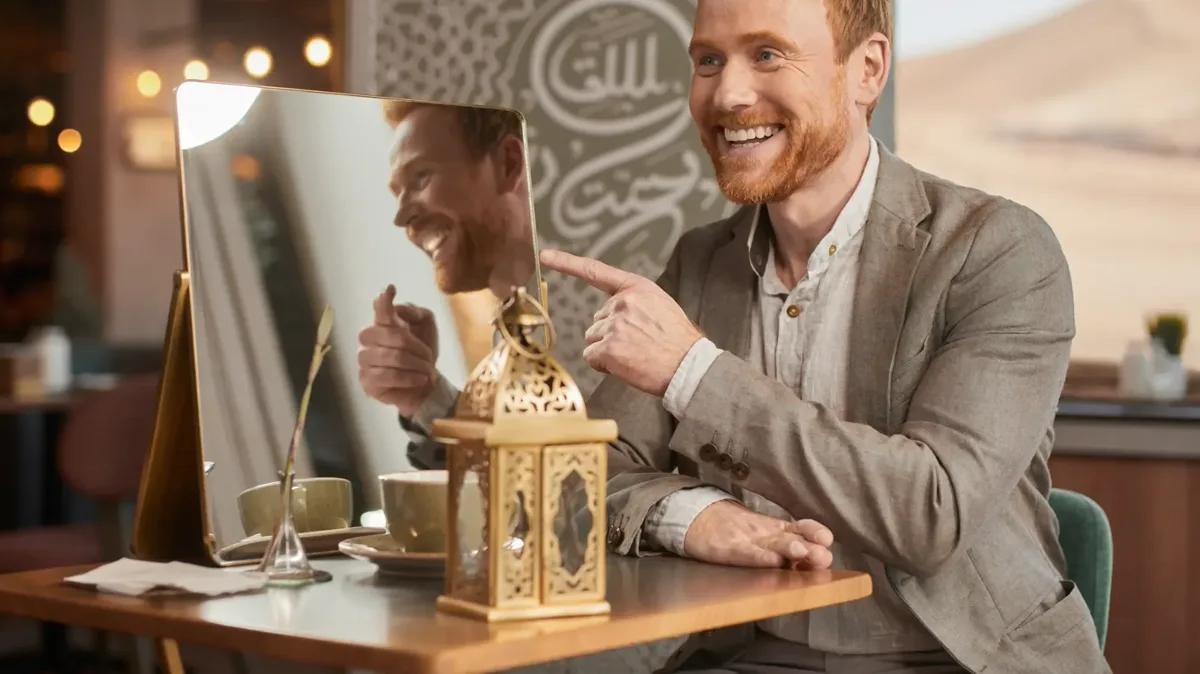
4 Total Rules
41 examples
6 min

Chapter in 30 Seconds

Master the art of pointing at your world and claiming what belongs to you.

  • Identify objects near and far using demonstrative pronouns.
  • Attach suffix pronouns to verbs for smoother communication.
  • Construct possessive relationships using the classic Idafa grammar structure.
Point, claim, and connect with your Arabic world.

What You'll Learn

Hey there, future Arabic speaker! You've built a solid foundation, and now it's time to supercharge your ability to interact with the world around you. This chapter is all about mastering how to point to things, near and far, and how to express who owns what. First, you'll learn the secrets of this in Arabic, using «هذا» (hādha) for masculine and «هذه» (hādhihi) for feminine nouns. A cool trick: for all non-human plurals, you'll always use the feminine singular «هذه»! Next, we'll venture into pointing at things further away with «ذلك» (dhālika) and «تلك» (tilka) for that and those. Another neat shortcut: for *all* plural objects, animals, and concepts, you'll use «تلك,» simplifying references to multiple items. Then, we'll dive into Lego Suffixes. Just like saying he saw *me* in English, Arabic uses clever little endings attached directly to verbs to show who is receiving the action. You'll learn to add suffixes like -ni (me), -ka (you), and -hu (him) to verbs. This makes your sentences concise and natural, avoiding separate, clunky pronouns. Finally, we'll unlock the Idafa structure (الإضافة), the bedrock of expressing possession. Think of it like building with Lego bricks: you'll learn to link two nouns to form phrases like "Ahmed's car or my book.

This powerful structure lets you clearly state ownership, whether asking
Is this car yours? or explaining That phone is mine." By the end, you'll confidently point out objects, discuss their location, and express possession with ease. Imagine asking «كم سعر هذا؟» (How much is this?) in a souk or telling a friend, «هذه حقيبتي» (This is my bag). You'll have the tools to describe your surroundings and belongings with clarity. Get ready to expand your Arabic world!

Learning Objectives

By the end of this chapter, you will be able to:

  1. 1
    By the end you will be able to: Use 'هذا' and 'هذه' to correctly identify objects in your immediate environment.
  2. 2
    By the end you will be able to: Build possessive phrases like 'my car' or 'Ahmed's book' using the Idafa structure.

Chapter Guide

Overview

Welcome, future Arabic speaker! You've already built a fantastic foundation in Arabic grammar A2, and now it's time to unlock some truly essential communication tools. This chapter, "Pointing and Belonging," will empower you to interact more dynamically with your surroundings, making your Arabic conversations richer and more natural. We're going to master how to accurately identify objects, near and far, using Arabic demonstrative pronouns, and confidently express ownership through Arabic possession structures. These skills are crucial for navigating daily life, whether you're asking for directions, shopping in a souk, or simply talking about your belongings. Get ready to supercharge your descriptive abilities and gain a deeper understanding of how native speakers talk about the world around them.
This chapter covers four key areas: the correct use of "this" (هذا and هذه), "that" and "those" (ذلك and تلك), adding direct object suffixes (our "Lego suffixes") to verbs like -ني (me) and (you), and the powerful Idafa structure (الإضافة) for showing possession. By the end, you'll feel much more confident pointing to things, describing them, and stating who owns what – core elements of A2 Arabic communication.

How This Grammar Works

Let's dive into the mechanics of these vital Arabic grammar points. First up are the Arabic demonstrative pronouns for "this" and "that." For something nearby, we use هذا (hādha) for masculine singular nouns, like هذا قلم (hādha qalam) – *this is a pen*. For feminine singular nouns, you'll use هذه (hādhihi), as in هذه حقيبة (hādhihi ḥaqībah) – *this is a bag*. Here's a neat trick: for *all non-human plurals*, whether masculine or feminine, you will *always* use the feminine singular هذه! So, it's هذه أقلام (hādhihi aqlām) – *these are pens*, and هذه حقائب (hādhihi ḥaqā'ib) – *these are bags*.
When pointing to things further away, we use ذلك (dhālika) for masculine singular "that," for example, ذلك بيت (dhālika bayt) – *that is a house*. For feminine singular "that," we use تلك (tilka), as in تلك شجرة (tilka shajarah) – *that is a tree*. Similar to هذه, تلك simplifies things for plurals: for *all plural objects, animals, and concepts*, you will use تلك for "those." So, تلك بيوت (tilka buyūt) – *those are houses*, and تلك أشجار (tilka ashjār) – *those are trees*.
Next, we have the "Lego Suffixes," which are direct object pronouns that attach directly to verbs. Instead of separate words for "me," "you," or "him," Arabic uses these clever endings. For "me," you add -ني (-nī) to the verb, as in ساعدني (sā'adanī) – *he helped me*. For "you" (masculine singular), it's (-ka), so رآك (ra'āka) – *he saw you*. For "him," you add (-hu), as in أعطه (a'ṭihu) – *give him*. These suffixes make your sentences concise and fluent.
Finally, the Idafa structure (الإضافة) is the backbone of Arabic possession. It's a two-noun construction, where the first noun (the *mudaf*) loses any *alif lam* (the definite article "the") and *tanween* (nunnation), and its ending reflects its grammatical role in the sentence. The second noun (the *mudaf ilayhi*) is always in the genitive case (often ending in a *kasra* or "i" sound). For example, كتاب أحمد (kitāb Aḥmad) means *Ahmed's book* or *the book of Ahmed*. You can also attach possessive suffixes directly to nouns, like كتابي (kitābī) – *my book*, or سيارتك (sayyāratuk) – *your car*, which is another form of possession and very common in A2 Arabic.

Common Mistakes

  1. 1Wrong: هذا كتب (hādha kutub)
Correct: هذه كتب (hādhihi kutub)
*Explanation:* A common mistake is to use هذا (masculine singular "this") for non-human plural nouns. Remember the golden rule for A2 Arabic: for *all* non-human plurals, whether masculine or feminine, you *must* use هذه ("this" / "these").
  1. 1Wrong: السيارة أحمد (as-sayyārah Aḥmad)
Correct: سيارة أحمد (sayyārat Aḥmad)
*Explanation:* When forming an Idafa structure for possession, the first noun (the possessed item) *never* takes the definite article الـ (al-) and its final short vowel changes according to its grammatical role. The second noun (the possessor) is always definite and in the genitive case (often indicated by a *kasra*).
  1. 1Wrong: هو ساعد أنا (huwa sā'ada anā)
Correct: ساعدني (sā'adanī)
*Explanation:* In Arabic grammar, when a pronoun is the direct object of a verb ("me," "you," "him"), it attaches directly to the verb as a "Lego suffix" rather than being a separate word. Using a standalone subject pronoun like أنا (anā) as an object is incorrect.

Real Conversations

A

A

كم سعر هذا القميص؟ (Kam si'r hādha al-qamīṣ?) (How much is this shirt?)
B

B

هذا القميص سعره خمسون ريالاً. (Hādha al-qamīṣ si'ruhu khamsūna riyālan.) (This shirt's price is fifty riyals.)
A

A

هل هذه حقيبتك؟ (Hal hādhihi ḥaqībatuk?) (Is this your bag?)
B

B

نعم، هذه حقيبتي. أعطني إياها من فضلك. (Na'am, hādhihi ḥaqībatī. A'ṭinī iyyāhā min faḍlik.) (Yes, this is my bag. Give it to me, please.)
A

A

تلك سيارة المدير؟ (Tilka sayyārat al-mudīr?) (Is that the manager's car?)
B

B

لا، تلك سيارة أخي. (Lā, tilka sayyārat akhī.) (No, that's my brother's car.)

Quick FAQ

Q

How do I know when to use هذا or هذه in A2 Arabic?

Use هذا for singular masculine nouns and هذه for singular feminine nouns. Crucially, use هذه for *all non-human plural nouns*, regardless of their original gender.

Q

What's the easiest way to express "my book" or "your car" in Arabic grammar?

The easiest way for Arabic possession at the A2 level is to attach a possessive suffix directly to the noun: كتابي (kitābī) for "my book," and سيارتك (sayyāratuk) for "your car."

Q

Can I use the "Lego suffixes" (object pronouns) with prepositions in Arabic?

Yes! These suffixes also attach to prepositions. For example, لي (lī) means "to me" or "for me," and معك (ma'ak) means "with you."

Q

Is the Idafa structure (الإضافة) only used for possession in Arabic grammar?

While primarily for possession, Idafa also forms descriptive phrases, like غرفة نوم (ghurfat nawm) – *bedroom* (literally "room of sleep"), or طالب علم (ṭālib 'ilm) – *student* (literally "seeker of knowledge").

Cultural Context

These Arabic grammar structures are incredibly common in daily conversation across the Arab world. You'll hear demonstratives like هذا and هذه constantly in shops, homes, and public spaces. The Idafa structure is ubiquitous; it's the standard way to express possession and create compound nouns, making it fundamental to fluent Arabic communication. While some dialects might use slightly different forms for demonstratives (e.g., هادا instead of هذا in some Levantine dialects), the Modern Standard Arabic forms taught here are universally understood and respected. Mastering these patterns will significantly boost your confidence in describing your world.

Key Examples (8)

1

هَذَا هَاتِفِي الْجَدِيد.

This is my new phone.

Arabic 'This': Using (هذا & هذه)
2

هَذِهِ الْقَهْوَة لَذِيذَة جِدًّا!

This coffee is very delicious!

Arabic 'This': Using (هذا & هذه)
3

Dhālika al-fīlm mumill jiddan.

That movie is very boring.

Distant Pointers: That & Those (Dhālika, Tilka)
4

Tilka al-sayyāra sarīʿa.

That car is fast.

Distant Pointers: That & Those (Dhālika, Tilka)
5

أنا أحبك جداً

I love you very much.

The 'Lego' Suffixes: Me, You, Him (-nī, -ka, -hu)
6

هل رأيته في الحفلة؟

Did you see him at the party?

The 'Lego' Suffixes: Me, You, Him (-nī, -ka, -hu)
7

هذا مكتب المدير الجديد.

This is the new director's office.

Arabic Possession: The Idafa Structure (الإضافة)
8

هل يمكنك إعطائي رقم الهاتف؟

Can you give me the phone number?

Arabic Possession: The Idafa Structure (الإضافة)

Tips & Tricks (4)

💡

Check the ending

Always look for the ة at the end of the noun. It's your best friend for identifying feminine nouns.
frontend.learn_grammar.from_rule: Arabic 'This': Using (هذا & هذه)
💡

Check the Noun

Always look at the noun's ending to decide between Dhālika and Tilka.
frontend.learn_grammar.from_rule: Distant Pointers: That & Those (Dhālika, Tilka)
💡

The 'N' Bridge

Always use the 'n' bridge for -nī to make it sound smooth.
frontend.learn_grammar.from_rule: The 'Lego' Suffixes: Me, You, Him (-nī, -ka, -hu)
💡

The 'Light' Rule

Always remember the first noun is light. No 'al-', no 'tanween'.
frontend.learn_grammar.from_rule: Arabic Possession: The Idafa Structure (الإضافة)

Key Vocabulary (6)

هذا (hādha) this (masculine) تلك (tilka) that (feminine/plural) سيارة (sayyārah) car كتاب (kitāb) book رآني (ra'ānī) he saw me حقيبة (ḥaqībah) bag

Real-World Preview

shopping-bag

At the Market

Review Summary

  • hādha/hādhihi + noun
  • Possessed + Possessor

Common Mistakes

You used the masculine pointer for a feminine noun. Remember, 'حقيبة' ends in a ta-marbuta, so it needs the feminine pointer.

Wrong: هذا حقيبة (Hādha ḥaqībah)
Correct: هذه حقيبة (Hādhihi ḥaqībah)

You must remove the definite article 'al-' from the first noun in an Idafa construction.

Wrong: سيارة أحمد (The car of Ahmed)
Correct: سيارةُ أحمد (Sayyāratu Aḥmad)

Lego suffixes must be attached directly to the verb, not written as separate words.

Wrong: رأى ني (Ra'ā nī)
Correct: رآني (Ra'ānī)

Next Steps

You are doing fantastic! Every word you learn brings you closer to fluency. See you in the next chapter!

Label items in your room with sticky notes using demonstratives.

Quick Practice (10)

Choose for plural.

___ كتبٌ كثيرةٌ.

✓ Correct! ✗ Not quite. Correct answer: تلك
Non-human plural.

frontend.learn_grammar.from_rule: Distant Pointers: That & Those (Dhālika, Tilka)

Fill in the blank: ___ كتاب.

هذا / هذه

✓ Correct! ✗ Not quite. Correct answer: هذا
Kitab is masculine.

frontend.learn_grammar.from_rule: Arabic 'This': Using (هذا & هذه)

Fill in the blank with the correct suffix for 'me'.

He saw ___ (ra'ā___)

✓ Correct! ✗ Not quite. Correct answer: -nī
-nī is the suffix for 'me'.

frontend.learn_grammar.from_rule: The 'Lego' Suffixes: Me, You, Him (-nī, -ka, -hu)

Fill in the blank: ___ سيارة.

هذا / هذه

✓ Correct! ✗ Not quite. Correct answer: هذه
Sayyara is feminine.

frontend.learn_grammar.from_rule: Arabic 'This': Using (هذا & هذه)

Fill in the blank.

هل ___ رجلٌ؟

✓ Correct! ✗ Not quite. Correct answer: ذلك
Rajul is masculine.

frontend.learn_grammar.from_rule: Distant Pointers: That & Those (Dhālika, Tilka)

Choose the correct sentence.

Which is correct?

✓ Correct! ✗ Not quite. Correct answer: بيتُ الرجلِ
First noun indefinite, second genitive.

frontend.learn_grammar.from_rule: Arabic Possession: The Idafa Structure (الإضافة)

Fill in the correct form.

___ الطالبِ (The student's pen)

✓ Correct! ✗ Not quite. Correct answer: قلم
The first noun must be indefinite.

frontend.learn_grammar.from_rule: Arabic Possession: The Idafa Structure (الإضافة)

Correct the sentence: هذا بنت.

Find and fix the mistake:

هذا بنت

✓ Correct! ✗ Not quite. Correct answer: هذه بنت
Bint is feminine.

frontend.learn_grammar.from_rule: Arabic 'This': Using (هذا & هذه)

Choose the correct pointer.

___ سيارةٌ جميلةٌ.

✓ Correct! ✗ Not quite. Correct answer: تلك
Sayyārah is feminine.

frontend.learn_grammar.from_rule: Distant Pointers: That & Those (Dhālika, Tilka)

Fix the error.

Find and fix the mistake:

Al-sayyarat al-rajuli

✓ Correct! ✗ Not quite. Correct answer: Sayyarat al-rajuli
Remove 'al-' from the first noun.

frontend.learn_grammar.from_rule: Arabic Possession: The Idafa Structure (الإضافة)

Score: /10

Common Questions (6)

In Arabic, non-human plurals are grammatically treated as feminine singular.
No, you must use 'هذه' for women.
Books are non-human plurals, which are treated as feminine singular in Arabic.
No, you must use Tilka for feminine nouns.
Yes, they attach to almost any verb in Arabic.
It's a bridge to connect the verb to the suffix.


