









fire in 30 Seconds
- Fire is primarily the physical phenomenon of combustion producing heat and light, essential for survival but potentially destructive.
- As a verb, it commonly refers to terminating someone's employment or discharging a weapon like a gun or bow.
- The word is frequently used metaphorically to describe intense passion, anger, or high-quality performance in sports or arts.
- Grammatically, it can be a countable noun (a fire) or uncountable (fire), and it forms many essential English idioms.
The word fire is one of the most fundamental concepts in human language, representing both a life-sustaining force and a destructive power. At its most basic level, it refers to the chemical process of combustion where fuel reacts with oxygen to produce heat and light. However, its usage extends far beyond the physical flames of a campfire or a burning building. In modern English, we use this term to describe intense emotions, the act of discharging a weapon, or even the termination of a professional relationship. Understanding the context is crucial because shouting this word in a crowded theater has vastly different legal and social consequences than using it to describe a passionate speech or a successful business strategy.
- Physical Phenomenon
- The visible effect of the process of combustion, characterized by flames, heat, and light. It is essential for cooking, heating, and industrial processes but requires careful management to prevent uncontrolled destruction.
- Metaphorical Intensity
- Often used to describe strong feelings such as anger, passion, or enthusiasm. When someone has 'fire in their eyes,' they are displaying a high level of determination or fury that mirrors the energy of a physical blaze.
The campers gathered around the fire to stay warm during the cold autumn night.
In professional settings, the term takes on a more clinical and often stressful meaning. To 'fire' someone is to dismiss them from their job, usually due to poor performance or a violation of company policy. This usage stems from the idea of 'discharging' someone, much like a weapon is discharged. Speaking of weapons, the command to 'fire' is the standard instruction to pull a trigger or launch a projectile. This versatility makes the word a 'chameleon' in the English language, shifting its weight and tone depending on whether you are in a forest, an office, or a military zone.
The manager had to fire the employee after repeated warnings about tardiness.
- Emergency Context
- In the context of safety, the word is a critical warning. Fire drills and fire extinguishers are standard in public buildings to mitigate the risks associated with uncontrolled combustion.
The archers were ordered to hold their fire until the enemy was within range.
Using the word correctly requires an understanding of its grammatical flexibility. As a noun, it can be both countable and uncountable. When referring to the general phenomenon or the element, it is uncountable. For example, 'Fire is dangerous.' However, when referring to a specific instance of burning, such as a house fire or a forest fire, it becomes countable: 'There were three fires in the city last night.' This distinction is vital for learners to master to sound natural in conversation and writing.
- Uncountable Usage
- Refers to the element or the state of burning. Example: 'The primitive humans discovered how to make fire.' Here, we do not use 'a' or pluralize it.
- Countable Usage
- Refers to a specific event. Example: 'The fire department responded to a kitchen fire.' In this case, 'fire' functions like any other common noun.
We need to gather more wood if we want to keep the fire going all night.
When using it as a verb, the most common meanings are to terminate employment or to shoot a weapon. In the case of employment, it is a transitive verb, meaning it requires an object: 'The CEO fired the manager.' It is often considered a harsh or direct word; more polite alternatives include 'let go' or 'terminate.' In the context of weaponry, it can be both transitive and intransitive: 'He fired the gun' or 'The soldiers fired at the target.' Note that in sports, 'to fire' can also mean to throw or hit a ball with great force and speed.
The investigator found that the fire was started by a faulty electrical wire.
- Prepositional Use
- Commonly used with 'on' (on fire) to describe something currently burning or someone performing exceptionally well. Example: 'The building is on fire!' or 'The striker is on fire today, scoring three goals.'
You will encounter this word in a staggering variety of environments. In the news, it is frequently used in reports about natural disasters (wildfires), urban accidents (apartment fires), or corporate restructuring (mass firings). In these contexts, the tone is usually serious and urgent. In literature and film, fire is a powerful symbol of transformation, destruction, or passion. Think of the 'fire' of a dragon or the 'fire' in a hero's heart. It is a staple of storytelling across all cultures and eras.
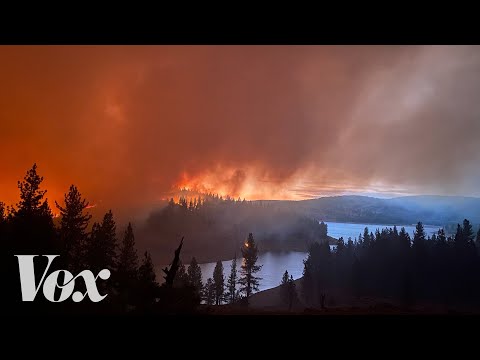
The evening news reported a massive forest fire spreading across the valley.
In everyday conversation, the word appears in many common idioms and expressions. You might hear a parent tell a child to 'stop playing with fire,' which is a literal warning about matches but also a metaphorical warning about taking unnecessary risks. In a workplace, colleagues might whisper about who is 'in the line of fire' during a round of budget cuts. Even in casual social settings, someone might describe a spicy meal as 'tasting like fire' or a particularly impressive performance as 'pure fire.' The word's ability to bridge the gap between literal danger and metaphorical excellence is unique.
- Pop Culture
- From Johnny Cash's 'Ring of Fire' to the 'Hunger Games' being the 'girl on fire,' the word is a central motif in music and movies, usually representing intense emotion or high stakes.
The politician came under fire for her controversial comments during the debate.
One of the most frequent errors for English learners is confusing 'fire' with 'burn.' While they are related, 'fire' is the thing itself (the noun) or the act of starting it, while 'burn' is the action of being consumed by fire or the injury caused by it. You don't 'fire' a piece of paper to get rid of it; you 'burn' it. Similarly, you don't have a 'fire' on your skin after touching a hot stove; you have a 'burn.' Understanding this distinction between the phenomenon and the process/result is essential for accuracy.
- Fire vs. Burn
- Use 'fire' for the event or the flame. Use 'burn' for the chemical reaction or the resulting damage. Incorrect: 'I fired my hand.' Correct: 'I burned my hand in the fire.'
- Preposition Errors
- Learners often say 'in fire' when they mean 'on fire.' If a house is 'in fire,' it sounds like it is located inside a giant flame. If it is 'on fire,' it means it is burning.
Wait! Don't touch that! The pan is fire hot! (Common error: should be 'burning hot' or 'red hot').
Another mistake involves the verb form in professional contexts. Some learners use 'fire' when they mean 'quit.' If you 'fire' someone, you are the boss. If you leave the job yourself, you 'quit' or 'resign.' Confusing these can lead to significant misunderstandings about who was responsible for the end of a job. Additionally, be careful with the plural. 'Fires' refers to multiple burning events, not the intensity of a single flame. You wouldn't say 'The fire was very big, it had many fires.'
The building was on fire, not 'in fire'.
Depending on the intensity and context, there are many alternatives to the word 'fire.' If you are describing a very large, out-of-control fire, 'blaze' or 'inferno' are much more descriptive. An 'inferno' suggests a fire so intense it resembles hell, while a 'blaze' implies a bright, powerful flame. For a very small, beginning fire, you might use 'spark' or 'glimmer.' In a technical or legal context, a large fire is often called a 'conflagration.' Using these synonyms can help you provide more detail and color to your descriptions.
- Blaze
- A large, bright, and powerful fire. Often used in news headlines: 'Firefighters battle the blaze.'
- Inferno
- A large fire that is dangerously out of control. It carries a connotation of extreme heat and danger.
- Flame
- The visible, gaseous part of a fire. A fire is made up of many flames.
The small spark quickly grew into a massive inferno that destroyed the warehouse.
When talking about the verb 'to fire' (employment), alternatives include 'dismiss,' 'terminate,' 'let go,' or 'sack' (informal UK). 'Dismiss' is formal and neutral, while 'let go' is a gentler euphemism often used to soften the blow. In the context of shooting, you might use 'discharge,' 'launch,' or 'shoot.' Each of these words carries a slightly different nuance, so choosing the right one depends on whether you want to sound professional, casual, or dramatic.
The company decided to terminate the contract rather than fire the individual.
How Formal Is It?
Fun Fact
The word 'fire' is one of the oldest words in the English language, remaining relatively unchanged for over a thousand years.
Pronunciation Guide
- Pronouncing it as 'far' (too short).
- Adding an extra syllable like 'fai-ree'.
- Confusing it with 'fry'.
- Muffling the 'f' sound.
- Over-emphasizing the 'r' in British English.
Difficulty Rating
Easy to recognize, but meanings vary by context.
Requires knowledge of countability and idioms.
Simple pronunciation, but don't confuse with 'fry'.
Clear sound, usually easy to distinguish.
What to Learn Next
Prerequisites
Learn Next
Advanced
Grammar to Know
Countability
Fire (uncountable) is an element. A fire (countable) is an event.
Passive Voice
He was fired (passive) by the boss (active).
Phrasal Verbs
Fire up the engine; Fire off an email.
Prepositions
On fire (burning); Under fire (criticized).
Compound Nouns
Firefighter, fire truck, fire station.
Examples by Level
The fire is very hot.
Le feu est très chaud.
Simple subject-verb-adjective structure.
Look at the fire!
Regarde le feu !
Imperative sentence.
We need fire to cook.
Nous avons besoin de feu pour cuisiner.
Uncountable noun usage.
The fire is red and orange.
Le feu est rouge et orange.
Descriptive adjectives.
Do not touch the fire.
Ne touche pas au feu.
Negative imperative.
The cat sits by the fire.
Le chat est assis près du feu.
Prepositional phrase 'by the fire'.
Is there a fire?
Y a-t-il un feu ?
Interrogative with 'there is'.
The fire gives light.
Le feu donne de la lumière.
Simple present tense.
The fire alarm is very loud.
L'alarme incendie est très forte.
Compound noun 'fire alarm'.
He started a fire in the garden.
Il a allumé un feu dans le jardin.
Countable noun 'a fire'.
Firefighters put out the fire.
Les pompiers ont éteint le feu.
Phrasal verb 'put out'.
Please use the fire exit.
Veuillez utiliser la sortie de secours.
Compound noun 'fire exit'.
The house was destroyed by fire.
La maison a été détruite par le feu.
Passive voice 'was destroyed'.
They sat around the campfire.
Ils se sont assis autour du feu de camp.
Compound noun 'campfire'.
The fire spread quickly.
Le feu s'est propagé rapidement.
Adverb 'quickly' modifying the verb.
Don't play with matches; you might start a fire.
Ne joue pas avec des allumettes ; tu pourrais déclencher un incendie.
Modal verb 'might' for possibility.
The company had to fire several employees.
L'entreprise a dû licencier plusieurs employés.
Verb meaning 'to dismiss'.
She has a real fire for her work.
Elle a une véritable passion pour son travail.
Metaphorical use meaning 'passion'.
The building is on fire!
Le bâtiment est en feu !
Idiomatic phrase 'on fire'.
He was fired for being late every day.
Il a été licencié pour être arrivé en retard tous les jours.
Passive verb 'was fired'.
The soldiers were ordered to fire.
Les soldats ont reçu l'ordre de tirer.
Verb meaning 'to shoot'.
We need a fire extinguisher in the kitchen.
Nous avons besoin d'un extincteur dans la cuisine.
Compound noun 'fire extinguisher'.
The forest fire lasted for three weeks.
L'incendie de forêt a duré trois semaines.
Specific event 'forest fire'.
His speech fired up the crowd.
Son discours a galvanisé la foule.
Phrasal verb 'fire up'.
The team is on fire lately, winning every game.
L'équipe est en feu ces derniers temps, gagnant tous les matchs.
Slang/Idiomatic use for 'performing well'.
You're playing with fire by ignoring those warnings.
Tu joues avec le feu en ignorant ces avertissements.
Idiom 'playing with fire'.
The politician came under fire for his comments.
Le politicien a été vivement critiqué pour ses propos.
Idiom 'under fire' (criticized).
The arsonist was caught trying to set fire to the warehouse.
L'incendiaire a été surpris en train de mettre le feu à l'entrepôt.
Phrase 'set fire to'.
There is no smoke without fire.
Il n'y a pas de fumée sans feu.
Proverb/Idiom.
The engine caught fire after the crash.
Le moteur a pris feu après l'accident.
Phrase 'catch fire'.
She was fired with enthusiasm for the new project.
Elle était animée d'un grand enthousiasme pour le nouveau projet.
Metaphorical passive 'fired with'.
The fire department is investigating the cause of the blaze.
Les pompiers enquêtent sur la cause du sinistre.
Synonym 'blaze' used for variety.
The controversy sparked a firestorm of criticism.
La polémique a déclenché une tempête de critiques.
Metaphorical 'firestorm'.
He has many irons in the fire right now.
Il a plusieurs fers au feu en ce moment.
Idiom meaning 'many projects'.
The sunset set the sky on fire with brilliant oranges.
Le coucher de soleil a embrasé le ciel d'oranges éclatants.
Poetic/Literary usage.
The CEO's decision added fuel to the fire.
La décision du PDG a jeté de l'huile sur le feu.
Idiom 'add fuel to the fire'.
She is a real firebrand in the activist community.
C'est une véritable agitatrice dans le milieu militant.
Noun 'firebrand' (troublemaker/passionate person).
The city was a conflagration of lights at night.
La ville était un embrasement de lumières la nuit.
Metaphorical 'conflagration'.
The trial by fire proved his worth as a leader.
L'épreuve du feu a prouvé sa valeur en tant que chef.
Idiom 'trial by fire'.
The old building was a firetrap waiting to happen.
Le vieux bâtiment était un véritable piège à feu.
Noun 'firetrap'.
The kiln requires a specific temperature for the firing process.
Le four nécessite une température spécifique pour le processus de cuisson.
Technical usage in pottery.
The synapses were firing rapidly as she solved the puzzle.
Les synapses s'activaient rapidement alors qu'elle résolvait l'énigme.
Scientific/Biological usage.
Her prose is imbued with a fire that captivates the reader.
Sa prose est imprégnée d'un feu qui captive le lecteur.
Abstract literary usage.
The scorched-earth policy left nothing but fire and ash.
La politique de la terre brûlée n'a laissé que le feu et les cendres.
Historical/Military context.
He managed to pull the chestnuts out of the fire for the company.
Il a réussi à tirer les marrons du feu pour l'entreprise.
Rare idiom 'pull chestnuts out of the fire'.
The fire in her belly was undiminished by age.
Le feu sacré qui l'animait n'était pas diminué par l'âge.
Idiom 'fire in the belly'.
The spontaneous combustion was a rare chemical fire.
La combustion spontanée était un feu chimique rare.
Technical scientific term.
The rhetoric was designed to fire the blood of the youth.
La rhétorique était conçue pour enflammer le sang de la jeunesse.
Archaic/Poetic verb usage.
Synonyms
Antonyms
Common Collocations
Common Phrases
— A portable device used to put out small fires.
Check the fire extinguisher's expiry date.
— A special staircase used to leave a building during a fire.
Use the fire escape in an emergency.
— The building where firefighters stay and keep their equipment.
The fire station is just around the corner.
— An outdoor fire used for warmth or cooking while camping.
We roasted marshmallows over the campfire.
— A place in a house where you can build a fire.
The living room has a beautiful stone fireplace.
— A person whose job is to put out fires.
The firefighter rescued the cat from the tree.
Often Confused With
Fire is the thing; burn is the action or the injury.
Flame is a single part of a fire.
Fry is a cooking method; fire is the heat source.
Idioms & Expressions
— To take dangerous or unnecessary risks.
Investing all your money in crypto is playing with fire.
Informal— To make a bad situation even worse.
His angry response only added fuel to the fire.
Neutral— A strong determination to succeed.
The young entrepreneur has a real fire in her belly.
Informal— Being attacked or severely criticized.
The minister is under fire for the new tax policy.
Neutral— To be very successful and famous.
He's a good singer, but he won't set the world on fire.
Informal— If there are rumors, there is usually some truth to them.
I heard they are closing, and where there's smoke, there's fire.
Neutral— To face any danger or difficulty for someone.
He would go through fire and water for his children.
Literary— To use the same methods as your opponent.
If they use negative ads, we must fight fire with fire.
Neutral— A very difficult first experience in a new job or activity.
My first day as a teacher was a real baptism of fire.
Neutral— To wait before taking action or speaking.
Hold your fire until we have all the facts.
NeutralEasily Confused
Both relate to heat and destruction.
Fire is the noun for the phenomenon; burn is the verb for the process or the noun for the injury.
The fire caused a severe burn on his arm.
They look and act similarly.
Fire is the whole event; flame is the specific visible part of the burning gas.
The candle has a small flame, but the house is on fire.
Both mean fire.
Blaze implies a very large, bright, and intense fire.
The small fire grew into a massive blaze.
Both mean losing a job.
Fire is more common and direct; dismiss is more formal and polite.
He was fired (common) / He was dismissed (formal).
Both mean using a gun.
Fire is often a command or a technical term; shoot is the general action.
Ready, aim, fire!
Sentence Patterns
The [noun] is fire.
The sun is fire.
There is a fire in [place].
There is a fire in the kitchen.
[Subject] was fired for [reason].
He was fired for stealing.
[Subject] is on fire today!
The team is on fire today!
A firestorm of [noun] followed.
A firestorm of protest followed.
To pull [object] out of the fire.
He pulled the deal out of the fire.
To set fire to [object].
She set fire to the old letters.
To be under fire from [source].
The law is under fire from the public.
Word Family
Nouns
Verbs
Adjectives
Related
How to Use It
Extremely high in both spoken and written English.
-
I fired my finger.
→
I burned my finger.
You use 'burn' for physical injuries caused by heat.
-
The house is in fire.
→
The house is on fire.
The correct idiomatic expression is 'on fire'.
-
He quitted his job.
→
He was fired from his job.
If the boss ends the job, it's 'fired'. If the person ends it, it's 'quit'.
-
The fire was very big, it had many fires.
→
The fire was very big; it had many flames.
A single fire has flames, not multiple 'fires' inside it.
-
Fire the gun at the target.
→
Fire at the target.
While 'fire the gun' is correct, 'fire at' is more common in military contexts.
Tips
Countability Check
Always check if you are talking about the element (uncountable) or an event (countable).
Use Synonyms
Use 'blaze' for big fires to sound more descriptive in your writing.
Softening the Blow
In a workplace, use 'let go' instead of 'fire' to be more polite.
Warning Word
Shouting 'Fire!' in a public place is a serious action; only do it in a real emergency.
Modern Usage
Understand that 'fire' in social media comments usually means 'great'.
Risk Taking
Use 'playing with fire' when someone is doing something very dangerous.
Vivid Imagery
Describe the 'dance' of the flames to make your creative writing more engaging.
Context Clues
If you hear 'fire' in a movie, check if there's a gun or a flame nearby.
Symbolism
Remember that fire can mean both life (warmth) and death (destruction).
Diphthong Practice
Focus on the 'ai' sound in 'fire' to ensure you don't say 'far'.
Memorize It
Mnemonic
F-I-R-E: Flames Ignite Red Energy. Think of the bright red color and the energy it releases.
Visual Association
Imagine a bright orange triangle. The heat comes from the bottom, the light from the top, and the danger from the sharp points.
Word Web
Challenge
Try to use 'fire' in three different ways today: as a noun (the element), as a verb (employment), and in an idiom (like 'on fire').
Word Origin
Derived from the Old English 'fȳr', which has roots in Proto-Germanic '*fūr'. It is related to the Dutch 'vuur' and German 'Feuer'.
Original meaning: The physical phenomenon of combustion.
GermanicCultural Context
Be careful using 'fire' (meaning dismissal) in professional settings as it is very blunt and can be perceived as insensitive.
In the US and UK, 'firefighter' is the standard term. 'Fireman' is becoming dated.
Practice in Real Life
Real-World Contexts
At Home
- Light the fire
- Sit by the fire
- Fireplace
- Smoke alarm
At Work
- Get fired
- Fire an employee
- Under fire
- Fire drill
In Nature
- Forest fire
- Wildfire
- Campfire
- Spread of fire
Safety
- Fire extinguisher
- Fire exit
- Fire hazard
- Call 911/999
Sports/Slang
- On fire
- Pure fire
- Fire a shot
- Fire up the team
Conversation Starters
“Have you ever sat around a campfire and told stories?”
“What would you do if the fire alarm went off right now?”
“Do you think it's fair to fire someone for being late once?”
“What is the best way to stay warm without a fire in winter?”
“Have you ever seen a professional firework display?”
Journal Prompts
Describe a time you felt a 'fire in your belly' to achieve something.
Write about the importance of fire in human history and civilization.
Imagine you are a firefighter. Describe a day in your life.
Discuss the pros and cons of having a fireplace in a modern home.
Write a story that begins with the sentence: 'The fire was spreading faster than we expected.'
Frequently Asked Questions
10 questionsIt is both. Use 'fire' (uncountable) for the element: 'Fire is hot.' Use 'a fire' (countable) for a specific event: 'There was a fire last night.'
'Fire' is standard English. 'Sack' is informal, mostly used in British English, and sounds more casual.
In traditional grammar, no. However, in modern slang, it is used as an adjective meaning 'excellent' or 'cool'.
Instead of 'fire', use 'terminate employment' or 'dismiss'. These sound more professional and less harsh.
It means a player or team is performing exceptionally well, often scoring many points in a row.
Yes, 'firefighter' is gender-neutral and is the preferred term in modern English.
It is a practice session to teach people how to leave a building safely if there is a fire.
It is an idiom that means making a bad situation even worse by doing or saying something.
Yes, 'fire' can be used for guns, bows, or even launching missiles.
It is wood specifically collected and cut to be burned in a fire for heat or cooking.
Test Yourself 180 questions
Write a sentence using 'fire' as a noun.
Well written! Good try! Check the sample answer below.
Write a sentence using 'fire' as a verb meaning to lose a job.
Well written! Good try! Check the sample answer below.
Explain the idiom 'playing with fire'.
Well written! Good try! Check the sample answer below.
Describe a campfire scene in three sentences.
Well written! Good try! Check the sample answer below.
Compare 'fire' and 'blaze'.
Well written! Good try! Check the sample answer below.
Write a short story about a firefighter.
Well written! Good try! Check the sample answer below.
What should you do if there is a fire in your house?
Well written! Good try! Check the sample answer below.
Write a sentence using 'fire' metaphorically.
Well written! Good try! Check the sample answer below.
Describe the importance of fire to early humans.
Well written! Good try! Check the sample answer below.
Use 'fire up' in a sentence.
Well written! Good try! Check the sample answer below.
Write a dialogue between a boss and an employee being fired.
Well written! Good try! Check the sample answer below.
Explain the difference between 'fire' and 'burn'.
Well written! Good try! Check the sample answer below.
Write a sentence with 'fire extinguisher'.
Well written! Good try! Check the sample answer below.
Describe a sunset using the word 'fire'.
Well written! Good try! Check the sample answer below.
What are the dangers of forest fires?
Well written! Good try! Check the sample answer below.
Write a sentence using 'under fire'.
Well written! Good try! Check the sample answer below.
Explain 'where there's smoke, there's fire'.
Well written! Good try! Check the sample answer below.
Describe a firework display.
Well written! Good try! Check the sample answer below.
Use 'fireproof' in a sentence.
Well written! Good try! Check the sample answer below.
Write a formal email about a fire drill.
Well written! Good try! Check the sample answer below.
Describe a fire you have seen.
Read this aloud:
You said:
Speech recognition is not supported in your browser. Try Chrome or Edge.
How do you feel about sitting by a fire?
Read this aloud:
You said:
Speech recognition is not supported in your browser. Try Chrome or Edge.
Discuss the dangers of playing with fire.
Read this aloud:
You said:
Speech recognition is not supported in your browser. Try Chrome or Edge.
Explain the job of a firefighter.
Read this aloud:
You said:
Speech recognition is not supported in your browser. Try Chrome or Edge.
Have you ever been in a fire drill?
Read this aloud:
You said:
Speech recognition is not supported in your browser. Try Chrome or Edge.
What would you do if you were fired from your job?
Read this aloud:
You said:
Speech recognition is not supported in your browser. Try Chrome or Edge.
Describe your favorite firework.
Read this aloud:
You said:
Speech recognition is not supported in your browser. Try Chrome or Edge.
Talk about a time you were 'on fire' (performing well).
Read this aloud:
You said:
Speech recognition is not supported in your browser. Try Chrome or Edge.
Is fire more useful or more dangerous?
Read this aloud:
You said:
Speech recognition is not supported in your browser. Try Chrome or Edge.
Explain 'add fuel to the fire' to a friend.
Read this aloud:
You said:
Speech recognition is not supported in your browser. Try Chrome or Edge.
How has fire changed human history?
Read this aloud:
You said:
Speech recognition is not supported in your browser. Try Chrome or Edge.
Describe a fireplace in a cozy house.
Read this aloud:
You said:
Speech recognition is not supported in your browser. Try Chrome or Edge.
What are the signs of a fire hazard?
Read this aloud:
You said:
Speech recognition is not supported in your browser. Try Chrome or Edge.
Discuss the ethics of firing employees.
Read this aloud:
You said:
Speech recognition is not supported in your browser. Try Chrome or Edge.
Tell a story about a campfire.
Read this aloud:
You said:
Speech recognition is not supported in your browser. Try Chrome or Edge.
What is the best way to put out a fire?
Read this aloud:
You said:
Speech recognition is not supported in your browser. Try Chrome or Edge.
How do you 'fire up' a team?
Read this aloud:
You said:
Speech recognition is not supported in your browser. Try Chrome or Edge.
Describe the color of a fire.
Read this aloud:
You said:
Speech recognition is not supported in your browser. Try Chrome or Edge.
What is a 'fire escape' used for?
Read this aloud:
You said:
Speech recognition is not supported in your browser. Try Chrome or Edge.
Is 'fire' a good word for slang?
Read this aloud:
You said:
Speech recognition is not supported in your browser. Try Chrome or Edge.
Listen for the word 'fire' in a news report about a forest.
Identify the meaning of 'fire' in a movie scene with a boss.
Listen to a fire alarm and describe the sound.
Listen for 'fire' in a song and explain its meaning.
Listen to a military command: 'Ready, aim, fire!'
Listen for 'on fire' in a sports commentary.
Listen to a safety briefing about fire exits.
Listen for 'firewood' in a story about camping.
Listen to a conversation about someone being fired.
Listen for 'firefighter' in a children's story.
Listen for 'fire hazard' in a building inspection report.
Listen for 'spark' in a technical explanation.
Listen for 'inferno' in a dramatic narration.
Listen for 'fire up' in a motivational speech.
Listen for 'fire drill' in a school announcement.
/ 180 correct
Perfect score!
Summary
The word 'fire' is a versatile term that spans from a basic physical element to complex professional and emotional concepts. Whether you are talking about a cozy fireplace, a military command, or losing a job, the context determines its weight. Example: 'The manager had to fire the employee after the fire in the warehouse destroyed the stock.'
- Fire is primarily the physical phenomenon of combustion producing heat and light, essential for survival but potentially destructive.
- As a verb, it commonly refers to terminating someone's employment or discharging a weapon like a gun or bow.
- The word is frequently used metaphorically to describe intense passion, anger, or high-quality performance in sports or arts.
- Grammatically, it can be a countable noun (a fire) or uncountable (fire), and it forms many essential English idioms.
Countability Check
Always check if you are talking about the element (uncountable) or an event (countable).
Use Synonyms
Use 'blaze' for big fires to sound more descriptive in your writing.
Softening the Blow
In a workplace, use 'let go' instead of 'fire' to be more polite.
Warning Word
Shouting 'Fire!' in a public place is a serious action; only do it in a real emergency.
Example
We gathered around the fire to roast marshmallows and stay warm.
Related Content


Learn it in Context
This Word in Other Languages
Related Phrases
More Environment words
ozone
B2Ozone is a colorless gas found in the upper atmosphere that protects the Earth from harmful ultraviolet radiation. It is also produced at ground level as a pollutant when sunlight reacts with industrial emissions.
conservation
B2The careful preservation and protection of natural resources, the environment, or historical sites to prevent damage, waste, or loss. It involves managing how humans interact with nature to ensure that ecosystems and species remain healthy and sustainable for the future.
microplastics
B2Extremely small pieces of plastic debris in the environment resulting from the disposal and breakdown of consumer products and industrial waste. These particles are typically less than five millimeters in diameter. They are a significant form of pollution, found everywhere from the deepest oceans to the air we breathe.
eco-friendly
B2This adjective describes products, services, or activities that are designed to have little or no damaging effect on the environment. It is a key term in environmental science and marketing used to denote sustainability and non-polluting characteristics.
fuels
B1As a noun, 'fuels' refers to substances such as coal, gas, or oil that are burned to produce heat or power. As a verb, it describes the act of providing energy to something or stimulating the development or intensity of a feeling or situation.
freshwater
B2Water that contains a negligible amount of dissolved salts, distinguishing it from seawater or brackish water. It is found in glaciers, lakes, reservoirs, ponds, rivers, streams, wetlands, and groundwater.
ground
A2The word 'ground' primarily refers to the solid surface of the Earth. It can also be used as a verb meaning to base a reason or argument on something, or to prohibit an aircraft or pilot from flying.
emissions
B2Substances, especially gases or radiation, that are released into the air. In modern contexts, it most frequently refers to pollutants released by cars, factories, and industrial processes.
adaptation
B2Adaptation is the process of changing something so that it is suitable for a new purpose, situation, or environment. It can also refer to a movie, television program, or stage play that is based on a written work like a book.
sinkhole
B2A natural depression or hole in the Earth's surface caused by the chemical dissolution of carbonate rocks or collapse of underground caves. It can also figuratively describe a situation or project that consumes a vast amount of resources without providing a return.
