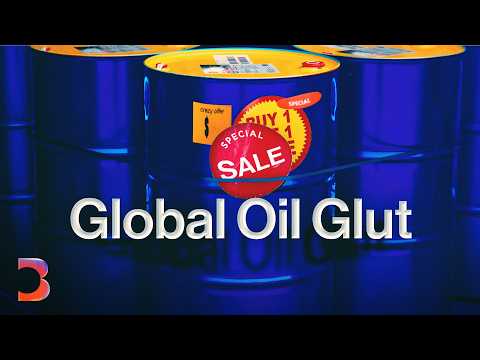
opec 30秒了解
- OPEC is an international group of oil-producing countries that coordinate their production levels to influence global oil prices and ensure market stability.
- Founded in 1960, the organization currently consists of 12-13 member nations from the Middle East, Africa, and South America, with headquarters in Vienna.
- The organization is a major player in global geopolitics and economics, as its decisions directly impact the cost of energy and transportation worldwide.
- In recent years, the group has expanded its cooperation to include non-member countries like Russia, forming a larger alliance known as OPEC+.
The term OPEC is an acronym that stands for the Organization of the Petroleum Exporting Countries. It is a permanent, intergovernmental organization created at the Baghdad Conference in September 1960. Originally founded by Iran, Iraq, Kuwait, Saudi Arabia, and Venezuela, it has since expanded to include several other nations, primarily from Africa and the Middle East. The fundamental mission of OPEC is to coordinate and unify the petroleum policies of its member countries. This coordination is designed to ensure the stabilization of oil markets, providing an efficient, economic, and regular supply of petroleum to consumers, a steady income to producers, and a fair return on capital for those investing in the petroleum industry. In the modern world, OPEC is often discussed in the context of global economics, geopolitics, and the fluctuating price of gasoline at the pump.
- Economic Influence
- OPEC members collectively own a significant portion of the world's proven oil reserves. Because they control such a large share of production, their decisions to increase or decrease oil output directly affect the global price of crude oil. When OPEC decides to cut production, the supply of oil decreases, which typically causes prices to rise globally. Conversely, when they increase production, prices often fall.
Financial analysts are closely watching the upcoming OPEC meeting to see if the member nations will agree on a production hike to lower global energy costs.
People use the term OPEC most frequently when discussing international news, business reports, or political science. It is a staple of financial journalism. If you hear a news anchor mention that 'oil prices jumped today,' the very next sentence often involves an action taken by OPEC. The organization acts as a collective voice for its members, allowing them to negotiate from a position of strength that they would not have individually. This collective bargaining power is why OPEC is sometimes referred to as a 'cartel,' although the organization itself prefers the term 'intergovernmental organization.' The distinction is important: while a cartel often implies a group acting to restrict competition for profit, OPEC describes its role as one of market stabilization and ensuring the long-term viability of the oil industry.
- Geopolitical Significance
- Beyond just economics, OPEC is a major player in global politics. The relationships between OPEC members and major oil consumers, like the United States, China, and the European Union, define much of the world's foreign policy. Decisions made in the OPEC headquarters in Vienna, Austria, can influence elections, spark diplomatic tensions, or lead to international cooperation agreements.
The 1973 oil embargo demonstrated the immense power that OPEC could wield over the global economy when its members acted in unison.
In everyday conversation, you might hear someone blame OPEC for high gas prices. While this is a simplification—since taxes, refining costs, and local demand also play huge roles—it reflects the public's awareness of the organization's influence. Historically, OPEC's power has fluctuated. In the 1970s, it was seen as an almost unstoppable force. In the 1990s and early 2000s, its influence seemed to wane as new oil sources like shale oil in the United States emerged. However, the formation of OPEC+ has revitalized its relevance in the 21st century. Understanding OPEC is essential for anyone interested in how the global economy functions, as energy is the lifeblood of modern industry and transportation.
- Membership and Structure
- Membership is open to any country that is a substantial exporter of oil and shares the ideals of the organization. The structure includes the Conference (the supreme authority), the Board of Governors, and the Secretariat. The Secretariat, located in Vienna, carries out the executive functions of the organization under the direction of the Board of Governors and the Secretary-General.
Despite internal disagreements, OPEC has managed to remain a cohesive unit for over sixty years, navigating numerous global crises.
Environmental groups often criticize OPEC for its role in promoting fossil fuel consumption over renewable energy alternatives.
The Secretary-General of OPEC often acts as a mediator when member states have conflicting views on production quotas.
Using the word OPEC correctly involves understanding its role as a proper noun representing a collective entity. Because it is an organization, it is usually treated as a singular noun in American English ('OPEC has decided...') but can sometimes be treated as a plural noun in British English ('OPEC have decided...') when referring to the individual member nations acting together. Most commonly, it appears in sentences related to economics, international relations, and energy policy. It is often preceded by 'the' when used as an adjective (e.g., 'the OPEC meeting') but often stands alone when used as the subject of a sentence (e.g., 'OPEC announced a cut').
- As a Subject
- When OPEC is the subject, it is performing an action, such as setting a quota or making a statement. Example: 'OPEC maintains that its primary goal is market stability, not just high prices.'
OPEC voted to extend the current production limits through the end of the fiscal year.
In more complex sentences, you might see OPEC used to describe a specific era or a specific type of economic policy. For instance, historians might refer to 'the OPEC-induced inflation of the 1970s.' In this case, 'OPEC-induced' acts as a compound adjective. You will also frequently see it paired with words like 'nations,' 'members,' 'ministers,' or 'quotas.' These pairings help specify which part of the organization or its actions are being discussed. For example, 'OPEC ministers' refers to the specific individuals who attend the meetings, while 'OPEC quotas' refers to the specific production limits set for each country.
- In Comparative Contexts
- OPEC is often compared to other energy organizations or economic blocs. Example: 'While the IEA represents the interests of oil-consuming nations, OPEC represents the interests of the producers.'
The relationship between OPEC and non-OPEC producers has become increasingly collaborative in recent years.
Another common usage is in the possessive form, 'OPEC's.' This is used to describe things that belong to or are characteristic of the organization. 'OPEC's influence on the market' or 'OPEC's headquarters.' Note that because OPEC ends in a 'C' sound, the possessive is formed by adding an apostrophe and an 's'. In academic writing, you might see it used in the context of 'OPEC's market share,' which refers to the percentage of the world's total oil production that comes from member countries. This is a key metric for determining how much power the organization has at any given time.
- In News Headlines
- Headlines often use OPEC as a shorthand for the entire global oil market's supply side. Example: 'OPEC Shrugs Off Demand Concerns, Keeps Output Steady.'
Investors are hesitant to make big moves until they hear the official statement from OPEC.
Many developing nations rely on OPEC to maintain a price floor that keeps their economies solvent.
The internal politics of OPEC are often as complicated as the global market itself.
The word OPEC is most commonly heard in environments where global news and economics are the primary focus. If you turn on a news channel like CNN, BBC, or Al Jazeera, especially during the business segment, you are likely to hear it mentioned several times a week. It is a central topic whenever there is a significant change in the price of gasoline or heating oil. In these contexts, the word is used to explain the 'why' behind price fluctuations. For example, a reporter might say, 'Gas prices are expected to rise this summer following OPEC's decision to tighten supply.' This usage links the high-level decisions of international ministers directly to the daily lives of consumers.
- Financial Markets
- On trading floors and in investment banks, OPEC is a constant subject of analysis. Traders in the 'commodities' market watch OPEC like hawks. Any rumor of an emergency OPEC meeting can cause the price of oil futures to swing wildly in minutes. In this high-stakes environment, 'OPEC' isn't just a word; it's a market signal.
'We are seeing a lot of volatility today as the market digests the latest comments from the OPEC president,' said the market analyst on CNBC.
You will also hear OPEC mentioned in political debates and speeches, particularly those concerning energy independence or climate change. Politicians in oil-consuming nations often use OPEC as a rhetorical device. They might argue for more domestic drilling to 'reduce our dependence on OPEC oil,' or they might criticize OPEC for keeping prices too high. Conversely, in member nations, OPEC is often discussed with a sense of national pride and strategic importance, as it represents their primary source of national wealth and their main leverage on the world stage. In these countries, the OPEC logo and its activities are frequently featured in local media as a sign of the nation's global influence.
- Academic and Educational Settings
- In university classrooms—specifically in courses on economics, international relations, or modern history—OPEC is a case study in collective action and market control. Students learn about the 'OPEC shocks' of the 1970s and how they changed the global economic landscape forever. It is used to illustrate concepts like oligopolies and the challenges of maintaining cooperation among sovereign states.
The professor explained how OPEC's strategy has shifted from price-fixing to market-sharing in the face of increased competition.
Finally, you might hear OPEC in documentaries or podcasts about history and the environment. Because oil is so central to the story of the 20th and 21st centuries, OPEC appears as a major character in the narrative of industrialization, the Cold War, and the current transition to green energy. Whether it's a podcast about the history of the Middle East or a documentary about the future of electric vehicles, OPEC is the entity that represents the 'old guard' of the energy world. Even in casual settings, like a conversation at a gas station, someone might grumble about 'OPEC raising prices again,' showing how the word has permeated the general public's consciousness as the face of the global oil industry.
The documentary highlighted how OPEC's founding changed the balance of power between Western oil companies and producing nations.
During the climate summit, several leaders called for OPEC to invest more of its profits into carbon capture technology.
Radio talk shows often feature callers debating whether OPEC still has the power it once did in the 1970s.
One of the most frequent mistakes people make with OPEC is assuming it includes all oil-producing countries. This is incorrect. Major oil producers like the United States, Canada, Norway, and Brazil are not members of OPEC. Another common error is thinking that all OPEC members are in the Middle East. While many are, the organization also includes South American (Venezuela) and African (Nigeria, Angola, Congo, etc.) nations. Understanding the specific membership is crucial for accurate economic and political analysis. If you say 'OPEC is increasing production' when you actually mean 'The US is increasing production,' you are describing two very different market dynamics.
- Misunderstanding 'OPEC+'
- A modern mistake is using 'OPEC' and 'OPEC+' interchangeably. OPEC+ is a larger group that includes Russia and other allies. While they often work together, they are distinct entities with different internal rules. Using the wrong term can lead to confusion about who is actually making the decisions.
Incorrect: 'The United States, as a member of OPEC, agreed to the new price floor.' (The US is not a member).
Grammatically, a common mistake is treating OPEC as a person or a single country. It is an organization made up of sovereign states. While we often personify it for brevity ('OPEC wants higher prices'), it is more accurate to remember that it is a forum for negotiation. Decisions are rarely unanimous without significant internal debate. Another mistake is the pronunciation. As mentioned before, it should be pronounced as a word ('oh-pek'), not as individual letters. Pronouncing it 'O-P-E-C' can make a speaker sound less familiar with the subject matter in professional or academic circles.
- Capitalization and Punctuation
- Because it is an acronym, it must always be fully capitalized. Writing 'Opec' or 'opec' is technically incorrect in standard English. Additionally, some people mistakenly put periods between the letters (O.P.E.C.). While this was common in the past for acronyms, modern style guides almost universally prefer 'OPEC' without periods.
Incorrect: 'The opec ministers met in Vienna.' (Should be capitalized: OPEC).
Finally, people often mistake OPEC's purpose. It is not solely to make oil as expensive as possible. If oil is too expensive, it can crash the global economy, which ultimately reduces demand for oil and hurts the producers. OPEC's goal is 'market stabilization.' This means they sometimes increase production to lower prices if they feel the market is becoming too volatile or if high prices are encouraging too much competition from alternative energy sources. Thinking of OPEC as only a 'price-hiker' ignores the complex economic balancing act they perform.
Incorrect: 'OPEC's only goal is to make gas unaffordable for drivers.' (This ignores their stated goal of market stability).
Incorrect: 'Russia is the most powerful member of OPEC.' (Russia is part of OPEC+, but not a member of OPEC itself).
Incorrect: 'The O.P.E.C. report was released today.' (Periods are unnecessary and outdated).
While OPEC is a unique entity, there are several words and phrases used to describe similar groups or concepts. Understanding these alternatives helps provide context and precision in your writing. The most common synonym used by critics and economists is 'cartel.' A cartel is a group of independent producers who cooperate to control prices or exclude competition. While OPEC officially rejects this label, it is the most frequent term used in economic textbooks to describe the organization's structure. Another related term is 'intergovernmental organization' (IGO), which is the formal category OPEC belongs to, along with the United Nations or the World Trade Organization.
- OPEC vs. IEA
- The International Energy Agency (IEA) is often mentioned alongside OPEC. However, they are opposites. While OPEC represents oil producers, the IEA was founded by oil-consuming nations (like the US and Japan) to coordinate their response to supply disruptions. They are two sides of the same coin.
The cartel's influence has been challenged by the rise of renewable energy.
In a broader sense, you might hear the term 'energy bloc' or 'producer alliance.' These are more neutral terms that can refer to OPEC or any other group of countries that collaborate on energy policy. For example, 'The OPEC+ alliance' is a specific type of producer alliance. Another alternative is 'commodity group.' This is a more general economic term for any organization that manages the supply of a raw material, such as the International Coffee Organization or the International Rubber Study Group. However, none of these groups have the same level of global economic impact as OPEC.
- OPEC vs. OPEC+
- It is vital to distinguish between the two. OPEC is the core 12 or 13 members. OPEC+ is the expanded group including Russia, Kazakhstan, and Mexico. If a news story mentions Russia's role in oil prices, you should use 'OPEC+' rather than just 'OPEC.'
The intergovernmental organization released its annual world oil outlook yesterday.
When discussing the individual members, you might use the term 'petrostates.' A petrostate is a country whose economy is heavily dependent on the export of oil and natural gas. Most OPEC members are classic examples of petrostates. Using this term shifts the focus from the organization as a whole to the economic structure of the individual countries. Similarly, 'oil-producing nations' is a broad category that includes both OPEC members and non-members. If you want to be very general, this is the safest term to use. However, if you are specifically referring to the coordinated actions of the group, 'OPEC' remains the most accurate and widely recognized term.
- Summary of Alternatives
-
- Cartel: Used to emphasize market control (often negative).
- OPEC+: Used when including Russia and other non-member allies.
- Petrostates: Used to describe the type of countries in the group.
- IEA: The consumer-side counterpart to OPEC.
Many petrostates are trying to diversify their economies to reduce their reliance on oil revenue.
The producer alliance remains the most powerful force in global energy markets.
Economists often debate whether OPEC behaves more like a true cartel or a loose association of states.
How Formal Is It?
趣味小知识
OPEC was originally headquartered in Geneva, Switzerland, but moved to Vienna, Austria, in 1965 because Austria offered better diplomatic status and facilities.
发音指南
- Pronouncing it as individual letters: O-P-E-C.
- Putting the stress on the second syllable: oh-PEK.
- Pronouncing the 'C' as an 'S' sound.
- Adding an extra vowel sound between the 'P' and 'E'.
- Mumbling the 'O' so it sounds like 'Uh-pek'.
难度评级
Easy to recognize, but requires context to understand the economic implications.
Simple to spell, but must always be capitalized.
Pronunciation is counter-intuitive (it's a word, not letters).
Common in news broadcasts; easy to hear once you know the sound.
接下来学什么
前置知识
接下来学习
高级
需要掌握的语法
Acronyms as Proper Nouns
OPEC (not opec) is meeting today.
Collective Nouns (Singular vs Plural)
OPEC has (US) / OPEC have (UK) decided.
Possessive of Acronyms
OPEC's headquarters are in Vienna.
Using 'The' with Organizations
The OPEC report (adjective) vs OPEC said (subject).
Compound Adjectives with Hyphens
An OPEC-led initiative.
按水平分级的例句
OPEC is a group of countries.
OPEC est un groupe de pays.
OPEC is a proper noun.
OPEC sells oil.
OPEC vend du pétrole.
Simple present tense.
The price of oil is high because of OPEC.
Le prix du pétrole est élevé à cause de l'OPEC.
Using 'because of' to show cause.
Saudi Arabia is in OPEC.
L'Arabie Saoudite est dans l'OPEC.
Preposition 'in' for membership.
OPEC meets in Vienna.
L'OPEC se réunit à Vienne.
Vienna is the headquarters.
I saw OPEC on the news.
J'ai vu l'OPEC aux informations.
Past tense of 'see'.
OPEC helps its members.
L'OPEC aide ses membres.
Possessive adjective 'its'.
Is OPEC a big group?
L'OPEC est-il un grand groupe ?
Simple question form.
OPEC decided to produce less oil this month.
L'OPEC a décidé de produire moins de pétrole ce mois-ci.
Infinitive 'to produce' after 'decided'.
Many countries in OPEC are in Africa.
De nombreux pays de l'OPEC se trouvent en Afrique.
Quantifier 'many'.
The OPEC meeting will start tomorrow.
La réunion de l'OPEC commencera demain.
Future tense with 'will'.
OPEC wants to keep the price of oil stable.
L'OPEC veut maintenir le prix du pétrole stable.
Verb 'want' followed by 'to' + verb.
The US is not a member of OPEC.
Les États-Unis ne sont pas membres de l'OPEC.
Negative sentence with 'is not'.
OPEC was founded in 1960.
L'OPEC a été fondée en 1960.
Passive voice 'was founded'.
Gas prices often change after an OPEC announcement.
Les prix de l'essence changent souvent après une annonce de l'OPEC.
Adverb of frequency 'often'.
Who is the leader of OPEC?
Qui est le chef de l'OPEC ?
Interrogative 'who'.
OPEC plays a major role in the global economy.
L'OPEC joue un rôle majeur dans l'économie mondiale.
Collocation 'play a role'.
The organization aims to coordinate petroleum policies.
L'organisation vise à coordonner les politiques pétrolières.
Verb 'aim' followed by 'to' + infinitive.
If OPEC cuts production, prices will likely rise.
Si l'OPEC réduit sa production, les prix augmenteront probablement.
First conditional sentence.
OPEC's headquarters are located in Vienna, Austria.
Le siège de l'OPEC est situé à Vienne, en Autriche.
Possessive 'OPEC's'.
Some economists describe OPEC as a powerful cartel.
Certains économistes décrivent l'OPEC comme un cartel puissant.
Verb 'describe... as'.
Member countries must agree on production quotas.
Les pays membres doivent se mettre d'accord sur des quotas de production.
Modal verb 'must' for obligation.
OPEC has faced many challenges since its creation.
L'OPEC a été confrontée à de nombreux défis depuis sa création.
Present perfect tense.
The news report focused on the latest OPEC decision.
Le reportage s'est concentré sur la dernière décision de l'OPEC.
Phrasal verb 'focus on'.
OPEC's influence on the market has fluctuated over the decades.
L'influence de l'OPEC sur le marché a fluctué au fil des décennies.
Present perfect for a period of time.
The formation of OPEC+ has significantly altered the energy landscape.
La formation de l'OPEC+ a considérablement modifié le paysage énergétique.
Adverb 'significantly' modifying a verb.
Analysts are debating whether OPEC can still control oil prices effectively.
Les analystes débattent de la question de savoir si l'OPEC peut encore contrôler efficacement les prix du pétrole.
Indirect question with 'whether'.
Despite internal tensions, the group remains a cohesive unit.
Malgré les tensions internes, le groupe reste une unité cohérente.
Preposition 'despite' showing contrast.
OPEC's primary objective is to ensure a steady income for producers.
L'objectif principal de l'OPEC est d'assurer un revenu régulier aux producteurs.
Noun 'objective' followed by 'is to'.
The 1973 oil embargo was a turning point for OPEC's global standing.
L'embargo pétrolier de 1973 a été un tournant pour la position mondiale de l'OPEC.
Compound noun 'turning point'.
OPEC must balance the needs of its diverse member nations.
L'OPEC doit équilibrer les besoins de ses divers pays membres.
Verb 'balance' used metaphorically.
The secretary-general represents OPEC in international forums.
Le secrétaire général représente l'OPEC dans les forums internationaux.
Present simple for a general truth/role.
OPEC's market share has been challenged by the surge in US shale production.
La part de marché de l'OPEC a été remise en question par l'essor de la production de schiste aux États-Unis.
Passive present perfect 'has been challenged'.
The organization navigates a complex web of geopolitical interests.
L'organisation navigue dans un réseau complexe d'intérêts géopolitiques.
Metaphorical use of 'navigates' and 'web'.
OPEC's ability to act as a 'swing producer' is vital for market stability.
La capacité de l'OPEC à agir en tant que 'producteur d'appoint' est vitale pour la stabilité du marché.
Technical term 'swing producer' in quotes.
There is a persistent tension between OPEC's economic goals and environmental concerns.
Il existe une tension persistante entre les objectifs économiques de l'OPEC et les préoccupations environnementales.
Adjective 'persistent' modifying 'tension'.
OPEC's long-term strategy involves diversifying the economies of its petrostates.
La stratégie à long terme de l'OPEC consiste à diversifier les économies de ses pétro-États.
Gerund 'diversifying' as a complement.
The group's decisions are often preceded by intense diplomatic maneuvering.
Les décisions du groupe sont souvent précédées d'intenses manœuvres diplomatiques.
Passive voice with 'often preceded by'.
OPEC's role in the global financial system is inextricably linked to the US dollar.
Le rôle de l'OPEC dans le système financier mondial est inextricablement lié au dollar américain.
Adverb 'inextricably' modifying 'linked'.
The volatility of oil prices often stems from uncertainty regarding OPEC's next move.
La volatilité des prix du pétrole découle souvent de l'incertitude concernant la prochaine action de l'OPEC.
Phrasal verb 'stem from'.
OPEC's institutional resilience is a testament to the shared economic interests of its members.
La résilience institutionnelle de l'OPEC témoigne des intérêts économiques partagés de ses membres.
Abstract noun 'resilience' as subject.
The organization must reconcile the divergent fiscal requirements of its diverse membership.
L'organisation doit concilier les exigences budgétaires divergentes de ses divers membres.
Verb 'reconcile' with complex objects.
OPEC's hegemony in the energy sector is being undermined by the global shift toward decarbonization.
L'hégémonie de l'OPEC dans le secteur de l'énergie est sapée par le virage mondial vers la décarbonation.
Passive continuous 'is being undermined'.
The intricacies of OPEC's production-sharing agreements are often opaque to outside observers.
Les subtilités des accords de partage de production de l'OPEC sont souvent opaques pour les observateurs extérieurs.
Adjective 'opaque' used metaphorically.
OPEC+ serves as a pragmatic alignment of interests between traditional rivals.
L'OPEC+ sert d'alignement pragmatique d'intérêts entre des rivaux traditionnels.
Noun phrase 'pragmatic alignment of interests'.
The historical narrative of OPEC is one of post-colonial empowerment and economic sovereignty.
Le récit historique de l'OPEC est celui de l'autonomisation postcoloniale et de la souveraineté économique.
Abstract nouns 'empowerment' and 'sovereignty'.
OPEC's periodic interventions are designed to mitigate the boom-and-bust cycles of the oil market.
Les interventions périodiques de l'OPEC sont conçues pour atténuer les cycles d'expansion et de récession du marché pétrolier.
Compound adjective 'boom-and-bust'.
The existential threat posed by climate change is forcing a fundamental reappraisal of OPEC's mission.
La menace existentielle posée par le changement climatique force une réévaluation fondamentale de la mission de l'OPEC.
Participle phrase 'posed by climate change'.
常见搭配
常用短语
— Refers to the official outcome of an OPEC meeting regarding oil production.
The world is waiting for OPEC's decision on supply levels.
— Describes an action or policy initiated and guided by the organization.
The OPEC-led cuts helped stabilize the market during the crisis.
— Refers to countries or oil production that are not part of the organization.
Non-OPEC production has increased significantly in North America.
— The amount of oil OPEC could produce quickly but chooses not to.
The market is worried about the lack of OPEC spare capacity.
— The percentage of the total global oil market controlled by OPEC.
OPEC's share of the market has fallen below 40 percent.
— The stated goals and principles of the organization.
Market stability remains at the heart of OPEC's mission.
— The standard price used by OPEC to measure the value of its oil.
The OPEC benchmark is used to price many international contracts.
— The official position or attitude of the organization on a specific issue.
OPEC's stance on climate change has evolved over the years.
— The degree to which member countries follow the agreed-upon production limits.
OPEC compliance was higher than expected last quarter.
— The total amount of money earned by member countries from oil exports.
OPEC's revenue is vital for the budgets of its member states.
容易混淆的词
The IEA represents oil consumers, while OPEC represents oil producers.
OECD is a group of developed nations; OPEC is specifically for oil exporters.
APEC is for Asia-Pacific economic cooperation; OPEC is for petroleum.
习语与表达
— Refers to the organization's strong control or influence over oil prices.
New technologies are loosening OPEC's grip on the market.
Journalistic— Specifically refers to the sudden and massive oil price increases of the 1970s.
The OPEC shock led to a period of global stagflation.
Historical/Economic— To be forced to follow the rules or prices set by the organization.
For years, the world had to dance to OPEC's tune regarding energy costs.
Informal— A member country or factor that could unexpectedly change the group's direction.
The political situation in Libya remains OPEC's wild card.
Journalistic— The protection or collective strength provided by being a member of the group.
Smaller producers feel safer under the OPEC umbrella.
Metaphorical— When a member country refuses to follow the group's collective decision.
There are rumors that one nation might break ranks with OPEC and increase output.
Formal— The minimum price level that OPEC tries to maintain for oil.
The organization is working hard to defend OPEC's floor of $70 per barrel.
Economic— The maximum price level OPEC tries to keep oil under to avoid hurting demand.
If prices hit the OPEC ceiling, they may release more supply.
Economic— Something that causes constant trouble or annoyance for the organization.
The rise of electric vehicles is a growing thorn in OPEC's side.
Informal— The standard set of strategies or actions the organization uses.
Cutting production during a surplus is a classic move from the OPEC playbook.
Informal容易混淆
OPEC is often called a cartel because it controls supply.
A cartel is a general economic term, while OPEC is a specific organization. OPEC members argue they are an intergovernmental body, not a private cartel.
While some call it a cartel, OPEC sees itself as a market stabilizer.
OPEC is the core 13 members; OPEC+ includes 10 additional non-member countries like Russia.
The OPEC+ group agreed to even deeper cuts than the original OPEC members.
OPEC is the organization; a petrostate is a type of country (which may or may not be in OPEC).
Norway is a petrostate, but it is not a member of OPEC.
OPEC is the group; a quota is the specific limit they set for production.
OPEC set a new quota for each of its members.
OPEC is the group; Brent Crude is a specific type/benchmark of oil used for pricing.
OPEC's decisions often cause the price of Brent Crude to rise.
句型
OPEC is [adjective].
OPEC is big.
OPEC [verb] oil.
OPEC sells oil.
OPEC decided to [verb].
OPEC decided to cut production.
According to [noun], OPEC will [verb].
According to analysts, OPEC will raise prices.
The impact of OPEC's [noun] on [noun] is [adjective].
The impact of OPEC's decision on global inflation is significant.
Despite [noun], OPEC remains [adjective].
Despite internal conflict, OPEC remains influential.
OPEC's role in [gerund] is [adjective] by [noun].
OPEC's role in stabilizing the market is undermined by shale oil.
The [noun] of OPEC is [verb]ed by [noun].
The hegemony of OPEC is challenged by green energy.
词族
名词
形容词
相关
如何使用
Highly frequent in business and political discourse.
-
Saying 'The OPEC'
→
OPEC
In most cases, you don't need 'the' before OPEC when it's the subject of a sentence. Just say 'OPEC announced...' rather than 'The OPEC announced...'.
-
Thinking Russia is in OPEC
→
Russia is in OPEC+
Russia is a key ally but not a formal member of the original OPEC organization. Confusing the two can be a major error in political discussions.
-
Pronouncing it O-P-E-C
→
OH-pek
Acronyms that can be pronounced as words usually are. Saying the letters individually sounds unnatural to native speakers.
-
Writing 'Opec'
→
OPEC
Proper acronyms should remain in all caps. Lowercase or mixed case is incorrect for this organization.
-
Assuming all members are Arab
→
OPEC includes African and South American nations
While many members are in the Middle East, countries like Nigeria and Venezuela are also key members. Don't assume it's an 'Arab-only' group.
小贴士
Always Capitalize
Since OPEC is an acronym, always use uppercase letters. Writing 'opec' is considered a spelling error in formal English.
Global Impact
When you hear OPEC mentioned, think about how it might affect the price of things you buy, like gas or groceries (due to shipping costs).
OPEC vs OPEC+
Use 'OPEC+' if you are talking about the recent cooperation between Saudi Arabia and Russia. It shows you have a deeper understanding of current events.
Say it as a word
Pronouncing it 'OH-pek' immediately makes you sound more fluent and professional than saying 'O-P-E-C'.
Vienna is the Key
If a news story mentions a 'meeting in Vienna' regarding oil, you can bet it's an OPEC meeting.
Supply and Demand
Remember the basic rule: If OPEC cuts supply, prices usually go up. If they increase supply, prices usually go down.
1960 is the Start
Knowing that OPEC was founded in 1960 helps you understand its role in the post-colonial history of the 20th century.
Learn 'Quota'
The word 'quota' is almost always used with OPEC. It means the specific amount of oil a country is allowed to produce.
Watch Business News
To see OPEC in action, watch the business section of any major news channel for 15 minutes; it's very likely to come up.
Possessive Form
Use 'OPEC's' (with an apostrophe and s) to show ownership, such as 'OPEC's decision' or 'OPEC's headquarters'.
记住它
记忆技巧
Only People Eat Cake? No! Oil Producers Export Crude. (O-P-E-C)
视觉联想
Imagine a giant oil barrel with a world map wrapped around it, and a group of leaders sitting on top of it holding a steering wheel.
Word Web
挑战
Try to find one news article today that mentions OPEC and explain to a friend how the decision in that article might affect their wallet.
词源
The term is an acronym created in 1960. It was coined during the Baghdad Conference where the organization was founded. The name was chosen to clearly state the group's identity as an organization of countries that export petroleum.
原始含义: Organization of the Petroleum Exporting Countries.
English (Acronym)文化背景
Be careful when using the word 'cartel.' While economically accurate, it can be seen as offensive or biased by representatives of OPEC member nations.
In the US and UK, OPEC is often discussed with a mix of respect for its power and frustration over its impact on fuel prices.
在生活中练习
真实语境
Financial News
- OPEC output
- Market volatility
- Production targets
- Crude oil futures
Political Science
- Intergovernmental organization
- Sovereign states
- Geopolitical leverage
- Diplomatic negotiations
Environmental Discussion
- Fossil fuel reliance
- Carbon footprint
- Energy transition
- Sustainable development
History Class
- 1973 embargo
- Post-colonial era
- Economic independence
- Global trade history
Everyday Conversation
- Gas prices
- Cost of living
- Heating bills
- Oil news
对话开场白
"Have you noticed how OPEC's decisions always seem to change the price of gas overnight?"
"Do you think OPEC still has as much power as it did back in the 1970s?"
"What do you think would happen to the global economy if OPEC didn't exist?"
"How do you feel about the relationship between OPEC and non-member countries like Russia?"
"Do you think OPEC will be able to survive the world's shift toward electric cars?"
日记主题
Reflect on how the decisions of a group like OPEC, which meets thousands of miles away, affect your personal monthly budget.
Write an essay arguing whether OPEC should be considered a force for global stability or a selfish economic cartel.
Imagine you are a minister from an OPEC country. Write a speech explaining why your nation needs to keep oil prices at a certain level.
How has your understanding of the word 'OPEC' changed after learning about its history and global influence?
Discuss the ethical implications of a small group of countries controlling a resource that the entire world depends on.
常见问题
10 个问题OPEC stands for the Organization of the Petroleum Exporting Countries. It was founded in 1960 to coordinate the oil policies of its members. The name reflects its mission to represent nations that sell oil to the global market.
No, the United States is not a member of OPEC. In fact, the US is often a competitor to OPEC. The US produces a large amount of its own oil, particularly through shale drilling, which can sometimes work against OPEC's goals.
OPEC doesn't directly 'set' the price at the pump, but they control the supply of crude oil. By increasing or decreasing how much oil they produce, they influence the global market price based on the laws of supply and demand.
OPEC's headquarters, known as the Secretariat, is located in Vienna, Austria. Even though Austria is not an oil-producing country or a member of OPEC, it serves as a neutral ground for the organization's international meetings.
The five founding members are Iran, Iraq, Kuwait, Saudi Arabia, and Venezuela. They met in Baghdad in 1960 to form the group in response to the dominance of Western oil companies.
OPEC+ is an informal alliance between the 13 OPEC members and 10 other oil-producing nations, most notably Russia. This larger group was formed in 2016 to have even more control over global oil supply.
As of recent years, there are typically 12 or 13 member countries. The number can change occasionally as countries like Qatar or Angola have left the organization, while others have joined.
No, OPEC members control about 40% of the world's oil production and about 80% of the world's proven oil reserves. While they are the most powerful group, they do not have total control.
This is a matter of perspective. Consumers in Western countries often see it as 'bad' when it raises prices. However, member nations see it as 'good' because it protects their main source of income and provides market stability.
It is pronounced as a single word: 'OH-pek'. You should not say the letters individually like 'O-P-E-C'. It rhymes with words like 'check' or 'deck'.
自我测试 200 个问题
Explain in your own words what OPEC does.
Well written! Good try! Check the sample answer below.
Describe how an OPEC production cut might affect your daily life.
Well written! Good try! Check the sample answer below.
Write a short paragraph about the history of OPEC's founding.
Well written! Good try! Check the sample answer below.
Compare and contrast OPEC and OPEC+.
Well written! Good try! Check the sample answer below.
Discuss the challenges OPEC faces in a world moving toward green energy.
Well written! Good try! Check the sample answer below.
Analyze the relationship between OPEC and the United States.
Well written! Good try! Check the sample answer below.
Explain the concept of 'market stabilization' as used by OPEC.
Well written! Good try! Check the sample answer below.
Write a news headline and a short lead about a fictional OPEC meeting.
Well written! Good try! Check the sample answer below.
Describe the role of the OPEC Secretary-General.
Well written! Good try! Check the sample answer below.
Argue for or against the label of 'cartel' for OPEC.
Well written! Good try! Check the sample answer below.
How does OPEC influence global geopolitics? Give one example.
Well written! Good try! Check the sample answer below.
Write a letter to an OPEC minister expressing concern about oil prices.
Well written! Good try! Check the sample answer below.
Summarize the impact of the 1973 oil embargo.
Well written! Good try! Check the sample answer below.
Explain why some countries choose to leave OPEC.
Well written! Good try! Check the sample answer below.
Describe the significance of Vienna to the organization.
Well written! Good try! Check the sample answer below.
How does shale oil production in the US affect OPEC's strategy?
Well written! Good try! Check the sample answer below.
What is the 'OPEC Basket' and why is it important?
Well written! Good try! Check the sample answer below.
Discuss the internal tensions that can occur within OPEC.
Well written! Good try! Check the sample answer below.
Write a summary of OPEC's mission statement.
Well written! Good try! Check the sample answer below.
Predict the future of OPEC over the next 50 years.
Well written! Good try! Check the sample answer below.
Pronounce 'OPEC' and use it in a sentence about gas prices.
Read this aloud:
你说的:
Speech recognition is not supported in your browser. Try Chrome or Edge.
Explain to a partner why OPEC is important for the world economy.
Read this aloud:
你说的:
Speech recognition is not supported in your browser. Try Chrome or Edge.
Describe a recent news story you heard about OPEC.
Read this aloud:
你说的:
Speech recognition is not supported in your browser. Try Chrome or Edge.
Debate with a classmate: Does OPEC have too much power?
Read this aloud:
你说的:
Speech recognition is not supported in your browser. Try Chrome or Edge.
Give a 2-minute presentation on the founding of OPEC.
Read this aloud:
你说的:
Speech recognition is not supported in your browser. Try Chrome or Edge.
Roleplay: You are an OPEC spokesperson answering questions from the press.
Read this aloud:
你说的:
Speech recognition is not supported in your browser. Try Chrome or Edge.
Explain the difference between OPEC and non-OPEC producers.
Read this aloud:
你说的:
Speech recognition is not supported in your browser. Try Chrome or Edge.
Discuss how OPEC's decisions affect the environment.
Read this aloud:
你说的:
Speech recognition is not supported in your browser. Try Chrome or Edge.
Talk about the pros and cons of being an OPEC member.
Read this aloud:
你说的:
Speech recognition is not supported in your browser. Try Chrome or Edge.
Explain the concept of a 'production quota' to a beginner learner.
Read this aloud:
你说的:
Speech recognition is not supported in your browser. Try Chrome or Edge.
Discuss the impact of the OPEC+ alliance on global oil markets.
Read this aloud:
你说的:
Speech recognition is not supported in your browser. Try Chrome or Edge.
How would you explain OPEC to a child?
Read this aloud:
你说的:
Speech recognition is not supported in your browser. Try Chrome or Edge.
Describe the city of Vienna's role in OPEC activities.
Read this aloud:
你说的:
Speech recognition is not supported in your browser. Try Chrome or Edge.
Discuss the historical context of the 1960 Baghdad Conference.
Read this aloud:
你说的:
Speech recognition is not supported in your browser. Try Chrome or Edge.
What are 'petrodollars' and how do they relate to OPEC?
Read this aloud:
你说的:
Speech recognition is not supported in your browser. Try Chrome or Edge.
Analyze the effect of high oil prices on developing nations.
Read this aloud:
你说的:
Speech recognition is not supported in your browser. Try Chrome or Edge.
How does OPEC handle disagreements between its members?
Read this aloud:
你说的:
Speech recognition is not supported in your browser. Try Chrome or Edge.
Discuss the future of oil-exporting countries in a post-oil world.
Read this aloud:
你说的:
Speech recognition is not supported in your browser. Try Chrome or Edge.
What is the 'OPEC Secretariat' and what does it do?
Read this aloud:
你说的:
Speech recognition is not supported in your browser. Try Chrome or Edge.
Summarize the main points of an OPEC press release.
Read this aloud:
你说的:
Speech recognition is not supported in your browser. Try Chrome or Edge.
Listen to a news clip and write down the percentage of the production cut.
Listen to a speaker pronounce 'OPEC' and repeat it correctly.
Identify the names of three countries mentioned in an OPEC report audio.
Listen to an interview with an oil analyst and summarize their view on OPEC.
Listen for the word 'quota' in a podcast about energy.
Listen to a historical recording from the 1960 Baghdad Conference.
Identify the tone of a reporter discussing high gas prices and OPEC.
Listen to a debate about OPEC+ and list the main points of each side.
Listen for the mention of 'Vienna' and 'oil' in a radio broadcast.
Listen to a technical explanation of the 'OPEC Basket' price.
Listen to a speech by the OPEC Secretary-General and identify the main theme.
Listen to a consumer complaining about gas prices and identify the keywords.
Listen to a podcast about the future of energy and take notes on OPEC's role.
Listen to a news flash about an emergency OPEC meeting.
Listen to a documentary clip about the 1973 oil embargo.
/ 200 correct
Perfect score!
Summary
OPEC is the primary collective voice of oil-exporting nations, using production quotas as a tool to manage the global supply of oil and stabilize prices. For example, when OPEC cuts production, you will likely see an increase in gasoline prices at your local station.
- OPEC is an international group of oil-producing countries that coordinate their production levels to influence global oil prices and ensure market stability.
- Founded in 1960, the organization currently consists of 12-13 member nations from the Middle East, Africa, and South America, with headquarters in Vienna.
- The organization is a major player in global geopolitics and economics, as its decisions directly impact the cost of energy and transportation worldwide.
- In recent years, the group has expanded its cooperation to include non-member countries like Russia, forming a larger alliance known as OPEC+.
Always Capitalize
Since OPEC is an acronym, always use uppercase letters. Writing 'opec' is considered a spelling error in formal English.
Global Impact
When you hear OPEC mentioned, think about how it might affect the price of things you buy, like gas or groceries (due to shipping costs).
OPEC vs OPEC+
Use 'OPEC+' if you are talking about the recent cooperation between Saudi Arabia and Russia. It shows you have a deeper understanding of current events.
Say it as a word
Pronouncing it 'OH-pek' immediately makes you sound more fluent and professional than saying 'O-P-E-C'.