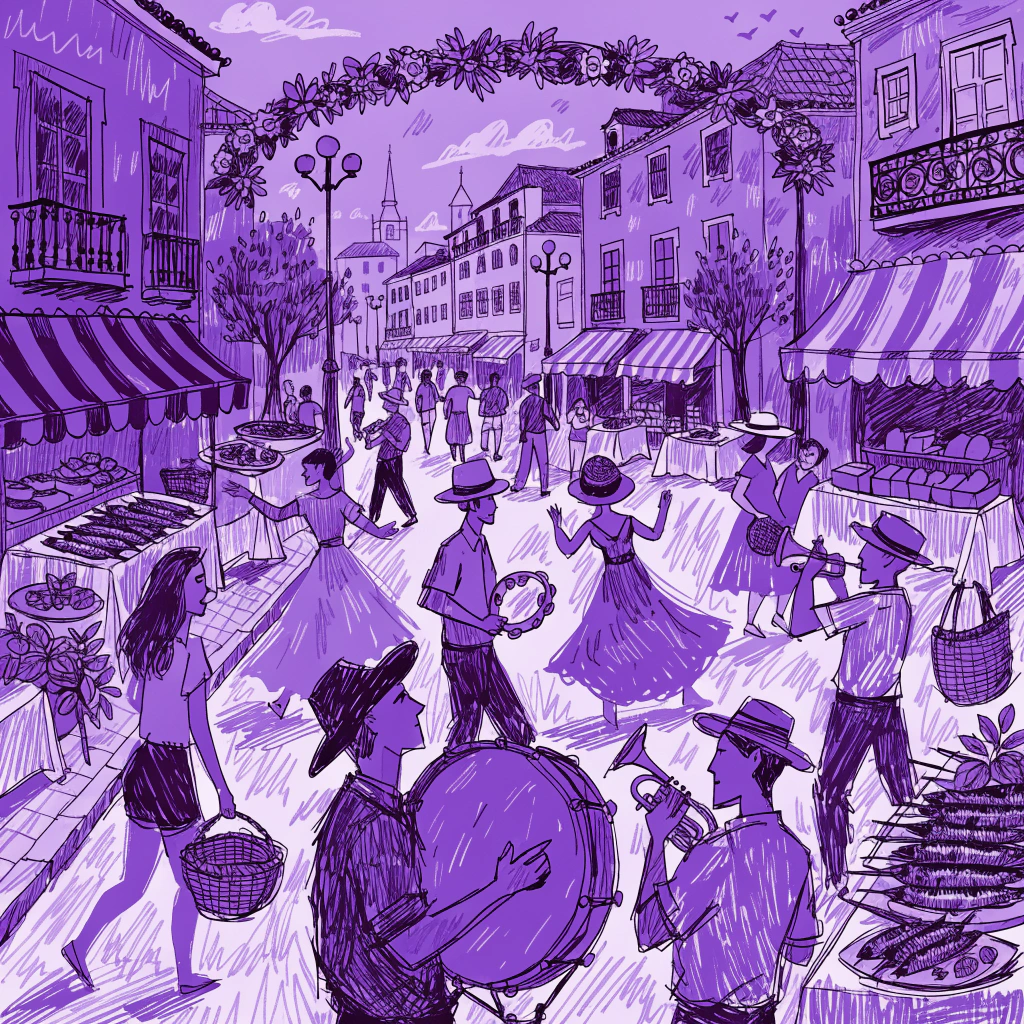
احتفال لشبونة: سانت أنطونيو
هذا شهر يونيو. في البرتغال، يوجد احتفال كبير. اسمه "سانتوس بوبولاريس". في مدينة لشبونة، هذا الاحتفال مهم جداً. الناس يحتفلون بقديس اسمه سانت أنطونيو. هو قديس لشبونة المحبوب. يوم الاحتفال الرسمي هو 13 يونيو. لكن الناس يحتفلون كثيراً في ليلة 12 يونيو. المدينة كلها تكون جميلة. البيوت فيها زينة ملونة. الناس يأكلون طعاماً لذيذاً ويسمعون موسيقى جميلة. الأحياء القديمة مثل ألفاما وموراريا تحتفل كثيراً. الكثير من الناس يذهبون إلى الشوارع. هم سعداء جداً. هذا احتفال رائع في لشبونة.
تسليط الضوء على القواعد
نمط: يوجد (There is/are)
"يوجد احتفال كبير."
نستخدم كلمة 'يوجد' لنقول 'هناك' شيء ما. هي كلمة مهمة جداً للمبتدئين للتعبير عن وجود شيء. يمكن استخدامها للمفرد والجمع.
نمط: الإضافة (Idafa / Possessive Construction)
"قديس لشبونة"
الإضافة تربط كلمتين لتبين الملكية أو العلاقة بينهما. الكلمة الأولى (المضاف) لا تأخذ 'ال'. الكلمة الثانية (المضاف إليه) تأخذ 'ال' وتصف الكلمة الأولى.
اختبر فهمك
10 أسئلة · A1 مبتدئ · معاينة مجانية واحدة
اختبر ما تعلمته من هذا المقال. أجب على جميع الأسئلة لكسب نقاط خبرة!
ما اسم القديس الذي يحتفل به الناس في لشبونة؟
هل تريد إنهاء الاختبار؟
9 أسئلة أخرى بانتظارك. سجّل مجاناً لفتح الاختبار الكامل وكسب نقاط خبرة!
سجل مجاناًلديك حساب بالفعل؟ دخول
تفصيل الأسئلة
ما اسم القديس الذي يحتفل به الناس في لشبونة؟
إجابتك:
الإجابة الصحيحة: سانت أنطونيو
الناس يحتفلون في لشبونة يوم 13 يونيو فقط.
إجابتك:
الإجابة الصحيحة: خطأ
ما معنى كلمة 'احتفال'؟
إجابتك:
الإجابة الصحيحة: عيد
المدينة كلها تكون _____. البيوت فيها زينة ملونة.
إجابتك:
الإجابة الصحيحة: جميلة
The Big Festival of Saint Anthony in Lisbon
June is a very special month in Lisbon because people celebrate Saint Anthony. He is the most popular saint in the city. People call him a matchmaker because he helps people find love. Many couples get married together on this day.
The biggest party happens on the night of June 12th. People walk to old neighborhoods like Alfama and Mouraria. These streets are more colorful than usual because there are many paper decorations and lights. It is a very happy atmosphere.
The air smells like grilled sardines. This is the traditional food of the festival. People eat sardines with bread and drink cold drinks. They also listen to 'Pimba' music and dance in the streets until the morning.
On June 13th, there is a big parade on Avenida da Liberdade. Many groups from different parts of the city dance and wear beautiful costumes. The festival is better than a normal party because the whole city celebrates together.
تسليط الضوء على القواعد
نمط: Comparatives (Adjective + er / More + Adjective)
"These streets are more colorful than usual because there are many paper decorations and lights."
We use comparatives to compare two things. For long adjectives like 'colorful', we use 'more' before the word and 'than' after it.
نمط: Connectors of Reason (Because)
"June is a very special month in Lisbon because people celebrate Saint Anthony."
We use 'because' to give a reason for something. It connects a result with its cause in one sentence.
اختبر فهمك
11 أسئلة · A2 ابتدائي · معاينة مجانية واحدة
اختبر ما تعلمته من هذا المقال. أجب على جميع الأسئلة لكسب نقاط خبرة!
When does the biggest party in Lisbon happen?
هل تريد إنهاء الاختبار؟
10 أسئلة أخرى بانتظارك. سجّل مجاناً لفتح الاختبار الكامل وكسب نقاط خبرة!
سجل مجاناًلديك حساب بالفعل؟ دخول
تفصيل الأسئلة
When does the biggest party in Lisbon happen?
إجابتك:
الإجابة الصحيحة: June 12th
Saint Anthony is known for helping people find love.
إجابتك:
الإجابة الصحيحة: صحيح
What does 'traditional' mean?
إجابتك:
الإجابة الصحيحة: Following the customs of the past
The traditional food of the festival is grilled _____.
إجابتك:
الإجابة الصحيحة: sardines
Where is the big parade located?
إجابتك:
الإجابة الصحيحة: On Avenida da Liberdade
Lisbon's Biggest Party: The Feast of Saint Anthony
June is a very special month in Portugal because of the 'Santos Populares' (Popular Saints). In Lisbon, the biggest celebration is for Saint Anthony, who is known as the city's patron saint. Although his official day is June 13th, the party has already started by the night of the 12th.
The historic neighborhoods, which are decorated with colorful paper ribbons, become very crowded. Local streets in Alfama and Mouraria have been transformed into huge outdoor parties. People eat grilled sardines and bread while listening to traditional music. The smell of sardines is everywhere, and the atmosphere is full of joy.
Saint Anthony is often called the 'matchmaker' saint. According to tradition, young people give small pots of basil to their partners to show their love. These pots usually contain a small poem. Furthermore, many couples have been married in collective weddings sponsored by the city, which are known as the 'Casamentos de Santo António'. This tradition helps couples who might not have enough money for a big wedding.
The highlight of the night is the grand parade on Avenida da Liberdade. Beautiful costumes have been designed by local groups who compete for the best performance. They dance and sing through the streets until the early morning. If you visit Lisbon in June, you will experience a tradition that has lasted for centuries. It is an unforgettable experience that combines history, religion, and fun.
تسليط الضوء على القواعد
نمط: Passive Voice
"The historic neighborhoods, which are decorated with colorful paper ribbons, become very crowded."
The passive voice (are decorated) is used here because the action of decorating is more important than who did it. It is formed using 'to be' + the past participle.
نمط: Present Perfect
"The party has already started by the night of the 12th."
The present perfect (has started) connects the past to the present. We use it here to show that the event is already in progress by a specific time.
اختبر فهمك
11 أسئلة · B1 متوسط · معاينة مجانية واحدة
اختبر ما تعلمته من هذا المقال. أجب على جميع الأسئلة لكسب نقاط خبرة!
When does the main celebration in Lisbon begin?
هل تريد إنهاء الاختبار؟
10 أسئلة أخرى بانتظارك. سجّل مجاناً لفتح الاختبار الكامل وكسب نقاط خبرة!
سجل مجاناًلديك حساب بالفعل؟ دخول
تفصيل الأسئلة
When does the main celebration in Lisbon begin?
إجابتك:
الإجابة الصحيحة: On the night of June 12th
Saint Anthony is known as the protector of animals in this text.
إجابتك:
الإجابة الصحيحة: خطأ
What does 'matchmaker' mean in the context of Saint Anthony?
إجابتك:
الإجابة الصحيحة: Someone who helps people find romantic partners
The highlight of the night is the grand _____ on Avenida da Liberdade.
إجابتك:
الإجابة الصحيحة: parade
What food is most commonly eaten during the festival?
إجابتك:
الإجابة الصحيحة: Grilled sardines
احتفالات لشبونة: سحر القديس أنطونيو وأضواء المدينة
تُعرف البرتغال في شهر يونيو/حزيران بـ 'قديسيها الشعبيين'، ولا تتجلى هذه الاحتفالات بحماس أكبر مما هي عليه في لشبونة، حيث يبلغ الاحتفال بالقديس أنطونيو ذروته. على الرغم من أن العطلة الرسمية تُصادف الثالث عشر من يونيو، إلا أن المدينة بأكملها تنفجر حيوية وصخبًا في ليلة الثاني عشر منه. يُعد القديس أنطونيو القديس الأكثر شعبية ومحبة في لشبونة، ويُعرف تقليديًا بكونه صانع الزيجات وحامي الفقراء، مما يضفي على هذه الاحتفالات بعدًا اجتماعيًا وروحانيًا عميقًا.
تتحول المدينة بأسرها، ولا سيما أحياؤها التاريخية العريقة مثل ألفاما وموراريا وغراسا، إلى لوحة فنية مبهجة مزينة بالزخارف الملونة والأكاليل الورقية والفوانيس التقليدية. تمتلئ الشوارع الضيقة بالأهازيج والموسيقى الشعبية، وتنتشر رائحة السردين المشوي المنبعثة من الشوايات في كل زاوية، مصحوبة بالخبز الطازج والنبيذ المحلي. إنها تجربة حسية فريدة تغمر الزوار والسكان على حد سواء، وتجعلهم جزءًا لا يتجزأ من هذا الكرنفال الثقافي.
لا يقتصر الأمر على الاحتفالات الصاخبة والولائم الشهية؛ بل تتضمن هذه المناسبة أيضًا استعراضات ومواكب احتفالية تُعرف بـ 'المارشاس بوبولاريس' (Marchas Populares)، حيث تتنافس الأحياء المختلفة في عروض راقصة وغنائية مبهرة، تعرض فيها أزياءها التقليدية وتصاميمها الفنية الفريدة. تُقام هذه المسيرات على طول شارع أفينيدا دا ليبرداد (Avenida da Liberdade)، وتجذب حشودًا غفيرة من المتفرجين الذين يأتون للاستمتاع بهذا المشهد البصري والصوتي الرائع.
إن الدور الاجتماعي للقديس أنطونيو كـ 'صانع الزيجات' يتجلى بشكل خاص في هذه الفترة، حيث تُقام العديد من حفلات الزفاف الجماعية في كاتدرائية لشبونة، والمعروفة باسم 'زيجات القديس أنطونيو'. تُقدم هذه الزيجات عادة للأزواج الذين قد لا يتمكنون من تحمل تكاليف حفل زفاف تقليدي، مما يعكس روح التكافل والعطاء التي يرمز إليها القديس. فضلاً عن ذلك، تُعتبر هذه الاحتفالات فرصة لتعزيز الروابط المجتمعية وتجديد التقاليد القديمة.
لذا، إذا كنت تخطط لزيارة لشبونة في شهر يونيو، يجب أن تكون مستعدًا لتجربة مدينة مفعمة بالحياة والطاقة، حيث يمتزج التاريخ بالحداثة، والروحانية بالفرح. إن احتفالات القديس أنطونيو ليست مجرد مهرجان؛ إنها تعبير حي عن هوية لشبونة وثقافتها الغنية، ودعوة مفتوحة للجميع للانغماس في سحرها الفريد.
تسليط الضوء على القواعد
نمط: الفعل المبني للمجهول (Passive Voice)
"يُعرف تقليديًا بكونه صانع الزيجات وحامي الفقراء."
يُستخدم الفعل المبني للمجهول عندما يكون الفاعل غير معروف أو غير مهم، أو عندما يكون التركيز على الفعل نفسه والمفعول به. يُصاغ بتحويل الفعل الماضي إلى ضم أوله وكسر ما قبل آخره (كُتِبَ)، والمضارع إلى ضم أوله وفتح ما قبل آخره (يُكتَبُ).
نمط: أسلوب الشرط بـ (إذا)
"إذا كنت تخطط لزيارة لشبونة في شهر يونيو، يجب أن تكون مستعدًا لتجربة مدينة مفعمة بالحياة والطاقة."
يُستخدم أسلوب الشرط للتعبير عن ارتباط حدث بحدث آخر. 'إذا' أداة شرط غير جازمة تربط بين فعل الشرط وجوابه، وتُفيد تحقق الجواب عند تحقق فعل الشرط في المستقبل أو الماضي.
نمط: لا يقتصر الأمر على... بل يتضمن/يشمل أيضًا
"لا يقتصر الأمر على الاحتفالات الصاخبة والولائم الشهية؛ بل تتضمن هذه المناسبة أيضًا استعراضات ومواكب احتفالية."
هذه العبارة تُستخدم كأداة ربط لغوية لإظهار أن الموضوع المطروح أوسع وأشمل مما قد يُعتقد للوهلة الأولى. تُفيد النفي لشيء وإثبات لشيء آخر أكثر اتساعًا، مما يعزز الفكرة المطروحة.
اختبر فهمك
11 أسئلة · B2 فوق المتوسط · معاينة مجانية واحدة
اختبر ما تعلمته من هذا المقال. أجب على جميع الأسئلة لكسب نقاط خبرة!
متى تنفجر مدينة لشبونة حيوية وصخبًا بشكل رئيسي خلال احتفالات القديس أنطونيو؟
هل تريد إنهاء الاختبار؟
10 أسئلة أخرى بانتظارك. سجّل مجاناً لفتح الاختبار الكامل وكسب نقاط خبرة!
سجل مجاناًلديك حساب بالفعل؟ دخول
تفصيل الأسئلة
متى تنفجر مدينة لشبونة حيوية وصخبًا بشكل رئيسي خلال احتفالات القديس أنطونيو؟
إجابتك:
الإجابة الصحيحة: ليلة الثاني عشر من يونيو
يُعرف القديس أنطونيو بكونه حامي الفقراء وصانع الزيجات.
إجابتك:
الإجابة الصحيحة: صحيح
ماذا تعني كلمة 'الأهازيج' في سياق المقال؟
إجابتك:
الإجابة الصحيحة: الأغاني الشعبية
تتحول المدينة بأسرها، ولا سيما أحياؤها التاريخية العريقة مثل ألفاما وموراريا وغراسا، إلى لوحة فنية _____ مزينة بالزخارف الملونة.
إجابتك:
الإجابة الصحيحة: مبهجة
ما هو الغرض الرئيسي من 'زيجات القديس أنطونيو'؟
إجابتك:
الإجابة الصحيحة: لمساعدة الأزواج غير القادرين على تحمل تكاليف الزفاف
احتفالات لشبونة: سحر سانتو أنطونيو وموروث شعبي متأصل
تغدو لشبونة، عاصمة البرتغال الساحرة، في شهر يونيو/حزيران، مسرحاً لمهرجان شعبي لا مثيل له، حيث تتجلى روح المدينة النابضة بالحياة في أبهى صورها. إن ما يميز هذا الشهر هو الاحتفاء بأعياد "القدّيسين الشعبيين" (Santos Populares)، غير أن البؤرة التي تستقطب أفئدة الجميع بلا منازع هي "فيستاس دي لشبونة" (Festas de Lisboa)، التي تبلغ ذروتها بالاحتفال بقدّيس المدينة المحبوب، سانتو أنطونيو.
ليس من قبيل المبالغة القول إن لشبونة تتحول بأكملها إلى كرنفال من الألوان والموسيقى والبهجة. ورغم أن العيد الرسمي يحل في الثالث عشر من يونيو، فإن ليلة الثاني عشر من الشهر هي التي تشهد الانفجار الحقيقي للفرح والاحتفال، حيث تتضافر جهود السكان المحليين والزوار في إحياء تقليد متجذر في عمق التاريخ البرتغالي. سانتو أنطونيو ليس مجرد قديس عادي؛ بل هو راعي لشبونة وشفيعها، ويُعرف بكونه صانع زيجات وحامي الفقراء، مما يضفي على شخصيته بعداً إنسانياً فريداً يفسر هذه الشعبية الجارفة.
ما إن تهل ليلة الثاني عشر من يونيو، حتى تتزين الأحياء التاريخية العريقة كألفاما وموراريا وغراسا بألوان زاهية، وتُعلّق آلاف الأعلام واللافتات الملونة التي تتراقص مع أنغام الموسيقى الفولكلورية الصاخبة. الشوارع، التي عادة ما تكون هادئة، تتحول إلى ممرات حيوية تضج بالناس، حيث تُقام الموائد في الهواء الطلق، وتنتشر رائحة السردين المشوي الزكية في كل زاوية، وهي وجبة لا غنى عنها في هذه المناسبة. يرافق السردين غالباً الخبز والزيتون والنبيذ المحلي، في أجواء من الألفة والاحتفال الجماعي.
يُعدّ نبات الحبق (Manjerico) أيضاً من الرموز المميزة لهذه الاحتفالات. فكم هي جميلة تلك الأواني الصغيرة المزينة بالحبق، والتي يحملها العشاق كهدية لمن يحبون، غالباً ما تكون مصحوبة بقصائد حب صغيرة مكتوبة بخط اليد. هذه العادة، التي تحمل في طياتها نذراً بالحب والخصوبة، تعكس جانباً من رمزية سانتو أنطونيو كصانع زيجات.
إن ما يميز "فيستاس دي لشبونة" ليس فقط صخب الاحتفالات، بل أيضاً عمقها الثقافي والاجتماعي. إنها مناسبة تتجاوز مجرد الاحتفال الديني لتصبح تعبيراً جماعياً عن الهوية اللشبونية. تتجلى فيها روح المجتمع، حيث يشارك الجميع، من الصغير إلى الكبير، في التحضيرات والفعاليات. المسيرات الاحتفالية، أو ما يُعرف بـ"Marchas Populares"، التي تتنافس فيها الأحياء المختلفة بعروضها الفنية الراقصة والموسيقية، تُعدّ من أبرز الفعاليات التي تستقطب الجماهير الغفيرة، وتُظهر مدى التنافس الشريف والروح الرياضية بين أبناء المدينة.
ولعل سر استمرارية هذه الاحتفالات، التي تمثل جزءاً لا يتجزأ من الموروث الثقافي البرتغالي، يكمن في قدرتها على التكيف مع العصور مع الحفاظ على جوهرها الأصيل. إنها ليست مجرد ذكريات عابرة، بل هي تجربة سنوية متجددة تُحيي في نفوس اللشبونيين شغفهم بمدينتهم وتاريخها العريق. فما أروع هذه الليالي التي تكتظ بالبهجة والتقاليد، وتدعونا للانغماس في سحر لشبونة الذي لا يُضاهى.
تسليط الضوء على القواعد
نمط: المصدر المؤول (أن والفعل المضارع)
"ليس من قبيل المبالغة القول إن لشبونة تتحول بأكملها إلى كرنفال..."
المصدر المؤول هو تركيب يحل محل المصدر الصريح، ويتكون هنا من "أن" الناصبة للفعل المضارع. يُستخدم لتحويل الجملة الفعلية إلى ما يشبه الاسم، مما يضيف تعقيداً ومرونة للجملة في التعبير عن المعاني المجردة أو المركبة.
نمط: الجملة الاعتراضية (بين شرطتين أو بفاصلتين)
"سانتو أنطونيو ليس مجرد قديس عادي؛ بل هو راعي لشبونة وشفيعها، ويُعرف بكونه صانع زيجات وحامي الفقراء، مما يضفي على شخصيته بعداً إنسانياً فريداً يفسر هذه الشعبية الجارفة."
الجملة الاعتراضية هي جملة أو شبه جملة تُدرج في سياق الكلام لتقديم معلومة إضافية أو توضيحية، دون أن تكون جزءاً أساسياً من التركيب النحوي للجملة الأصلية. توضع عادة بين شرطتين أو فاصلتين لتمييزها، وتُستخدم لإثراء المعنى أو تقديم تفصيل مهم.
نمط: ما التعجبية
"فما أروع هذه الليالي التي تكتظ بالبهجة والتقاليد، وتدعونا للانغماس في سحر لشبونة الذي لا يُضاهى."
تُستخدم "ما" التعجبية لصياغة أسلوب التعجب القياسي في اللغة العربية. تأتي على وزن "ما أفعَلَ"، وتُعبر عن الدهشة أو الإعجاب الشديد بصفة أو حدث. تضفي على النص قوة تعبيرية وجمالية.
اختبر فهمك
12 أسئلة · C1 متقدم · معاينة مجانية واحدة
اختبر ما تعلمته من هذا المقال. أجب على جميع الأسئلة لكسب نقاط خبرة!
ما هو الاسم الذي يُعرف به شهر يونيو/حزيران في لشبونة بالنسبة للاحتفالات؟
هل تريد إنهاء الاختبار؟
11 أسئلة أخرى بانتظارك. سجّل مجاناً لفتح الاختبار الكامل وكسب نقاط خبرة!
سجل مجاناًلديك حساب بالفعل؟ دخول
تفصيل الأسئلة
ما هو الاسم الذي يُعرف به شهر يونيو/حزيران في لشبونة بالنسبة للاحتفالات؟
إجابتك:
الإجابة الصحيحة: شهر القدّيسين الشعبيين
العيد الرسمي لسانتو أنطونيو هو في ليلة الثاني عشر من يونيو.
إجابتك:
الإجابة الصحيحة: خطأ
ماذا تعني كلمة "متجذر"؟
إجابتك:
الإجابة الصحيحة: راسخ وثابت وعميق
تنتشر رائحة السردين المشوي _______ في كل زاوية خلال الاحتفالات.
إجابتك:
الإجابة الصحيحة: الزكية
ما هي الأحياء التاريخية التي تُذكر في المقال كأماكن تتزين للاحتفالات؟
إجابتك:
الإجابة الصحيحة: ألفاما، موراريا، غراسا
تُعدّ المسيرات الاحتفالية (Marchas Populares) من أبرز الفعاليات التي تستقطب الجماهير.
إجابتك:
الإجابة الصحيحة: صحيح
The Hagiography of Revelry: Deciphering the Socio-Anthropological Fabric of Lisbon’s Festas de Santo António
The kaleidoscopic metamorphosis of Lisbon during the month of June is not merely a testament to religious piety but serves as a profound socio-anthropological case study. At the heart of this transformation lies the Festas de Lisboa, a month-long celebration culminating in the eve of Saint Anthony’s feast day on June 12th. To the uninitiated, the spectacle may appear as a chaotic assemblage of grilled sardines and folk music; however, a more nuanced analysis reveals a complex hagiography interwoven with atavistic rituals and modern urban identity. Seldom has a metropolis managed to balance such fervent ebullience with the preservation of its archaic, labyrinthine soul.
Saint Anthony, though born in Lisbon, is often erroneously associated solely with Padua. In the Lusitanian capital, he is revered not just as a doctor of the church, but as a matchmaker and the benevolent protector of the impoverished. This duality is reflected in the city's topography. While the majestic Lisbon Cathedral hosts the 'Casamentos de Santo António'—a collective wedding ceremony for couples who might otherwise lack the financial means—the surrounding alleys of Alfama and Mouraria descend into a jubilant, secular frenzy. This juxtaposition of the liturgical and the profane is the hallmark of the festivities. The saint’s role as the 'Saint of the Poor' is further underscored by the distribution of the 'Pão de Santo António' (Saint Anthony’s Bread), a tradition that persists in many of the city’s older parishes, emphasizing a community-wide commitment to social cohesion.
The sensory palette of the night is dominated by an olfactory signature: the pungent aroma of sardines grilling over charcoal, mingling with the delicate scent of manjerico (bush basil). The manjerico, often accompanied by a paper carnation and a 'quadra' (a four-line poem), serves as a tacit medium for romantic expression. It is a tradition that harks back to courtly love, yet it persists amidst the secularization of contemporary society. Lest the cultural significance of these small pots of basil be overlooked, one must recognize them as ephemeral tokens of affection that bridge the gap between the ancestral and the fleeting present. The sardine itself, once a humble staple of the poor, has been elevated to an iconic status, appearing on everything from ceramic tiles to haute couture, illustrating the commodification of local symbols.
Central to the visual grandeur are the 'Marchas Populares', a choreographed parade where various neighborhoods compete for prestige. Each 'bairro' presents a theme, showcasing elaborate costumes and original compositions. This competition is more than mere entertainment; it is an expression of local idiosyncrasy and communal pride. Historically, these marches were repurposed during the mid-20th century by the Estado Novo regime to promote nationalistic values, yet they have since been reclaimed by the populace as a genuine celebration of localism. Had the city planners of the mid-20th century succeeded in their total modernization of these districts, the visceral connection to these local identities might have been severed. Fortunately, the resilient spirit of the 'marchantes' ensures that the historical narrative remains vibrantly intact.
However, the festivities are not immune to the pressures of globalization and gentrification. As the historic centers become increasingly commodified for tourism, the authenticity of the 'arraiais' (street parties) faces a precarious future. There is an ongoing scholarly debate regarding whether the influx of international visitors dilutes the intrinsic value of the celebration or provides the necessary economic impetus for its survival. Academic hedging suggests that while the form remains robust, the underlying social fabric is undergoing a subtle yet irreversible shift. The tension between the 'authentic' experience sought by residents and the 'packaged' experience offered to tourists remains a point of contention among urban sociologists.
In conclusion, the Festas de Lisboa represent a multifaceted phenomenon where the sacred, the romantic, and the communal converge. It is an annual reassertion of Lisbon’s identity—a moment where the city pauses its pursuit of modernity to embrace its atavistic roots. Whether through the smoke of the grills or the rhythm of the 'pimba' music, the spirit of Santo António continues to permeate the cobblestones, reminding both residents and visitors alike of the enduring power of shared cultural heritage. The festival serves as a reminder that even in an era of rapid technological advancement, the human need for collective ritual and communal belonging remains undiminished.
تسليط الضوء على القواعد
نمط: Inversion with Negative Adverbials
"Seldom has a metropolis managed to balance such fervent ebullience with the preservation of its archaic, labyrinthine soul."
When a negative or restrictive adverb (like 'seldom') starts a sentence, the subject and auxiliary verb are inverted to create emphasis. This is a common rhetorical device in formal C2 English.
نمط: Subjunctive with 'Lest'
"Lest the cultural significance of these small pots of basil be overlooked, one must recognize them as ephemeral tokens of affection..."
The word 'lest' is used to express fear that something might happen. It is followed by the subjunctive mood (the base form of the verb 'be'), which is highly formal and academic.
نمط: Inverted Third Conditional
"Had the city planners of the mid-20th century succeeded in their total modernization of these districts, the visceral connection to these local identities might have been severed."
In formal English, 'if' can be omitted in third conditional sentences by inverting the subject and 'had'. This structure is used to discuss hypothetical past situations and their potential consequences.
اختبر فهمك
12 أسئلة · C2 إتقان · معاينة مجانية واحدة
اختبر ما تعلمته من هذا المقال. أجب على جميع الأسئلة لكسب نقاط خبرة!
What is the primary objective of the article?
هل تريد إنهاء الاختبار؟
11 أسئلة أخرى بانتظارك. سجّل مجاناً لفتح الاختبار الكامل وكسب نقاط خبرة!
سجل مجاناًلديك حساب بالفعل؟ دخول
تفصيل الأسئلة
What is the primary objective of the article?
إجابتك:
الإجابة الصحيحة: To analyze the socio-anthropological and historical dimensions of the Festas de Lisboa.
Saint Anthony was originally from Padua, Italy, before moving to Lisbon.
إجابتك:
الإجابة الصحيحة: خطأ
What does 'ephemeral' mean in the context of the manjerico pots?
إجابتك:
الإجابة الصحيحة: Lasting for a very short time
The city's soul is described as _____, referring to its complex and maze-like historic streets.
إجابتك:
الإجابة الصحيحة: labyrinthine
What does the 'juxtaposition of the liturgical and the profane' refer to?
إجابتك:
الإجابة الصحيحة: The contrast between religious weddings and the wild street parties.
The 'Marchas Populares' were once used for political purposes by a previous regime.
إجابتك:
الإجابة الصحيحة: صحيح

