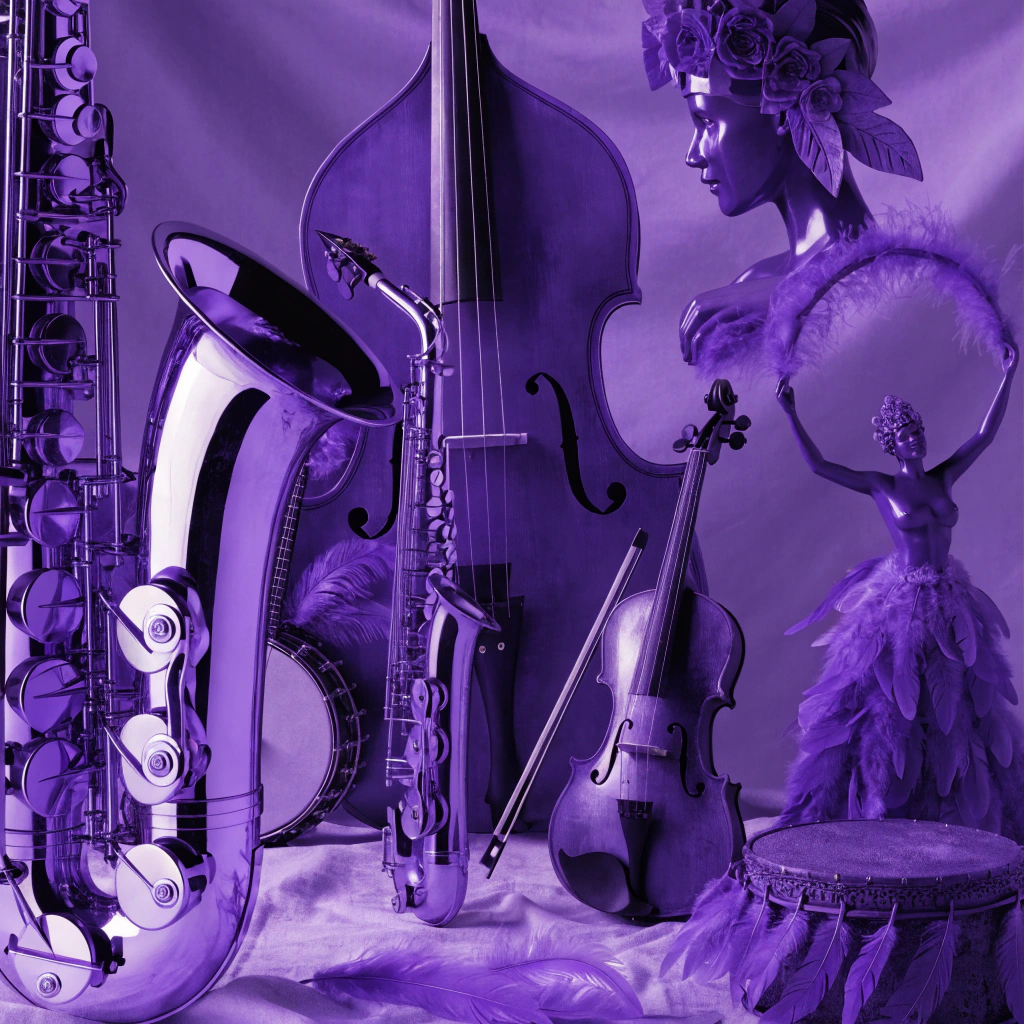
الجاز: موسيقى أمريكية رائعة
الجاز موسيقى جميلة ومهمة. هي من الولايات المتحدة الأمريكية. الجاز بدأ في مدينة نيو أورلينز. هذه المدينة تقع في جنوب أمريكا. الجاز ليس موسيقى قديمة فقط، بل هو موسيقى مشهورة جداً اليوم أيضاً. كثير من الناس في العالم يحبون الجاز. الجاز لديه إيقاع خاص ومميز. الموسيقيون في الجاز يعزفون الموسيقى بحرية وإبداع. هذا يعني أنهم يبتكرون أصواتاً جديدة في كل مرة. الجاز جزء مهم من الثقافة الأمريكية الغنية. هو يعبر عن الفرح والحياة والتاريخ. الجاز يعطي الناس شعوراً جيداً ويجعلهم سعداء. هذه الموسيقى رائعة حقاً.
تسليط الضوء على القواعد
نمط: الاسم + الصفة (Noun + Adjective)
"الجاز موسيقى جميلة."
الصفة تأتي بعد الاسم وتصفه. هي تتبع الاسم في التذكير والتأنيث. (مثل: موسيقى جميلة، مدينة كبيرة).
نمط: الفعل المضارع مع الضمائر (Present Simple with Pronouns)
"كثير من الناس يحبون الجاز."
الفعل المضارع يدل على حدث يحدث الآن أو بانتظام. تتغير نهايته حسب الضمير (مثل: هو يحب، هم يحبون).
اختبر فهمك
10 أسئلة · A1 مبتدئ · معاينة مجانية واحدة
اختبر ما تعلمته من هذا المقال. أجب على جميع الأسئلة لكسب نقاط خبرة!
من أين الجاز؟
هل تريد إنهاء الاختبار؟
9 أسئلة أخرى بانتظارك. سجّل مجاناً لفتح الاختبار الكامل وكسب نقاط خبرة!
سجل مجاناًلديك حساب بالفعل؟ دخول
تفصيل الأسئلة
من أين الجاز؟
إجابتك:
الإجابة الصحيحة: الولايات المتحدة
الجاز موسيقى قديمة فقط.
إجابتك:
الإجابة الصحيحة: خطأ
ماذا تعني كلمة 'مدينة'؟
إجابتك:
الإجابة الصحيحة: مكان كبير يعيش فيه الناس
الجاز جزء مهم من _____ الأمريكية.
إجابتك:
الإجابة الصحيحة: الثقافة
Jazz: America's Special Music
Jazz is a very special type of music from the United States. Many people call it "America's Classical Music" because it is a very important part of American history. Jazz started more than one hundred years ago in a city called New Orleans. This city was a big "melting pot" where many different cultures lived together.
Jazz was born when African American music met European music. It used rhythms from Africa and instruments like trumpets and pianos from Europe. Jazz is different from other music because it is more free. In a jazz band, musicians often play "improvisation." This means they make up the music while they are playing it.
Today, jazz is more popular than it was in the past. People all over the world listen to it because it is exciting and creative. Many famous musicians, like Louis Armstrong, became stars because they played jazz. It is a beautiful way to express feelings without using many words.
تسليط الضوء على القواعد
نمط: Past Simple
"Jazz started more than one hundred years ago in a city called New Orleans."
We use the Past Simple to talk about finished actions in the past. To form it for regular verbs, we usually add '-ed' to the base verb.
نمط: Comparatives
"Today, jazz is more popular than it was in the past."
We use comparatives to compare two things. For long adjectives like 'popular', we use 'more' + adjective + 'than'.
اختبر فهمك
11 أسئلة · A2 ابتدائي · معاينة مجانية واحدة
اختبر ما تعلمته من هذا المقال. أجب على جميع الأسئلة لكسب نقاط خبرة!
Where did jazz music start?
هل تريد إنهاء الاختبار؟
10 أسئلة أخرى بانتظارك. سجّل مجاناً لفتح الاختبار الكامل وكسب نقاط خبرة!
سجل مجاناًلديك حساب بالفعل؟ دخول
تفصيل الأسئلة
Where did jazz music start?
إجابتك:
الإجابة الصحيحة: New Orleans
Jazz only uses music from Europe.
إجابتك:
الإجابة الصحيحة: خطأ
What does 'improvisation' mean?
إجابتك:
الإجابة الصحيحة: Making up music while playing
Jazz started more than one _____ years ago.
إجابتك:
الإجابة الصحيحة: hundred
Who was a famous jazz star mentioned in the text?
إجابتك:
الإجابة الصحيحة: Louis Armstrong
Jazz: The Soul of American Music
Jazz is often called 'America’s Classical Music' because it is a unique style that was born in the United States. It started in the late 19th century in New Orleans, which is a city with a very diverse history. At that time, many different cultures lived together, including people with African, Caribbean, and European backgrounds. This cultural mix created a new type of music that combined African rhythms with European instruments.
Since its beginning, jazz has changed many times, but its heart is always the same. The most important part of jazz is improvisation. This means that musicians often make up the music while they are playing it. Instead of reading every note from a page, they listen to each other and create something new in the moment. This makes every jazz performance special because it can never be played exactly the same way twice.
Many famous musicians have contributed to this genre. For example, Louis Armstrong and Duke Ellington helped make jazz popular around the world. Today, jazz is studied in universities and performed in big concert halls. It is no longer just 'street music'; it has become a respected art form that represents freedom and creativity.
Over the years, jazz has influenced many other types of music, such as rock and hip-hop. Even though it is over a hundred years old, jazz is still evolving. New artists are constantly finding ways to mix traditional jazz with modern sounds, ensuring that this American treasure will be enjoyed for many years to come.
تسليط الضوء على القواعد
نمط: Passive Voice (Present and Past)
"Jazz is often called 'America’s Classical Music' because it is a unique style that was born in the United States."
The passive voice is used when the action is more important than the person doing it. It is formed using 'be' + the past participle (e.g., 'is called', 'was born').
نمط: Relative Clauses
"It started in the late 19th century in New Orleans, which is a city with a very diverse history."
Relative clauses give extra information about a noun. We use 'which' for things or places and 'who' for people.
اختبر فهمك
11 أسئلة · B1 متوسط · معاينة مجانية واحدة
اختبر ما تعلمته من هذا المقال. أجب على جميع الأسئلة لكسب نقاط خبرة!
Where did jazz music first start?
هل تريد إنهاء الاختبار؟
10 أسئلة أخرى بانتظارك. سجّل مجاناً لفتح الاختبار الكامل وكسب نقاط خبرة!
سجل مجاناًلديك حساب بالفعل؟ دخول
تفصيل الأسئلة
Where did jazz music first start?
إجابتك:
الإجابة الصحيحة: New Orleans
Jazz performances are exactly the same every time they are played.
إجابتك:
الإجابة الصحيحة: خطأ
What is the definition of 'improvisation'?
إجابتك:
الإجابة الصحيحة: Making up music while playing it
Jazz has _____ many other types of music, such as rock and hip-hop.
إجابتك:
الإجابة الصحيحة: influenced
Which two cultures were combined to create jazz?
إجابتك:
الإجابة الصحيحة: African and European
The Evolution of Jazz: America’s Unique Musical Legacy
Often hailed as 'America’s Classical Music,' jazz represents a sophisticated synthesis of African American musical expression and European harmonic theory. This genre emerged during the late 19th and early 20th centuries in the vibrant city of New Orleans, Louisiana. It was born from a unique cultural melting pot where Caribbean rhythms, African communal music, and European brass band traditions collided to create something entirely new.
The heart of jazz lies in improvisation—the ability of a musician to compose music spontaneously while performing. Unlike classical music, where performers typically adhere strictly to a written score, jazz musicians are expected to interpret a melody in their own unique way. This requires not only a high level of technical skill but also a deep understanding of music theory. While one soloist takes the lead, the other members of the ensemble must maintain a delicate balance of group cohesion, reacting to every subtle shift in rhythm or tone.
As the 20th century progressed, jazz underwent several significant transformations. During the 1930s, the 'Swing Era' saw the rise of big bands, making jazz the most popular dance music in the United States. However, by the 1940s, a more complex style known as 'Bebop' had emerged. This style was characterized by fast tempos and intricate harmonies, shifting jazz from the dance floor to the concert hall. Consequently, jazz began to be viewed as an intellectual pursuit rather than mere entertainment.
Throughout its history, jazz has served as a powerful tool for social change. It has been used to break down racial barriers, as integrated bands became more common long before the Civil Rights Movement gained national momentum. Furthermore, jazz has had a profound influence on other genres, including rock, R&B, and hip-hop.
In conclusion, the legacy of jazz continues to thrive in the modern era. Although it may no longer dominate the popular music charts, its principles of freedom and creativity remain essential. Jazz is a testament to the resilience of the human spirit and the power of cultural exchange. As long as musicians continue to experiment with new sounds, the evolution of jazz will never truly be finished.
تسليط الضوء على القواعد
نمط: Passive Voice (Present Perfect)
"It has been used to break down racial barriers."
The passive voice is used here because the focus is on the action (breaking barriers) rather than the specific person doing it. It is formed using 'has/have been' + the past participle.
نمط: Defining and Non-Defining Relative Clauses
"It was born from a unique cultural melting pot where Caribbean rhythms, African communal music, and European brass band traditions collided..."
The relative adverb 'where' introduces a clause that provides essential information about the 'melting pot'. This adds complexity and detail to the description of the setting.
نمط: Passive with Infinitives
"...jazz began to be viewed as an intellectual pursuit rather than mere entertainment."
This structure (began + to be + past participle) describes a change in perception over time. It shifts the focus to the subject being perceived.
اختبر فهمك
11 أسئلة · B2 فوق المتوسط · معاينة مجانية واحدة
اختبر ما تعلمته من هذا المقال. أجب على جميع الأسئلة لكسب نقاط خبرة!
What is considered the core element of jazz music according to the article?
هل تريد إنهاء الاختبار؟
10 أسئلة أخرى بانتظارك. سجّل مجاناً لفتح الاختبار الكامل وكسب نقاط خبرة!
سجل مجاناًلديك حساب بالفعل؟ دخول
تفصيل الأسئلة
What is considered the core element of jazz music according to the article?
إجابتك:
الإجابة الصحيحة: Improvisation and spontaneous composition
Jazz first emerged in New York City during the late 20th century.
إجابتك:
الإجابة الصحيحة: خطأ
What does the word 'sophisticated' mean in the context of the text?
إجابتك:
الإجابة الصحيحة: Highly complex and refined
Jazz musicians are expected to interpret a _____ in their own unique way.
إجابتك:
الإجابة الصحيحة: melody
How did Bebop differ from the Swing Era style?
إجابتك:
الإجابة الصحيحة: It featured fast tempos and intricate harmonies
The Existential Rhythms of America: A Critical Analysis of Jazz
Rarely has a musical genre encapsulated the convoluted history of a nation as profoundly as jazz. Often heralded as 'America’s Classical Music,' jazz represents a sophisticated synthesis of African rhythmic sensibilities and European harmonic structures. It was in the cultural crucible of late 19th-century New Orleans that this art form first germinated, emerging from an unprecedented convergence of Caribbean influences, spirituals, and brass band traditions. This unique melting pot allowed for the cross-pollination of ideas that would eventually redefine the global musical landscape.
Central to the ethos of jazz is the concept of improvisation. Unlike the rigid adherence to a score found in traditional Western classical music, jazz prioritizes the spontaneity and creative agency of the performer. What the musician achieves through 'comping' and soloing is not merely a display of technical prowess, but an existential dialogue between the individual and the collective. This subversion of traditional hierarchies within the ensemble reflects a broader democratic ideal, albeit one born from the crucible of racial segregation and systemic oppression. The interplay between musicians requires a level of active listening and mutual respect that mirrors the complexities of social integration.
The institutionalization and subsequent global dissemination of jazz have not been without controversy. Critics often point to the commodification of the genre during the Swing Era as a potential dilution of its radical roots. As jazz moved from the smoky clubs of Storyville to the grand ballrooms of New York, the tension between commercial viability and artistic integrity became increasingly palpable. However, the emergence of Bebop in the 1940s served as a defiant reclamation of jazz as a high art form, demanding intellectual engagement rather than mere passive consumption. Not only did these musicians push the boundaries of tonality and rhythm, but they also challenged the prevailing social order, asserting their identity in a society that frequently sought to marginalize them.
Furthermore, the globalization of jazz has facilitated a dialogue between disparate cultures, leading to the birth of Afro-Cuban jazz, Bossa Nova, and European avant-garde movements. This adaptability is perhaps the genre's greatest strength. The legacy of jazz continues to resonate in contemporary discourse, influencing modern hip-hop, R&B, and even electronic music. It proves that its foundational principles—innovation, resilience, and fusion—are timeless. The role of jazz as a catalyst for social change cannot be overstated. During the Civil Rights Movement, jazz served as a soundtrack for resistance, providing a voice to the voiceless. The complexities of its harmonic language and the freedom inherent in its structure offered a symbolic counter-narrative to the rigid constraints of Jim Crow laws. Ultimately, the ongoing evolution of jazz serves as a testament to the enduring power of creative expression to transcend cultural and linguistic barriers, remaining a vital force in the 21st century.
تسليط الضوء على القواعد
نمط: Negative Inversion
"Rarely has a musical genre encapsulated the convoluted history of a nation as profoundly as jazz."
When we start a sentence with a negative or limiting adverb like 'rarely', the subject and auxiliary verb are inverted. This is used for emphasis and to create a more formal or dramatic tone.
نمط: It-Cleft Sentence
"It was in the cultural crucible of late 19th-century New Orleans that this art form first germinated..."
A cleft sentence divides a single clause into two parts to focus on specific information (in this case, the location). It follows the structure 'It + is/was + focus + that/who clause'.
نمط: Nominalization
"The institutionalization and subsequent global dissemination of jazz have not been without controversy."
Nominalization involves turning verbs (institutionalize, disseminate) into nouns. This makes the text more dense, abstract, and academic, which is typical of C1 level writing.
اختبر فهمك
12 أسئلة · C1 متقدم · معاينة مجانية واحدة
اختبر ما تعلمته من هذا المقال. أجب على جميع الأسئلة لكسب نقاط خبرة!
According to the article, what distinguishes jazz from traditional Western classical music?
هل تريد إنهاء الاختبار؟
11 أسئلة أخرى بانتظارك. سجّل مجاناً لفتح الاختبار الكامل وكسب نقاط خبرة!
سجل مجاناًلديك حساب بالفعل؟ دخول
تفصيل الأسئلة
According to the article, what distinguishes jazz from traditional Western classical music?
إجابتك:
الإجابة الصحيحة: The prioritization of spontaneity and improvisation
The author suggests that jazz serves as a reflection of democratic ideals through the interplay between musicians.
إجابتك:
الإجابة الصحيحة: صحيح
Which word describes the process of turning an art form into a commercial product?
إجابتك:
الإجابة الصحيحة: Commodification
Bebop is described as a defiant _____ of jazz as a high art form.
إجابتك:
الإجابة الصحيحة: reclamation
What was the significance of jazz during the Civil Rights Movement?
إجابتك:
الإجابة الصحيحة: It served as a soundtrack for resistance and a voice for the voiceless
Bebop was characterized by its demand for passive consumption and simple tonality.
إجابتك:
الإجابة الصحيحة: خطأ
The Ontological Synthesis of Jazz: A Socio-Musical Paradigm
The ontological status of jazz is often predicated upon its perceived role as 'America’s Classical Music'—a designation that, while honorific, necessitates a rigorous examination of the genre’s genealogical roots and its structural idiosyncrasies. Emerging from the crucible of late 19th-century New Orleans, jazz represents a profound synthesis of African communal music and European harmonic theory. This confluence was not merely a passive blending but a radical reconfiguration of musical hierarchies. Should one scrutinize the socio-historical conditions of the era, it becomes evident that the city served as a liminal space, allowing for a cacophony of influences—from Caribbean polyrhythms to the rigid structures of European brass bands—to coalesce into a new, syncopated idiom.
At the heart of this artistic revolution lies the concept of improvisation, a practice that challenges the traditional hegemony of Western notation. In the classical tradition, the score is often treated as a sacred text; however, in jazz, the performance is the primary text. Were one to deconstruct the rhythmic scaffolding of a jazz standard, one would find that the essence of the work exists in its ephemeral realization rather than its written form. This spontaneity is governed by syncopation—the deliberate displacement of rhythmic stresses—which provides the genre with its characteristic 'swing.' It might be argued that the very essence of jazz is its resistance to stasis, as it constantly evolves through the dialogue between the soloist and the ensemble.
The transition from the swing era to the bebop revolution in the 1940s marked a significant shift in the jazz paradigm. Musicians like Charlie Parker and Dizzy Gillespie sought to elevate jazz from a vernacular form of popular entertainment to a high art requiring immense technical virtuosity and theoretical knowledge. This era introduced complex harmonic structures and faster tempos, effectively distancing jazz from the dance hall and placing it within the conservatory and the concert hall. Rarely has any artistic medium so effectively encapsulated the tension between populist appeal and avant-garde intellectualism.
Furthermore, the global dissemination of jazz has led to a variety of sub-genres that reflect a diverse array of cultural identities. Despite this fragmentation, the core tenets of the genre—improvisation, syncopation, and the 'blue note'—remain ubiquitous. It is not entirely inaccurate to posit that jazz serves as a sonic mirror of the American experience, reflecting both its democratic ideals and its historical traumas. The music functions as a dynamic continuum, where the past is not merely preserved but is actively reinterpreted through the lens of the present.
In contemporary discourse, jazz is increasingly viewed through an analytical lens that acknowledges its role in challenging cultural hegemony. By subverting traditional European tonal systems and elevating the African American oral tradition, jazz has carved out a unique space in the global aesthetic landscape. The legacy of jazz is not found in a static repertoire but in the indefatigable spirit of innovation that continues to influence modern composition. As we look toward the future, the genre remains a vital testament to the power of cultural synthesis and the enduring relevance of spontaneous artistic expression.
تسليط الضوء على القواعد
نمط: Subjunctive Mood for Hypothetical Situations
"Were one to deconstruct the rhythmic scaffolding of a jazz standard, one would find that the essence of the work exists in its ephemeral realization."
The 'were... to + verb' structure is a formal way to express a hypothetical or unlikely condition in the present or future. It is a hallmark of C2 academic writing, replacing the more common 'if' constructions for a more sophisticated tone.
نمط: Negative Inversion for Emphasis
"Rarely has any artistic medium so effectively encapsulated the tension between populist appeal and avant-garde intellectualism."
When a sentence begins with a negative or restrictive adverb like 'rarely,' 'seldom,' or 'never,' the auxiliary verb is placed before the subject. This inversion is used to emphasize the rarity or importance of the statement.
نمط: Academic Hedging
"It might be argued that the very essence of jazz is its resistance to stasis."
Hedging is the use of cautious or vague language to avoid overgeneralization. Using 'It might be argued' instead of a direct statement allows the author to present a perspective while acknowledging that other interpretations may exist.
اختبر فهمك
12 أسئلة · C2 إتقان · معاينة مجانية واحدة
اختبر ما تعلمته من هذا المقال. أجب على جميع الأسئلة لكسب نقاط خبرة!
According to the article, what distinguishes the jazz 'text' from the classical 'text'?
هل تريد إنهاء الاختبار؟
11 أسئلة أخرى بانتظارك. سجّل مجاناً لفتح الاختبار الكامل وكسب نقاط خبرة!
سجل مجاناًلديك حساب بالفعل؟ دخول
تفصيل الأسئلة
According to the article, what distinguishes the jazz 'text' from the classical 'text'?
إجابتك:
الإجابة الصحيحة: The primary text in jazz is the live performance itself.
The transition to bebop moved jazz further away from being a popular dance-hall genre.
إجابتك:
الإجابة الصحيحة: صحيح
Which word describes a 'harsh, discordant mixture of sounds'?
إجابتك:
الإجابة الصحيحة: Cacophony
The city of New Orleans served as a _____ space where various cultural influences could merge.
إجابتك:
الإجابة الصحيحة: liminal
What is the primary function of 'syncopation' in jazz?
إجابتك:
الإجابة الصحيحة: To provide the characteristic 'swing' by displacing rhythmic stresses.
The author argues that jazz has lost its relevance in the modern aesthetic landscape.
إجابتك:
الإجابة الصحيحة: خطأ

