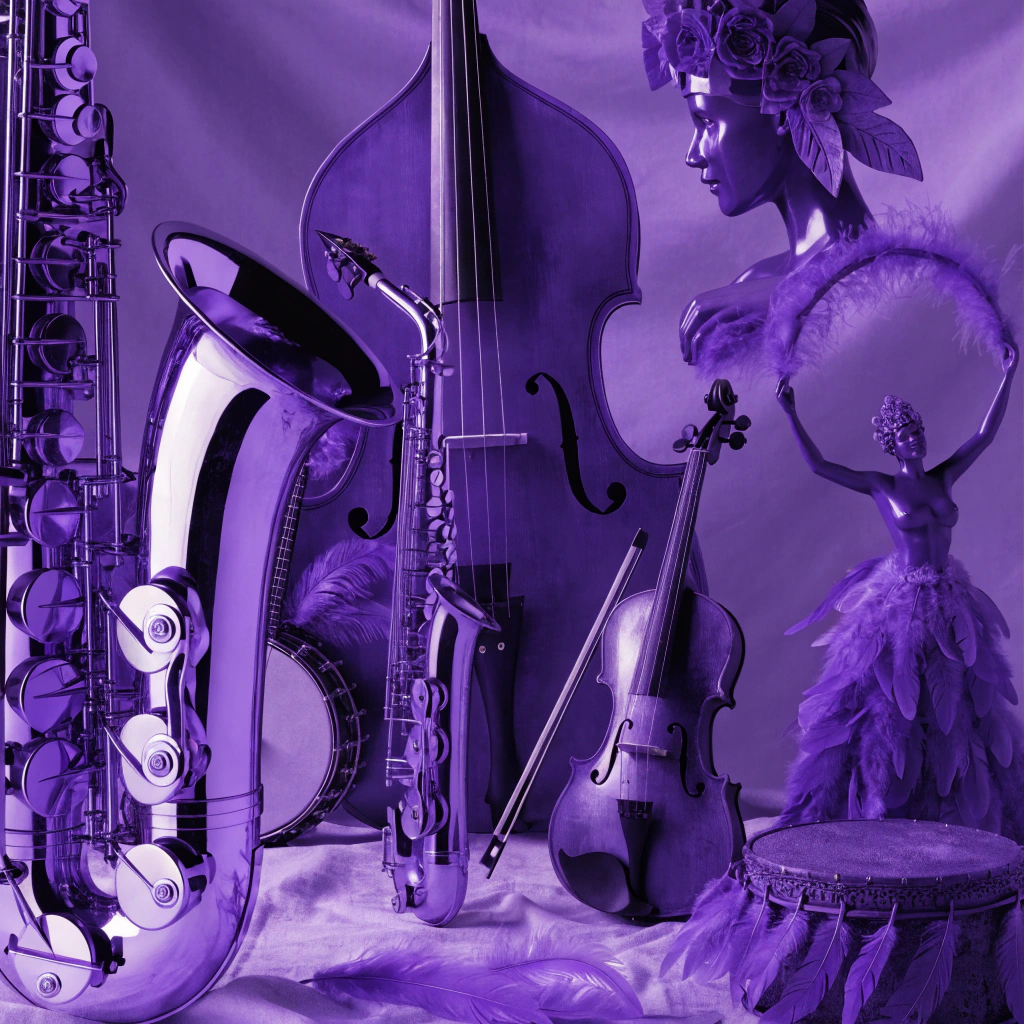
Jazz: Music from America
Jazz is a famous style of music. It is from the United States. Many people love jazz. It started in a city called New Orleans.
Jazz is special. Musicians play instruments like the trumpet and the piano. They often make new music while they play. This is called improvisation.
Jazz has many sounds. Sometimes it is fast. Sometimes it is slow. It is important to American history. You can hear jazz in clubs and at big festivals today.
文法スポットライト
パターン: Present Simple: To Be
"Jazz is a famous style of music."
We use 'is' with singular subjects like 'Jazz' to talk about facts. It connects the subject to a description.
パターン: Present Simple: Regular Verbs
"Musicians play instruments like the trumpet."
For plural subjects like 'Musicians', we use the base form of the verb. This describes a regular action or habit.
理解度をチェック
10 問 · A1 初級 · 無料プレビュー 1回
この記事で学んだことをテストしよう。全問正解してXPを獲得!
Where did jazz start?
問題の内訳
Where did jazz start?
あなたの回答:
正解: New Orleans
Jazz is from the United Kingdom.
あなたの回答:
正解: 間違い
What does 'famous' mean?
あなたの回答:
正解: Known by many people
Jazz is a _____ style of music.
あなたの回答:
正解: famous
Jazz: America's Special Music
Jazz is a very special type of music from the United States. Many people call it "America's Classical Music" because it is a very important part of American history. Jazz started more than one hundred years ago in a city called New Orleans. This city was a big "melting pot" where many different cultures lived together.
Jazz was born when African American music met European music. It used rhythms from Africa and instruments like trumpets and pianos from Europe. Jazz is different from other music because it is more free. In a jazz band, musicians often play "improvisation." This means they make up the music while they are playing it.
Today, jazz is more popular than it was in the past. People all over the world listen to it because it is exciting and creative. Many famous musicians, like Louis Armstrong, became stars because they played jazz. It is a beautiful way to express feelings without using many words.
文法スポットライト
パターン: Past Simple
"Jazz started more than one hundred years ago in a city called New Orleans."
We use the Past Simple to talk about finished actions in the past. To form it for regular verbs, we usually add '-ed' to the base verb.
パターン: Comparatives
"Today, jazz is more popular than it was in the past."
We use comparatives to compare two things. For long adjectives like 'popular', we use 'more' + adjective + 'than'.
理解度をチェック
11 問 · A2 初級 · 無料プレビュー 1回
この記事で学んだことをテストしよう。全問正解してXPを獲得!
Where did jazz music start?
問題の内訳
Where did jazz music start?
あなたの回答:
正解: New Orleans
Jazz only uses music from Europe.
あなたの回答:
正解: 間違い
What does 'improvisation' mean?
あなたの回答:
正解: Making up music while playing
Jazz started more than one _____ years ago.
あなたの回答:
正解: hundred
Who was a famous jazz star mentioned in the text?
あなたの回答:
正解: Louis Armstrong
Jazz: The Soul of American Music
Jazz is often called 'America’s Classical Music' because it is a unique style that was born in the United States. It started in the late 19th century in New Orleans, which is a city with a very diverse history. At that time, many different cultures lived together, including people with African, Caribbean, and European backgrounds. This cultural mix created a new type of music that combined African rhythms with European instruments.
Since its beginning, jazz has changed many times, but its heart is always the same. The most important part of jazz is improvisation. This means that musicians often make up the music while they are playing it. Instead of reading every note from a page, they listen to each other and create something new in the moment. This makes every jazz performance special because it can never be played exactly the same way twice.
Many famous musicians have contributed to this genre. For example, Louis Armstrong and Duke Ellington helped make jazz popular around the world. Today, jazz is studied in universities and performed in big concert halls. It is no longer just 'street music'; it has become a respected art form that represents freedom and creativity.
Over the years, jazz has influenced many other types of music, such as rock and hip-hop. Even though it is over a hundred years old, jazz is still evolving. New artists are constantly finding ways to mix traditional jazz with modern sounds, ensuring that this American treasure will be enjoyed for many years to come.
文法スポットライト
パターン: Passive Voice (Present and Past)
"Jazz is often called 'America’s Classical Music' because it is a unique style that was born in the United States."
The passive voice is used when the action is more important than the person doing it. It is formed using 'be' + the past participle (e.g., 'is called', 'was born').
パターン: Relative Clauses
"It started in the late 19th century in New Orleans, which is a city with a very diverse history."
Relative clauses give extra information about a noun. We use 'which' for things or places and 'who' for people.
理解度をチェック
11 問 · B1 中級 · 無料プレビュー 1回
この記事で学んだことをテストしよう。全問正解してXPを獲得!
Where did jazz music first start?
問題の内訳
Where did jazz music first start?
あなたの回答:
正解: New Orleans
Jazz performances are exactly the same every time they are played.
あなたの回答:
正解: 間違い
What is the definition of 'improvisation'?
あなたの回答:
正解: Making up music while playing it
Jazz has _____ many other types of music, such as rock and hip-hop.
あなたの回答:
正解: influenced
Which two cultures were combined to create jazz?
あなたの回答:
正解: African and European
アメリカ合衆国におけるジャズ:その歴史と普遍的魅力
ジャズは、しばしば「アメリカのクラシック音楽」と称され、アフリカ系アメリカ人の豊かな音楽表現とヨーロッパの洗練された和声理論が独自に融合した、アメリカ固有の芸術形式として世界中で認識されています。そのルーツは、19世紀後半から20世紀初頭にかけて、ルイジアナ州ニューオーリンズという多様な文化が交錯する都市に深く根ざしています。カリブ海のリズム、アフリカの共同体音楽、スピリチュアル、そしてヨーロッパのブラスバンドの伝統といった、多岐にわたる音楽的要素がこの地で出会い、新たな音楽ジャンルを誕生させました。
ジャズの最も顕著な特徴の一つは、即興演奏にあります。これは、演奏者がその場でメロディ、ハーモニー、リズムを創造する能力を指し、予測不能なスリルと深い感情表現を可能にします。この即興性は、ジャズを単なる楽曲の再現に留まらせず、常に進化し続ける生きた音楽たらしめています。また、スウィング感と呼ばれる独特のリズムは、聴衆を魅了し、身体を揺さぶるような高揚感を生み出します。
ジャズは、その誕生以来、時代とともに様々な変遷を遂げてきました。ビッグバンドによるスウィングジャズの時代を経て、より複雑な和声と速いテンポを特徴とするビバップが登場し、クールジャズ、モードジャズ、フュージョンなど、多種多様なスタイルが生まれました。これらのスタイルはそれぞれ異なる音楽的アプローチを持ちながらも、即興演奏と深い表現力というジャズの核となる要素を共有しています。
ジャズは単なる音楽ジャンルに留まらず、アメリカ社会の歴史と深く結びついています。アフリカ系アメリカ人の苦難と希望、そして自由への渇望を表現する手段として発展し、後に人種や文化の壁を超えて、世界中の人々に受け入れられるようになりました。その普遍的な魅力は、個性の尊重と創造性の追求という、人類共通の価値観を音楽で表現している点にあると言えるでしょう。
今日、ジャズは世界中の音楽学校で研究され、多くのミュージシャンによって演奏されています。伝統的なスタイルが守られる一方で、現代の音楽と融合し、常に新たな表現を模索し続けています。アメリカ発祥のこの偉大な音楽遺産は、今後もその多様性と革新性をもって、私たちを魅了し続けることでしょう。
文法スポットライト
パターン: ~として知られています / ~と称され
"ジャズは、しばしば「アメリカのクラシック音楽」と称され、アフリカ系アメリカ人の豊かな音楽表現とヨーロッパの洗練された和声理論が独自に融合した、アメリカ固有の芸術形式として世界中で認識されています。"
このパターンは、あるものが何であるか、またはどのように評価されているかを説明する際に使われます。「~として知られています」は広く認識されている事実を、「~と称され」は特に敬意や評価を込めて呼ばれる場合に使われます。
パターン: ~に留まらず
"ジャズは単なる音楽ジャンルに留まらず、アメリカ社会の歴史と深く結びついています。"
この表現は、「~だけでなく、さらに広い範囲や他の側面にも及ぶ」という意味を示します。多くの場合、期待される範囲を超えた、より重要な事実や状況を付け加える際に用いられます。
パターン: ~を特徴とする
"より複雑な和声と速いテンポを特徴とするビバップが登場し、クールジャズ、モードジャズ、フュージョンなど、多種多様なスタイルが生まれました。"
この文型は、ある物事や概念が持つ、際立った性質や特性を説明する際に使われます。「AはBを特徴とする」で、「AがBという特別な性質を持っている」という意味になります。
理解度をチェック
11 問 · B2 中上級 · 無料プレビュー 1回
この記事で学んだことをテストしよう。全問正解してXPを獲得!
ジャズの起源となった都市はどこですか?
問題の内訳
ジャズの起源となった都市はどこですか?
あなたの回答:
正解: ニューオーリンズ
ジャズの即興演奏は、演奏者が楽譜通りに正確に演奏することを指します。
あなたの回答:
正解: 間違い
「融合」の意味に最も近いものはどれですか?
あなたの回答:
正解: 異なるものが一つになること
ジャズは、しばしば「アメリカの( )音楽」と称されます。
あなたの回答:
正解: クラシック
ジャズの最も顕著な特徴の一つとして、記事で挙げられているのは何ですか?
あなたの回答:
正解: 即興演奏
The Existential Rhythms of America: A Critical Analysis of Jazz
Rarely has a musical genre encapsulated the convoluted history of a nation as profoundly as jazz. Often heralded as 'America’s Classical Music,' jazz represents a sophisticated synthesis of African rhythmic sensibilities and European harmonic structures. It was in the cultural crucible of late 19th-century New Orleans that this art form first germinated, emerging from an unprecedented convergence of Caribbean influences, spirituals, and brass band traditions. This unique melting pot allowed for the cross-pollination of ideas that would eventually redefine the global musical landscape.
Central to the ethos of jazz is the concept of improvisation. Unlike the rigid adherence to a score found in traditional Western classical music, jazz prioritizes the spontaneity and creative agency of the performer. What the musician achieves through 'comping' and soloing is not merely a display of technical prowess, but an existential dialogue between the individual and the collective. This subversion of traditional hierarchies within the ensemble reflects a broader democratic ideal, albeit one born from the crucible of racial segregation and systemic oppression. The interplay between musicians requires a level of active listening and mutual respect that mirrors the complexities of social integration.
The institutionalization and subsequent global dissemination of jazz have not been without controversy. Critics often point to the commodification of the genre during the Swing Era as a potential dilution of its radical roots. As jazz moved from the smoky clubs of Storyville to the grand ballrooms of New York, the tension between commercial viability and artistic integrity became increasingly palpable. However, the emergence of Bebop in the 1940s served as a defiant reclamation of jazz as a high art form, demanding intellectual engagement rather than mere passive consumption. Not only did these musicians push the boundaries of tonality and rhythm, but they also challenged the prevailing social order, asserting their identity in a society that frequently sought to marginalize them.
Furthermore, the globalization of jazz has facilitated a dialogue between disparate cultures, leading to the birth of Afro-Cuban jazz, Bossa Nova, and European avant-garde movements. This adaptability is perhaps the genre's greatest strength. The legacy of jazz continues to resonate in contemporary discourse, influencing modern hip-hop, R&B, and even electronic music. It proves that its foundational principles—innovation, resilience, and fusion—are timeless. The role of jazz as a catalyst for social change cannot be overstated. During the Civil Rights Movement, jazz served as a soundtrack for resistance, providing a voice to the voiceless. The complexities of its harmonic language and the freedom inherent in its structure offered a symbolic counter-narrative to the rigid constraints of Jim Crow laws. Ultimately, the ongoing evolution of jazz serves as a testament to the enduring power of creative expression to transcend cultural and linguistic barriers, remaining a vital force in the 21st century.
文法スポットライト
パターン: Negative Inversion
"Rarely has a musical genre encapsulated the convoluted history of a nation as profoundly as jazz."
When we start a sentence with a negative or limiting adverb like 'rarely', the subject and auxiliary verb are inverted. This is used for emphasis and to create a more formal or dramatic tone.
パターン: It-Cleft Sentence
"It was in the cultural crucible of late 19th-century New Orleans that this art form first germinated..."
A cleft sentence divides a single clause into two parts to focus on specific information (in this case, the location). It follows the structure 'It + is/was + focus + that/who clause'.
パターン: Nominalization
"The institutionalization and subsequent global dissemination of jazz have not been without controversy."
Nominalization involves turning verbs (institutionalize, disseminate) into nouns. This makes the text more dense, abstract, and academic, which is typical of C1 level writing.
理解度をチェック
12 問 · C1 上級 · 無料プレビュー 1回
この記事で学んだことをテストしよう。全問正解してXPを獲得!
According to the article, what distinguishes jazz from traditional Western classical music?
問題の内訳
According to the article, what distinguishes jazz from traditional Western classical music?
あなたの回答:
正解: The prioritization of spontaneity and improvisation
The author suggests that jazz serves as a reflection of democratic ideals through the interplay between musicians.
あなたの回答:
正解: 正しい
Which word describes the process of turning an art form into a commercial product?
あなたの回答:
正解: Commodification
Bebop is described as a defiant _____ of jazz as a high art form.
あなたの回答:
正解: reclamation
What was the significance of jazz during the Civil Rights Movement?
あなたの回答:
正解: It served as a soundtrack for resistance and a voice for the voiceless
Bebop was characterized by its demand for passive consumption and simple tonality.
あなたの回答:
正解: 間違い
The Ontological Synthesis of Jazz: A Socio-Musical Paradigm
The ontological status of jazz is often predicated upon its perceived role as 'America’s Classical Music'—a designation that, while honorific, necessitates a rigorous examination of the genre’s genealogical roots and its structural idiosyncrasies. Emerging from the crucible of late 19th-century New Orleans, jazz represents a profound synthesis of African communal music and European harmonic theory. This confluence was not merely a passive blending but a radical reconfiguration of musical hierarchies. Should one scrutinize the socio-historical conditions of the era, it becomes evident that the city served as a liminal space, allowing for a cacophony of influences—from Caribbean polyrhythms to the rigid structures of European brass bands—to coalesce into a new, syncopated idiom.
At the heart of this artistic revolution lies the concept of improvisation, a practice that challenges the traditional hegemony of Western notation. In the classical tradition, the score is often treated as a sacred text; however, in jazz, the performance is the primary text. Were one to deconstruct the rhythmic scaffolding of a jazz standard, one would find that the essence of the work exists in its ephemeral realization rather than its written form. This spontaneity is governed by syncopation—the deliberate displacement of rhythmic stresses—which provides the genre with its characteristic 'swing.' It might be argued that the very essence of jazz is its resistance to stasis, as it constantly evolves through the dialogue between the soloist and the ensemble.
The transition from the swing era to the bebop revolution in the 1940s marked a significant shift in the jazz paradigm. Musicians like Charlie Parker and Dizzy Gillespie sought to elevate jazz from a vernacular form of popular entertainment to a high art requiring immense technical virtuosity and theoretical knowledge. This era introduced complex harmonic structures and faster tempos, effectively distancing jazz from the dance hall and placing it within the conservatory and the concert hall. Rarely has any artistic medium so effectively encapsulated the tension between populist appeal and avant-garde intellectualism.
Furthermore, the global dissemination of jazz has led to a variety of sub-genres that reflect a diverse array of cultural identities. Despite this fragmentation, the core tenets of the genre—improvisation, syncopation, and the 'blue note'—remain ubiquitous. It is not entirely inaccurate to posit that jazz serves as a sonic mirror of the American experience, reflecting both its democratic ideals and its historical traumas. The music functions as a dynamic continuum, where the past is not merely preserved but is actively reinterpreted through the lens of the present.
In contemporary discourse, jazz is increasingly viewed through an analytical lens that acknowledges its role in challenging cultural hegemony. By subverting traditional European tonal systems and elevating the African American oral tradition, jazz has carved out a unique space in the global aesthetic landscape. The legacy of jazz is not found in a static repertoire but in the indefatigable spirit of innovation that continues to influence modern composition. As we look toward the future, the genre remains a vital testament to the power of cultural synthesis and the enduring relevance of spontaneous artistic expression.
文法スポットライト
パターン: Subjunctive Mood for Hypothetical Situations
"Were one to deconstruct the rhythmic scaffolding of a jazz standard, one would find that the essence of the work exists in its ephemeral realization."
The 'were... to + verb' structure is a formal way to express a hypothetical or unlikely condition in the present or future. It is a hallmark of C2 academic writing, replacing the more common 'if' constructions for a more sophisticated tone.
パターン: Negative Inversion for Emphasis
"Rarely has any artistic medium so effectively encapsulated the tension between populist appeal and avant-garde intellectualism."
When a sentence begins with a negative or restrictive adverb like 'rarely,' 'seldom,' or 'never,' the auxiliary verb is placed before the subject. This inversion is used to emphasize the rarity or importance of the statement.
パターン: Academic Hedging
"It might be argued that the very essence of jazz is its resistance to stasis."
Hedging is the use of cautious or vague language to avoid overgeneralization. Using 'It might be argued' instead of a direct statement allows the author to present a perspective while acknowledging that other interpretations may exist.
理解度をチェック
12 問 · C2 マスター · 無料プレビュー 1回
この記事で学んだことをテストしよう。全問正解してXPを獲得!
According to the article, what distinguishes the jazz 'text' from the classical 'text'?
問題の内訳
According to the article, what distinguishes the jazz 'text' from the classical 'text'?
あなたの回答:
正解: The primary text in jazz is the live performance itself.
The transition to bebop moved jazz further away from being a popular dance-hall genre.
あなたの回答:
正解: 正しい
Which word describes a 'harsh, discordant mixture of sounds'?
あなたの回答:
正解: Cacophony
The city of New Orleans served as a _____ space where various cultural influences could merge.
あなたの回答:
正解: liminal
What is the primary function of 'syncopation' in jazz?
あなたの回答:
正解: To provide the characteristic 'swing' by displacing rhythmic stresses.
The author argues that jazz has lost its relevance in the modern aesthetic landscape.
あなたの回答:
正解: 間違い
ジャズ:アメリカの おんがく
「ジャズ」です。 アメリカの おんがく です。 ニューオーリンズ。これは アメリカの まち です。 ふるい おんがく。あたらしい おんがく。 ジャズは たのしい です。 たくさんの ひと が すき です。
文法スポットライト
パターン: 〜は〜です
"ジャズは たのしい です。"
「〜は〜です」は、ものやこと を せつめい するとき に つかいます。「は」は トピック を しめします。「です」は ていねい な ことば です。
理解度をチェック
9 問 · A0 プレビギナー · 無料プレビュー 1回
この記事で学んだことをテストしよう。全問正解してXPを獲得!
ジャズ は どこ の おんがく ですか?
問題の内訳
ジャズ は どこ の おんがく ですか?
あなたの回答:
正解: アメリカ
ジャズは ふるい おんがく です。
あなたの回答:
正解: 正しい
「おんがく」は なに ですか?
あなたの回答:
正解: うた

