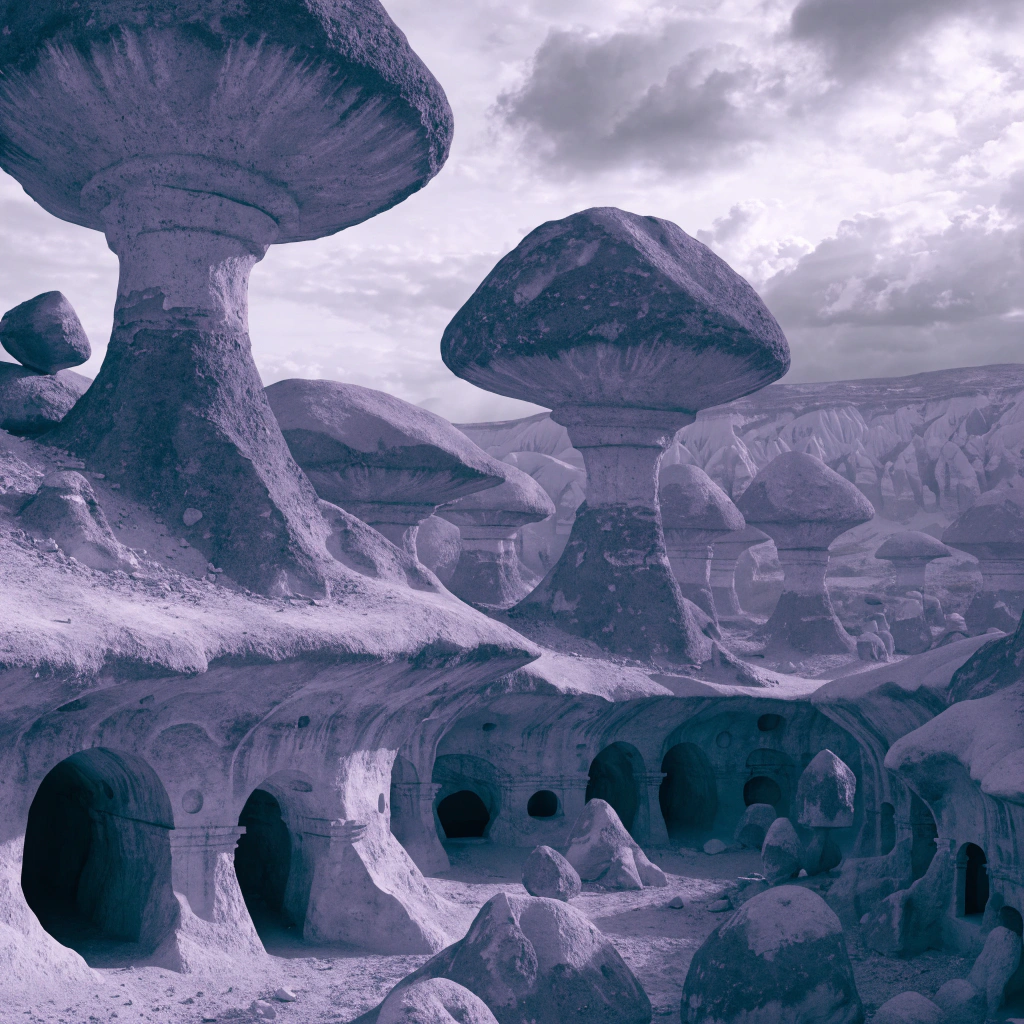
A Beautiful Place in Turkey
Cappadocia is a beautiful place in Turkey. It is in the center of the country. The rocks have strange shapes. People call them fairy chimneys. They look like tall mushrooms.
Long ago, people lived in these rocks. They carved houses and churches inside the soft stone. Today, many people visit Cappadocia. They like to see the valleys.
Many people fly in hot air balloons. They see the mountains from the sky. It is very quiet and peaceful. Cappadocia is a magic place.
نکته دستوری
الگو: Present Simple of 'to be'
"Cappadocia is a beautiful place in Turkey."
We use 'is' for singular subjects like 'Cappadocia' or 'it'. This pattern helps us describe people, places, and things.
الگو: Present Simple (Plural)
"Many people visit Cappadocia."
With plural subjects like 'people' or 'they', we use the base form of the verb. We do not add an -s at the end.
درک خود را بسنجید
10 سوال · A1 مبتدی · 1 پیشنمایش رایگان
آنچه از این مقاله آموختید را بسنجید. به همه سؤالات پاسخ دهید و XP کسب کنید!
Where is Cappadocia?
آیا میخواهید آزمون را تمام کنید؟
9 سؤال دیگر منتظر شماست. ثبتنام رایگان کنید تا آزمون کامل را باز کنید و XP کسب کنید!
ثبتنام رایگانقبلاً ثبتنام کردی؟ ورود
جزئیات سؤالات
Where is Cappadocia?
پاسخ شما:
پاسخ درست: In Turkey
People live in the sky in Cappadocia.
پاسخ شما:
پاسخ درست: نادرست
What is a 'valley'?
پاسخ شما:
پاسخ درست: Low land between mountains
Cappadocia is a _____ place.
پاسخ شما:
پاسخ درست: magic
Cappadocia: The Land of Fairy Chimneys
Cappadocia is a special region in central Turkey. It is a very famous place because it looks like another planet. The land is unique and beautiful.
Millions of years ago, volcanoes covered the area with ash. This ash became soft rock. Later, the wind and rain changed the rocks into tall shapes. People call these rocks 'fairy chimneys.' They are taller than normal trees and look very strange.
In the past, people lived inside these rocks. They carved houses, churches, and even cities under the ground because the rock was soft. It was easier to build homes there than in other places. Today, some people still live in cave houses, but many are now hotels for tourists.
The most popular activity is flying in a hot air balloon. Every morning, hundreds of balloons fly in the sky. The view is more amazing than any photo. Cappadocia is more quiet than a big city, but it is very exciting to visit.
نکته دستوری
الگو: Past Simple
"Millions of years ago, volcanoes covered the area with ash."
We use the past simple to talk about things that happened and finished in the past. To form regular verbs, we usually add '-ed' to the end of the word.
الگو: Comparatives
"The view is more amazing than any photo."
We use comparatives to compare two things or places. For long adjectives like 'amazing', we use 'more' before the adjective and 'than' after it.
درک خود را بسنجید
11 سوال · A2 مقدماتی · 1 پیشنمایش رایگان
آنچه از این مقاله آموختید را بسنجید. به همه سؤالات پاسخ دهید و XP کسب کنید!
Where is Cappadocia located?
آیا میخواهید آزمون را تمام کنید؟
10 سؤال دیگر منتظر شماست. ثبتنام رایگان کنید تا آزمون کامل را باز کنید و XP کسب کنید!
ثبتنام رایگانقبلاً ثبتنام کردی؟ ورود
جزئیات سؤالات
Where is Cappadocia located?
پاسخ شما:
پاسخ درست: Turkey
People built cities under the ground in Cappadocia.
پاسخ شما:
پاسخ درست: درست
What does 'unique' mean?
پاسخ شما:
پاسخ درست: Special and different
The wind and rain _____ the rocks into tall shapes.
پاسخ شما:
پاسخ درست: changed
What do people call the tall rocks in Cappadocia?
پاسخ شما:
پاسخ درست: Fairy chimneys
The Magic of Cappadocia: A World Carved in Stone
Cappadocia is a magical region in central Turkey which has been shaped by nature over millions of years. This incredible area is famous for its unique landscape, which often looks like it belongs on another planet. The strange rock formations, which are called 'fairy chimneys', were created by volcanic eruptions a long time ago. Thick layers of ash from these volcanoes eventually became a soft rock known as tuff. Over many centuries, the wind and rain have carved this tuff into the tall, thin spires that we see today.
However, the true wonder of Cappadocia is how humans have adapted to this environment. Because the rock is soft and easy to cut, people have carved homes, churches, and even entire underground cities into the mountains. In the past, these hidden cities were used by thousands of people to protect themselves from enemies during times of war. Today, many of these ancient caves have been turned into unique hotels where modern tourists can experience life inside the rock.
One of the most popular activities in Cappadocia is taking a hot air balloon flight at sunrise. Every morning, hundreds of colorful balloons are seen floating in the sky, providing a spectacular view of the valleys below. This experience has become a bucket-list dream for many travelers who visit Turkey. Although the region has changed because of tourism, it still keeps its mysterious and peaceful atmosphere. Visitors often spend several days exploring the deep valleys and hiking through the historical sites. It is truly a destination that has been admired by people for generations.
نکته دستوری
الگو: Passive Voice
"Every morning, hundreds of colorful balloons are seen floating in the sky."
The passive voice is used when the action is more important than who is doing it. It is formed using 'be' + the past participle.
الگو: Relative Clauses with 'Which'
"Cappadocia is a magical region in central Turkey which has been shaped by nature."
Relative clauses give more information about a noun. We use 'which' for things or places to connect ideas smoothly in one sentence.
درک خود را بسنجید
11 سوال · B1 متوسط · 1 پیشنمایش رایگان
آنچه از این مقاله آموختید را بسنجید. به همه سؤالات پاسخ دهید و XP کسب کنید!
What caused the formation of the 'fairy chimneys' initially?
آیا میخواهید آزمون را تمام کنید؟
10 سؤال دیگر منتظر شماست. ثبتنام رایگان کنید تا آزمون کامل را باز کنید و XP کسب کنید!
ثبتنام رایگانقبلاً ثبتنام کردی؟ ورود
جزئیات سؤالات
What caused the formation of the 'fairy chimneys' initially?
پاسخ شما:
پاسخ درست: Volcanic eruptions and erosion
The underground cities were originally built to host modern tourists.
پاسخ شما:
پاسخ درست: نادرست
What does 'ancient' mean?
پاسخ شما:
پاسخ درست: From a very long time ago
The soft rock created from volcanic ash is known as _____.
پاسخ شما:
پاسخ درست: tuff
Why did people carve their homes into the rock in Cappadocia?
پاسخ شما:
پاسخ درست: Because the rock was soft and easy to cut
Cappadocia: A Masterpiece of Nature and Human Ingenuity
Situated in the heart of Anatolia, Cappadocia presents a landscape so surreal that it seems to belong to a different realm. Millions of years ago, violent volcanic eruptions deposited layers of thick ash across the region, which subsequently solidified into a porous, soft rock known as tuff. Over millennia, the relentless forces of wind and water erosion have meticulously sculpted this material into the world-renowned 'fairy chimneys'—tapering rock spires that dominate the horizon. This unique topography serves as a testament to the transformative power of natural processes over geological time.
While the geological formations are undoubtedly spectacular, the historical human intervention is what truly distinguishes Cappadocia. For centuries, inhabitants have exploited the pliable nature of the tuff rock, carving out elaborate subterranean cities and cliffside dwellings. These structures were not merely primitive shelters; they were sophisticated urban centers capable of housing thousands of people, featuring ventilation systems, storage rooms, and places of worship. Consequently, these underground labyrinths provided essential protection against both extreme weather and invading forces. The thermal properties of the rock also ensured a stable temperature, offering a cool retreat during scorching summers and warmth during the bitter winters.
Beyond its architectural marvels, the region holds significant cultural weight. As a vital stop along the ancient Silk Road, Cappadocia became a melting pot of diverse civilizations. This cultural exchange is most evident in the numerous rock-cut churches, many of which are adorned with intricate frescoes that have survived the passage of time. These artworks provide a window into the spiritual life of the Byzantine era, reflecting a period where art and faith were inextricably linked. Today, the preservation of these sites is a subject of ongoing debate, as the influx of international tourism brings both economic prosperity and environmental challenges.
In contemporary times, the region is perhaps most famous for the kaleidoscopic display of hot air balloons that drift over the valleys at dawn. This spectacle offers a unique perspective on the intricate topography below. However, observers must consider the delicate balance required to maintain such a heritage site. While tourism provides the necessary funds for conservation, the sheer volume of visitors could potentially threaten the structural integrity of the soft rock formations. Therefore, sustainable management remains paramount for the future of this Anatolian treasure.
نکته دستوری
الگو: Relative Clauses
"Millions of years ago, violent volcanic eruptions deposited layers of thick ash across the region, which subsequently solidified into a porous, soft rock known as tuff."
Non-defining relative clauses provide extra information about a noun. They are separated by commas and use 'which' for things or 'who' for people.
الگو: Present Perfect Passive
"Over millennia, the relentless forces of wind and water erosion have meticulously sculpted this material..."
The present perfect (have/has + past participle) is used here to describe an action that started in the past and has continuing relevance or results in the present.
الگو: Passive Voice with 'be' + Past Participle
"...many of which are adorned with intricate frescoes that have survived the passage of time."
The passive voice is used when the focus is on the action or the object receiving the action rather than the person performing it. Here, it emphasizes the state of the churches.
درک خود را بسنجید
11 سوال · B2 بالاتر از متوسط · 1 پیشنمایش رایگان
آنچه از این مقاله آموختید را بسنجید. به همه سؤالات پاسخ دهید و XP کسب کنید!
What was the primary cause of the unique geological formations in Cappadocia?
آیا میخواهید آزمون را تمام کنید؟
10 سؤال دیگر منتظر شماست. ثبتنام رایگان کنید تا آزمون کامل را باز کنید و XP کسب کنید!
ثبتنام رایگانقبلاً ثبتنام کردی؟ ورود
جزئیات سؤالات
What was the primary cause of the unique geological formations in Cappadocia?
پاسخ شما:
پاسخ درست: Volcanic eruptions followed by erosion
The subterranean cities were only used as temporary shelters during wars.
پاسخ شما:
پاسخ درست: نادرست
What does 'pliable' mean in the context of the tuff rock?
پاسخ شما:
پاسخ درست: Easy to shape or carve
The article suggests that sustainable management is _____ for the future of the region.
پاسخ شما:
پاسخ درست: paramount
Why does the author mention hot air balloons?
پاسخ شما:
پاسخ درست: To describe a popular way to view the landscape
The Stratigraphy of Human Ingenuity: Unearthing the Cultural Palimpsest of Cappadocia
Seldom does a landscape evoke such a profound sense of temporal displacement as the central Anatolian plateau of Cappadocia. This region, characterized by its surreal 'fairy chimneys' and undulating valleys, is not merely a geological anomaly but a testament to human resilience. The stratigraphy of the land reveals a history of volcanic upheaval, where layers of ash solidified into tuff—a soft rock that would eventually become the canvas for an entire civilization.
It was the peculiar geological composition of this tuff that facilitated an unprecedented architectural phenomenon. Rather than building upward, the inhabitants of Cappadocia carved downward, creating vast subterranean cities such as Derinkuyu and Kaymakli. These monolithic structures, descending several stories beneath the surface, provided sanctuary for thousands during periods of invasion. The sheer ingenuity required to engineer ventilation shafts and rolling stone doors in such a precarious environment remains a subject of intense academic scrutiny.
Beyond its defensive utility, the rock also served as an ecclesiastical refuge. The Goreme Open Air Museum showcases a multitude of churches hewn directly into the rock face. Inside, the preservation of Byzantine frescoes is remarkable, offering a glimpse into the spiritual life of early Christian communities. This cultural palimpsest—where layers of history are superimposed upon one another—illustrates how the region transitioned from a pagan landscape to a bastion of Christian monasticism.
However, the modern era brings a different set of challenges. The ephemeral nature of the tuff, while beneficial for carvers, makes the structures susceptible to erosion. Furthermore, the burgeoning tourism industry presents a double-edged sword. While it brings economic prosperity, the risk of 'Disneyfication' threatens the authenticity of these ancient sites. Conservationists argue that the delicate balance between accessibility and preservation must be maintained to prevent the irreversible degradation of this UNESCO World Heritage site.
Ultimately, Cappadocia represents a unique synthesis of nature and culture. The landscape is a living record of how humans can adapt to and thrive in even the most alien environments. As we gaze upon the sunset reflecting off the honey-colored spires, we are reminded that our history is not just written in books, but etched into the very earth itself.
نکته دستوری
الگو: Negative Inversion
"Seldom does a landscape evoke such a profound sense of temporal displacement as the central Anatolian plateau of Cappadocia."
When a negative adverbial like 'seldom' starts a sentence, the auxiliary verb and subject are inverted. This is used in formal writing to emphasize the rarity or intensity of the statement.
الگو: Cleft Sentence (It-cleft)
"It was the peculiar geological composition of this tuff that facilitated an unprecedented architectural phenomenon."
Cleft sentences use the structure 'It is/was + [focused part] + that/who' to emphasize a specific piece of information. Here, it highlights the rock's composition as the primary cause.
الگو: Nominalisation
"The preservation of Byzantine frescoes is remarkable, offering a glimpse into the spiritual life of early Christian communities."
Nominalisation involves turning verbs (preserve) into nouns (preservation). This makes the writing more concise, formal, and objective, which is a hallmark of C1-level academic and descriptive prose.
درک خود را بسنجید
12 سوال · C1 پیشرفته · 1 پیشنمایش رایگان
آنچه از این مقاله آموختید را بسنجید. به همه سؤالات پاسخ دهید و XP کسب کنید!
What is the primary message regarding the human history of Cappadocia?
آیا میخواهید آزمون را تمام کنید؟
11 سؤال دیگر منتظر شماست. ثبتنام رایگان کنید تا آزمون کامل را باز کنید و XP کسب کنید!
ثبتنام رایگانقبلاً ثبتنام کردی؟ ورود
جزئیات سؤالات
What is the primary message regarding the human history of Cappadocia?
پاسخ شما:
پاسخ درست: It demonstrates how humans adapted architecture to unique geological conditions.
The 'tuff' rock in Cappadocia is described as a hard, impenetrable material.
پاسخ شما:
پاسخ درست: نادرست
Which word best describes the 'cleverness and inventiveness' shown by the inhabitants?
پاسخ شما:
پاسخ درست: Ingenuity
The inhabitants built _____ cities to protect themselves from invasion.
پاسخ شما:
پاسخ درست: subterranean
What does the term 'cultural palimpsest' refer to in the text?
پاسخ شما:
پاسخ درست: The overlapping layers of history and religious transition in the region.
The author suggests that tourism is entirely beneficial for the preservation of Cappadocia.
پاسخ شما:
پاسخ درست: نادرست
کاپادوکیه: تقاطع شگفتانگیز طبیعت و تمدن انسانی
کاپادوکیه، منطقهای در قلب آناتولی مرکزی، همواره به دلیل چشماندازهای فرازمینی و بیبدیل خود، مایه شگفتی و تحسین بوده است. این دیار، که گویی از دل افسانهها سر برآورده، حکایت از تعامل دیرینه و پیچیده انسان با طبیعتی سرکش و در عین حال سخاوتمند دارد. کمتر مکانی در جهان یافت میشود که در آن، سازوکارهای زمینشناختی و نبوغ بشری تا این حد در هم آمیخته و چنین شاهکار بینظیری را پدید آورده باشند.
شکلگیری این توپوگرافی منحصر به فرد به میلیونها سال پیش بازمیگردد، زمانی که فورانهای مهیب آتشفشانی، نظیر کوه ارجیس و حسنداغ، لایههای ضخیمی از خاکستر و گدازه را بر پهنه وسیعی از این سرزمین گستراندند. این مواد آتشفشانی به مرور زمان سخت شده و به سنگی نرم و قابل تراش به نام «توف آتشفشانی» تبدیل گشتند. سپس، در طول اعصار متمادی، عوامل فرسایش بادی و آبی، با ظرافتی بینظیر، این توف را تراشیده و به اشکال حیرتانگیزی نظیر «مخروطهای دودکش جن» درآوردند که امروزه نماد کاپادوکیه به شمار میروند. این ساختارهای ستونمانند، که گاهی کلاهکی سنگی بر سر دارند، منظرهای سوررئال و فراموشنشدنی خلق کردهاند که هر بینندهای را به تأمل وا میدارد.
اما آنچه کاپادوکیه را از دیگر عجایب طبیعی متمایز میکند، نه تنها شکلگیری زمینشناختی آن، بلکه چگونگی تطابق و همزیستی انسان با این زیستبوم خاص است. انسانهای اولیه، با درک پتانسیل نهفته در این سنگ نرم، از آن به عنوان مأمنی امن و پایدار بهره بردند. آنها با کندن و تراشیدن توف، خانهها، کلیساها، انبارها و حتی شهرهای زیرزمینی وسیعی را بنا نهادند که هر یک شاهکاری از معماری صخرهای به شمار میآیند و گواه بر استقامت و خلاقیت بشریاند.
این شهرهای زیرزمینی، نظیر درینکویو و کایماکلی، با دالانهای پیچ در پیچ، اتاقهای متعدد، سیستمهای تهویه پیشرفته و چاههای آب، نه تنها پناهگاهی در برابر حملات دشمنان بودند، بلکه در فصول سرد و گرم نیز محیطی با دمای ثابت و مطبوع فراهم میآوردند. این سازههای پنهان، که در برخی موارد تا دهها طبقه در زیر زمین گسترش یافتهاند، میتوانستند هزاران نفر را برای مدت طولانی در خود جای دهند و به مثابه شریان حیاتی برای جوامع محلی عمل میکردند.
در ادوار مختلف تاریخی، کاپادوکیه پناهگاه اقلیتهای مذهبی، به ویژه مسیحیان اولیه، شد که برای فرار از آزار و اذیت رومیان به این منطقه روی آوردند. آنها در دل صخرهها کلیساهای متعددی را حفر کردند و دیوارها را با نقاشیهای دیواری (فرسکها) زیبا و الهامبخش مزین ساختند که بسیاری از آنها تا به امروز پابرجا ماندهاند و روایتگر فصلی مهم از تاریخ هنر بیزانس هستند. این کلیساها، که اغلب به صورت پنهانی و با ظرافت خاصی ساخته شدهاند، گنجینههایی از ایمان و استقامت بشری را در خود جای دادهاند و همچنان الهامبخش پژوهشگران و بازدیدکنندگاناند.
امروزه، کاپادوکیه نه تنها یک میراث طبیعی و تاریخی یونسکو، بلکه مقصدی پرطرفدار برای گردشگران از سراسر جهان است. بالنسواری بر فراز مخروطهای دودکش جن در سپیدهدم، تجربه اقامت در هتلهای صخرهای و بازدید از شهرهای زیرزمینی و کلیساهای سنگی، از جمله جاذبههایی است که هر ساله هزاران نفر را به سوی خود میکشاند. با این حال، حفظ تعادل میان توسعه گردشگری و حراست از این گنجینه بیهمتا، چالشی جدی است که مسئولان و فعالان محیط زیست با آن دست و پنجه نرم میکنند. بیشک، آینده کاپادوکیه در گرو برنامهریزی دقیق و پایدار است تا این موهبت طبیعت و تمدن، برای نسلهای آینده نیز به یادگار بماند و همچنان الهامبخش شگفتی باقی بماند.
نکته دستوری
الگو: اسم مصدر (Nominalization) با پسوندهای «ـش» یا «ـی»
"شکلگیری این توپوگرافی منحصر به فرد به میلیونها سال پیش بازمیگردد."
اسم مصدر برای تبدیل فعل به اسم و بیان فرآیند یا نتیجه یک عمل به کار میرود. پسوندهایی مانند «ـش» (شکلگیری از «شکل گرفتن») و «ـی» (همزیستی از «همزیست بودن») رایج هستند. این ساختار به فصاحت و ایجاز جمله کمک میکند و در متنهای علمی و تحلیلی بسیار کاربرد دارد.
الگو: جملات موصولی پیچیده با «که»
"این ساختارهای ستونمانند، که گاهی کلاهکی سنگی بر سر دارند، منظرهای سوررئال و فراموشنشدنی خلق کردهاند."
جملات موصولی با «که» برای افزودن اطلاعات توصیفی یا توضیحی درباره یک اسم یا عبارت قبلی به کار میروند. در سطح C2، این جملات اغلب پیچیدهتر شده و میتوانند شامل چندین بند باشند که به درک دقیقتر و غنیتر مطلب کمک میکنند و از تکرار جلوگیری مینمایند.
الگو: ساختار «در گروِ...» برای بیان وابستگی یا لازمه بودن
"بیشک، آینده کاپادوکیه در گرو برنامهریزی دقیق و پایدار است."
این ساختار برای نشان دادن اینکه تحقق یا بقای چیزی وابسته به چیز دیگری است، استفاده میشود. «در گروِ» به معنای «منوط به» یا «وابسته به» است و اغلب برای بیان شرایط لازم و ضروری به کار میرود. این عبارت بیانگر ارتباط علّی و معلولی یا شرطی است و در بحثهای تحلیلی کاربرد دارد.
درک خود را بسنجید
12 سوال · C2 تسلط · 1 پیشنمایش رایگان
آنچه از این مقاله آموختید را بسنجید. به همه سؤالات پاسخ دهید و XP کسب کنید!
کدام یک از عوامل زیر در شکلگیری «مخروطهای دودکش جن» نقش اصلی را داشتهاند؟
آیا میخواهید آزمون را تمام کنید؟
11 سؤال دیگر منتظر شماست. ثبتنام رایگان کنید تا آزمون کامل را باز کنید و XP کسب کنید!
ثبتنام رایگانقبلاً ثبتنام کردی؟ ورود
جزئیات سؤالات
کدام یک از عوامل زیر در شکلگیری «مخروطهای دودکش جن» نقش اصلی را داشتهاند؟
پاسخ شما:
پاسخ درست: فرسایش بادی و آبی پس از فورانهای آتشفشانی
انسانها از توف آتشفشانی تنها برای ساخت خانههای روی زمین استفاده میکردند.
پاسخ شما:
پاسخ درست: نادرست
«مأمن» در متن به چه معناست؟
پاسخ شما:
پاسخ درست: پناهگاه امن
شهرهای زیرزمینی کاپادوکیه دارای سیستمهای تهویه __________ و چاههای آب بودند.
پاسخ شما:
پاسخ درست: پیشرفته
هدف اصلی مسیحیان اولیه از حفر کلیساها در دل صخرهها چه بود؟
پاسخ شما:
پاسخ درست: فرار از آزار و اذیت رومیان
حفظ تعادل میان توسعه گردشگری و حراست از میراث طبیعی کاپادوکیه، چالشی جدی به شمار نمیرود.
پاسخ شما:
پاسخ درست: نادرست

