









curry در ۳۰ ثانیه
- A spiced dish of meat or vegetables in sauce.
- A blend of spices used for flavoring food.
- An idiom meaning to seek favor through flattery.
- A word with deep colonial and South Asian roots.
- Culinary Definition
- A dish of meat, vegetables, or fish cooked in a sauce with a combination of hot, fragrant spices, typically served with rice or bread.
We decided to go out for a Thai green curry to celebrate her promotion.
- Regional Variation
- In Japan, 'kare' is a thick, sweet, and savory stew often served with breaded pork cutlets, while in the Caribbean, curry often features goat and heavy use of turmeric.
The chef spent years perfecting his signature spice blend for the lamb curry.
The politician tried to curry favor with the local business owners by promising tax cuts.
- Common Collocations
- Spicy curry, mild curry, vegetable curry, curry house, curry powder, curry paste.
She added a teaspoon of curry powder to the soup to give it a warm, earthy depth.
The aroma of simmering curry wafted through the apartment building, making everyone hungry.
- As a Countable Noun
- Used when referring to specific types or individual portions of the dish. Example: 'The menu features several different curries from across Asia.'
Which curry would you recommend for someone who doesn't like very spicy food?
- The Idiomatic Verb
- 'To curry favor' means to try to get someone to like you or give you an advantage. Example: 'He brought expensive gifts to the meeting to curry favor with the investors.'
It was obvious that she was trying to curry favor with the professor by sitting in the front row and nodding constantly.
You can buy pre-made curry paste at the supermarket, but making it from scratch tastes much better.
- Descriptive Adjectives
- Common adjectives used with curry include: aromatic, fiery, mild, creamy, coconut-based, authentic, and homemade.
The curry was so fiery that I had to drink three glasses of water to cool my mouth down.
A creamy vegetable curry is the perfect comfort food for a cold winter evening.
- In Restaurants
- Menus are the most common place to see the word. You'll see it categorized by protein (Chicken Curry, Beef Curry) or by regional style (Thai Red Curry, Japanese Curry).
The waiter asked if we wanted our curry to be mild, medium, or hot.
The editorial criticized the CEO for trying to curry favor with the board members before the annual vote.
- In Pop Culture
- The word appears in songs, movies, and literature, often as a symbol of home, comfort, or exoticism, depending on the perspective of the author.
In the movie, the protagonist's mother always made a special fish curry when he returned from his travels.
The travel documentary explored the different curry cultures along the historic Silk Road.
- Workplace Conversations
- Colleagues might discuss their lunch: 'That curry smells amazing! Where did you get it?' or 'I'm making a big batch of curry for meal prep this week.'
The smell of curry in the breakroom was a welcome change from the usual sandwiches.
- The 'Curry Powder' Myth
- Many people believe that all curries are made with 'curry powder'. In traditional South Asian cooking, spice blends (masalas) are usually made fresh for each specific dish. Curry powder is a British invention designed to mimic these flavors for export.
Don't make the mistake of thinking that adding curry powder to a dish makes it an authentic Indian meal.
- Spelling and Pronunciation
- In some languages, the 'u' sound in curry might be pronounced differently. In English, it is a short 'u' sound /ʌ/, like in 'cup' or 'luck'.
The student was corrected when he wrote 'carry favor' in his essay about political lobbying; the teacher explained the horse-grooming origin of curry.
It is a common mistake to assume that all curries are extremely spicy; many are quite mild and sweet.
- Countability Errors
- Using 'much curry' when you mean 'many curries'. Use 'much' for the food in general ('I don't eat much curry') and 'many' for specific types ('There are many curries on the menu').
The restaurant offers so many different curries that it is hard to choose just one.
I put too much curry powder in the sauce, and now it tastes quite bitter.
- Stew vs. Curry
- A stew is a general term for meat and vegetables slow-cooked in liquid. A curry is a specific type of stew that is defined by its use of complex spice blends. You wouldn't call a beef bourguignon a curry, even though it is a stew.
The Japanese curry is more like a thick, savory stew than a traditional Indian gravy.
- Ingratiate
- This is a more formal alternative to 'curry favor'. It means to bring oneself into favor with someone by flattering or trying to please them. Example: 'He tried to ingratiate himself with the new manager.'
Instead of trying to curry favor, he decided to let his hard work speak for itself.
- Specific Dish Names
- Korma (creamy/mild), Vindaloo (very hot/vinegary), Saag (spinach-based), Jalfrezi (stir-fried with peppers).
I prefer a mild korma over a fiery Madras curry.
The lamb was cooked in a rich, dark gravy that was reminiscent of a classic curry.
- Register and Context
- Use 'curry' for general conversation. Use specific dish names for culinary precision. Use 'ingratiate' for formal writing instead of 'curry favor'.
The menu was divided into 'Traditional Curries' and 'Chef's Specials'.
The aroma of the curry was so pungent that it lingered in the house for days.
چقدر رسمی است؟
نکته جالب
The idiom 'curry favor' originally referred to a specific horse named Fauvel from a 14th-century French poem. Fauvel was a vain, wicked horse, and 'currying Fauvel' meant to flatter him to get ahead.
راهنمای تلفظ
- Pronouncing it like 'carry'.
- Over-emphasizing the 'y' at the end.
- Using a long 'u' sound like 'coory'.
- Confusing the 'r' sound with an 'l' sound in some accents.
- Misplacing the stress on the second syllable.
سطح دشواری
The word is short and common, but the idiom 'curry favor' is more advanced.
Spelling is easy, but using the idiom correctly in context requires practice.
Pronunciation is straightforward for most learners.
Easily recognized in food contexts.
بعداً چه یاد بگیریم؟
پیشنیازها
بعداً یاد بگیرید
پیشرفته
گرامر لازم
Countable vs. Uncountable Nouns
I like curry (uncountable) vs. I ordered three curries (countable).
Transitive Idioms
You must 'curry favor' WITH someone (requires an object).
Compound Nouns
Curry powder, curry house, curry paste.
Adjective Placement
A 'spicy' curry, a 'Thai' curry.
Verb Tenses with Idioms
He 'is currying' favor, he 'curried' favor.
مثالها بر اساس سطح
I like chicken curry.
J'aime le curry de poulet.
Simple subject-verb-object.
Is the curry spicy?
Le curry est-il épicé ?
Question form with 'is'.
We eat curry with rice.
Nous mangeons du curry avec du riz.
Present simple for habits.
This curry is very good.
Ce curry est très bon.
Adjective 'good' modifying 'curry'.
I want a mild curry.
Je veux un curry doux.
Adjective 'mild' before the noun.
She makes curry for dinner.
Elle prépare du curry pour le dîner.
Third person singular 'makes'.
Do you like vegetable curry?
Aimez-vous le curry de légumes ?
Question with 'do'.
The curry is yellow.
Le curry est jaune.
Simple descriptive sentence.
I'm going to buy some curry powder.
Je vais acheter de la poudre de curry.
Future with 'going to'.
Thai green curry is my favorite.
Le curry vert thaïlandais est mon préféré.
Compound noun as subject.
Would you like a hot or mild curry?
Voulez-vous un curry fort ou doux ?
Polite offer with 'would like'.
He cooked a delicious curry last night.
Il a cuisiné un délicieux curry hier soir.
Past simple tense.
There are many types of curry in the world.
Il existe de nombreux types de curry dans le monde.
Plural 'curries' implied by 'types of'.
I don't like curry because it's too spicy.
Je n'aime pas le curry parce que c'est trop épicé.
Conjunction 'because' for reason.
Can you pass the curry, please?
Peux-tu me passer le curry, s'il te plaît ?
Request with 'can'.
She is learning how to make a proper curry.
Elle apprend à faire un vrai curry.
Present continuous.
The politician tried to curry favor with the voters.
Le politicien a essayé de s'attirer les faveurs des électeurs.
Idiomatic use of 'curry favor'.
A good curry needs a balance of different spices.
Un bon curry a besoin d'un équilibre de différentes épices.
Abstract noun usage.
I've been craving a spicy lamb curry all day.
J'ai eu envie d'un curry d'agneau épicé toute la journée.
Present perfect continuous.
You should add the curry leaves at the beginning.
Tu devrais ajouter les feuilles de curry au début.
Modal verb 'should' for advice.
Is there any curry left in the fridge?
Reste-t-il du curry dans le frigo ?
Uncountable usage with 'any'.
He spent the afternoon making a curry from scratch.
Il a passé l'après-midi à préparer un curry à partir de zéro.
Gerund after 'spent the afternoon'.
The aroma of the curry filled the entire house.
L'arôme du curry a rempli toute la maison.
Noun as possessive.
I prefer Japanese curry because it is thicker and sweeter.
Je préfère le curry japonais car il est plus épais et plus sucré.
Comparative adjectives.
The term 'curry' is actually a British colonial invention.
Le terme « curry » est en fait une invention coloniale britannique.
Passive voice 'is... invention'.
She tried to curry favor by bringing her boss coffee every morning.
Elle a essayé de s'attirer les faveurs en apportant du café à son patron tous les matins.
Idiom followed by a gerund phrase.
The restaurant specializes in authentic regional curries.
Le restaurant est spécialisé dans les currys régionaux authentiques.
Plural noun 'curries'.
The secret to a great curry is slow-cooking the onions.
Le secret d'un excellent curry est de faire cuire les oignons lentement.
Gerund as a complement.
Many people confuse curry powder with the actual curry leaf.
Beaucoup de gens confondent la poudre de curry avec la véritable feuille de curry.
Verb 'confuse' with 'with'.
The curry had a complex flavor profile with hints of cinnamon.
Le curry avait un profil de saveur complexe avec des notes de cannelle.
Advanced vocabulary 'flavor profile'.
He was accused of trying to curry favor with the judges.
Il a été accusé d'avoir tenté de s'attirer les faveurs des juges.
Passive 'was accused of'.
The curry was served with a side of naan and mango chutney.
Le curry était servi avec un accompagnement de naan et de chutney à la mangue.
Passive voice.
The linguistic roots of 'curry' can be traced back to the Tamil word 'kari'.
Les racines linguistiques du « curry » remontent au mot tamoul « kari ».
Academic passive construction.
His attempts to curry favor were seen as transparent and desperate.
Ses tentatives pour s'attirer les faveurs ont été perçues comme transparentes et désespérées.
Idiom as a subject phrase.
The globalization of curry has led to unique fusions like 'curry wurst'.
La mondialisation du curry a conduit à des fusions uniques comme la « curry wurst ».
Present perfect 'has led to'.
The chef's deconstructed curry challenged traditional notions of the dish.
Le curry déconstruit du chef a remis en question les notions traditionnelles du plat.
Complex noun phrase.
One must be careful not to use 'curry' as a reductive catch-all term.
Il faut veiller à ne pas utiliser le mot « curry » comme un terme fourre-tout réducteur.
Formal 'one' and 'must'.
The pungent aroma of curry spices permeated the entire apartment complex.
L'arôme âcre des épices de curry imprégnait tout le complexe d'appartements.
Sophisticated verb 'permeated'.
The documentary explores how curry became a symbol of British multiculturalism.
Le documentaire explore comment le curry est devenu un symbole du multiculturalisme britannique.
Indirect question clause.
The richness of the curry was balanced by the acidity of the lime.
La richesse du curry était équilibrée par l'acidité du citron vert.
Abstract nouns 'richness' and 'acidity'.
The pervasive use of 'curry' in colonial discourse often obscured regional identities.
L'utilisation omniprésente du mot « curry » dans le discours colonial a souvent occulté les identités régionales.
High-level academic vocabulary.
To curry favor with the hegemony, the minor party compromised its core values.
Pour s'attirer les faveurs de l'hégémonie, le petit parti a compromis ses valeurs fondamentales.
Infinitive of purpose with the idiom.
The dish was a masterclass in the subtle layering of curry aromatics.
Le plat était une leçon magistrale dans la superposition subtile des aromates du curry.
Metaphorical use of 'masterclass'.
The etymological journey of 'curry' reflects centuries of trade and conquest.
Le voyage étymologique du « curry » reflète des siècles de commerce et de conquête.
Personification of 'journey'.
Critics argue that the 'curryfication' of Western palates is a form of soft power.
Les critiques soutiennent que la « curryfication » des palais occidentaux est une forme de soft power.
Noun-forming suffix '-fication'.
The curry's complexity was such that even the most seasoned critics were impressed.
La complexité du curry était telle que même les critiques les plus chevronnés ont été impressionnés.
Result clause 'such that'.
In the realm of diplomacy, one must often curry favor without appearing sycophantic.
Dans le domaine de la diplomatie, il faut souvent s'attirer les faveurs sans paraître sycophante.
Formal register with 'one' and 'sycophantic'.
The curry's vibrant hue was a testament to the quality of the hand-ground turmeric.
La teinte vibrante du curry témoignait de la qualité du curcuma moulu à la main.
Metaphorical 'testament to'.
مترادفها
متضادها
ترکیبهای رایج
عبارات رایج
— The liquid part of a curry dish, often sold separately.
He poured the curry sauce over his chips.
— A curry made at home rather than bought at a restaurant.
Nothing beats a homemade curry.
— A curry made using traditional methods and ingredients.
This is the most authentic curry I've had outside India.
— A specific night of the week dedicated to eating curry.
Thursday is curry night at the local pub.
— A curry with very little sauce, where the spices coat the ingredients.
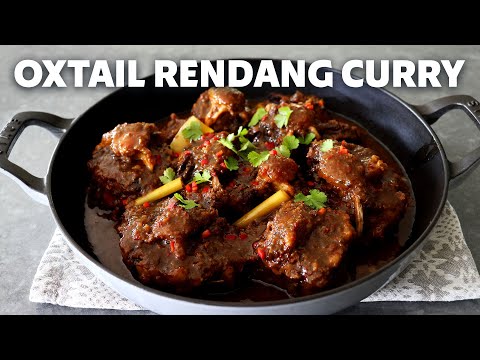
This beef rendang is a delicious dry curry.
— A specific mixture of spices for making curry.
The chef has his own secret curry blend.
— The initial mixture of onions, garlic, and ginger used to start a curry.
You need to cook the curry base slowly.
— Curry ordered from a restaurant to be eaten at home.
Let's get a takeaway curry tonight.
— The specific taste associated with curry spices.
These crisps have a strong curry flavor.
اغلب اشتباه گرفته میشود با
Often confused in the idiom 'curry favor'.
Confused with curry powder; they are very different ingredients.
Often used interchangeably, but masala is the spice blend, curry is the dish.
اصطلاحات و عبارات
— To try to get someone to like you or give you an advantage by flattering them.
He tried to curry favor with the boss by working late.
neutral— An old-fashioned and rare idiom meaning to beat or thrash someone.
His father threatened to curry his hide if he didn't behave.
archaic— Very hot, usually referring to the weather or a person's temper.
It's as hot as a curry out there today!
informal— A very niche slang term sometimes used to mean keeping things spicy or interesting.
We need to keep it curry for the next performance.
slang— Used to describe something that is a standard or basic combination.
Their relationship was just curry and rice—nothing fancy.
informal— A famous stretch of restaurants in Manchester, UK, known for South Asian food.
We spent the evening exploring the Curry Mile.
toponymic— A pun on 'hurry up', sometimes used in restaurant names or casual jokes.
Curry up and finish your dinner!
informal— While not using the word curry, it is often associated with the variety found in curries.
Variety is the spice of life, just like in a good curry.
neutral— The opposite of the origin of 'curry favor' (which was to rub the horse the right way).
His arrogant attitude really rubs me the wrong way.
neutral— A synonym for 'curry favor' that uses a different food metaphor.
She's trying to butter up the teacher before the exam.
informalبهراحتی اشتباه گرفته میشود
Phonetic similarity.
'Carry' means to move something; 'curry' refers to food or grooming.
I will carry the curry to the table.
Rhyming word.
'Scurry' means to move quickly with small steps.
The mouse scurried away from the smell of curry.
Rhyming word.
'Flurry' means a small swirling mass of something, like snow.
There was a flurry of excitement at the curry house.
Rhyming word.
'Hurry' means to move or act with haste.
Hurry up and order the curry!
Rhyming word.
'Slurry' is a semi-liquid mixture, often in industrial contexts.
The thick sauce looked almost like a curry slurry.
الگوهای جملهسازی
I like [type] curry.
I like chicken curry.
Can I have a [adjective] curry?
Can I have a mild curry?
He tried to curry favor with [person].
He tried to curry favor with the teacher.
The [noun] was cooked in a [adjective] curry sauce.
The fish was cooked in a spicy curry sauce.
The [noun] of the curry was [adjective].
The aroma of the curry was intoxicating.
Despite his efforts to curry favor, [result].
Despite his efforts to curry favor, he was passed over for promotion.
I've been [verb-ing] curry all [time].
I've been eating curry all week.
This curry is too [adjective] for me.
This curry is too spicy for me.
خانواده کلمه
اسمها
فعلها
صفتها
مرتبط
نحوه استفاده
Extremely high in culinary and social contexts.
-
I'm going to carry favor with him.
→
I'm going to curry favor with him.
The idiom uses 'curry' (from grooming), not 'carry'.
-
I like to eat much curries.
→
I like to eat many curries.
Use 'many' with plural countable nouns like 'curries'.
-
This curry powder is a fresh leaf.
→
This curry leaf is a fresh herb.
Curry powder and curry leaves are different things.
-
All Indian food is curry.
→
Indian cuisine includes many dishes, some of which are curries.
Avoid overgeneralizing a diverse cuisine.
-
The curry is very spicy, I can't carry it.
→
The curry is very spicy, I can't eat it.
Using 'carry' instead of 'eat' or 'handle' is a common confusion.
نکات
Bloom your spices
To make a better curry, fry your spices in oil for a minute before adding other ingredients to release their flavor.
Idiom usage
Use 'curry favor' when describing someone who is being 'fake' to get a promotion or a better grade.
Regionality
Remember that 'curry' is a broad term; try to learn specific names like 'Rendang' or 'Massaman' for more accuracy.
Countability
Use 'much' for general curry and 'many' for different types of curries.
Short U
Make sure the 'u' in curry sounds like the 'u' in 'up', not the 'a' in 'apple'.
Favor vs Favour
In American English it is 'curry favor', in British English it is 'curry favour'.
Ordering
When at a curry house, ask the waiter for the 'heat level' if you are unsure how spicy a dish is.
Horse grooming
Remember the horse 'Fauvel' to help you remember the meaning of 'curry favor'.
Leftovers
Curry often tastes better the next day because the spices have more time to meld together.
Turmeric
Most curries contain turmeric, which is known for its anti-inflammatory health benefits.
حفظ کنید
روش یادسپاری
Think of a 'CURly' piece of 'RYe' bread dipping into a spicy sauce. CUR-RY.
تداعی تصویری
Imagine a bright yellow bowl of steaming sauce with a silver comb (to remember 'curry favor' as grooming).
شبکه واژگان
چالش
Try to use 'curry' as a noun for food and 'curry favor' as an idiom in the same paragraph about a dinner party.
ریشه کلمه
The culinary word comes from the Tamil word 'kari' meaning 'sauce' or 'relish for rice'. It was adopted by the Portuguese as 'caril' and then by the English as 'curry'. The idiomatic 'curry favor' comes from the Middle English 'currayen' (to groom a horse).
معنای اصلی: Sauce or relish (culinary); to groom or comb (idiomatic).
Dravidian (Tamil) for the food; Indo-European (French/Latin) for the idiom.بافت فرهنگی
Be aware that 'curry' is a colonial term. Some people from South Asia prefer using specific dish names to honor their heritage.
In the UK, 'a curry' is almost as common as 'fish and chips'. In the US, it is often associated specifically with Thai or Indian restaurants.
تمرین در زندگی واقعی
موقعیتهای واقعی
At a restaurant
- How spicy is the curry?
- I'd like the chicken curry.
- Is the curry vegan?
- Can I have extra curry sauce?
In the kitchen
- Add the curry powder now.
- Let the curry simmer.
- I'm making a big curry.
- Where are the curry leaves?
At work (idiomatic)
- He's trying to curry favor.
- Don't curry favor with him.
- It's a clear attempt to curry favor.
- She curried favor by doing extra work.
Shopping
- Where is the curry paste?
- Do you have mild curry powder?
- I need curry ingredients.
- Is this curry sauce hot?
Socializing
- Let's go for a curry.
- Who wants a curry?
- That curry was amazing.
- I know a great curry place.
شروعکنندههای مکالمه
"Do you prefer spicy curries or mild ones?"
"What is your favorite type of curry to cook at home?"
"Have you ever tried to curry favor with someone to get what you wanted?"
"Which country do you think makes the best curry?"
"Do you like Japanese curry or Indian curry more?"
موضوعات نگارش
Describe the best curry you have ever eaten. What did it smell and taste like?
Write about a time you saw someone try to curry favor with a person in authority.
If you had to create a signature curry dish, what ingredients would you use?
How has the meaning of 'curry' changed as it traveled around the world?
Why do you think 'curry' is such a popular comfort food in so many different cultures?
سوالات متداول
10 سوالNo, 'curry' is not a single spice. It is a dish or a blend of many spices like turmeric, cumin, and coriander.
It means to try to get someone to like you or help you by being overly nice or flattering them.
It comes from the Tamil word 'kari', which means sauce or relish.
No, many curries are mild or even sweet, like some Japanese or korma-style curries.
It is a pre-mixed blend of spices created by the British to mimic the flavors of Indian cooking.
No, curry leaves are a fresh herb from a specific tree and have a very different flavor from the powder.
Yes, in the idiom 'curry favor' or rarely to mean cooking with curry spices or grooming a horse.
Chicken Tikka Masala is widely considered the most popular curry in the United Kingdom.
Yes, Thai curries often use fresh herbs and coconut milk, while Indian curries often use dried spices and a base of onions and tomatoes.
Yes, you can say 'I would like two curries,' but it is also uncountable when talking about the food in general.
خودت رو بسنج 180 سوال
Describe your favorite type of curry in three sentences.
خوب نوشتید! تلاش خوبی بود! پاسخ نمونه را ببینید.
Write a sentence using the idiom 'curry favor'.
خوب نوشتید! تلاش خوبی بود! پاسخ نمونه را ببینید.
Explain the difference between curry powder and curry leaves.
خوب نوشتید! تلاش خوبی بود! پاسخ نمونه را ببینید.
Write a short dialogue between a waiter and a customer ordering a curry.
خوب نوشتید! تلاش خوبی بود! پاسخ نمونه را ببینید.
Discuss the cultural significance of curry in the United Kingdom.
خوب نوشتید! تلاش خوبی بود! پاسخ نمونه را ببینید.
Write a recipe for a simple vegetable curry.
خوب نوشتید! تلاش خوبی بود! پاسخ نمونه را ببینید.
Compare and contrast Indian and Thai curries.
خوب نوشتید! تلاش خوبی بود! پاسخ نمونه را ببینید.
Write a formal paragraph using 'ingratiate' instead of 'curry favor'.
خوب نوشتید! تلاش خوبی بود! پاسخ نمونه را ببینید.
Describe the aroma of a curry using five different adjectives.
خوب نوشتید! تلاش خوبی بود! پاسخ نمونه را ببینید.
Write a story about a chef who wins a competition with a secret curry.
خوب نوشتید! تلاش خوبی بود! پاسخ نمونه را ببینید.
How would you explain the word 'curry' to someone who has never heard it?
خوب نوشتید! تلاش خوبی بود! پاسخ نمونه را ببینید.
Write a review of a curry house you have visited.
خوب نوشتید! تلاش خوبی بود! پاسخ نمونه را ببینید.
Explain the etymology of 'curry favor' in your own words.
خوب نوشتید! تلاش خوبی بود! پاسخ نمونه را ببینید.
Write a sentence using 'curry' as a countable noun.
خوب نوشتید! تلاش خوبی بود! پاسخ نمونه را ببینید.
Write a sentence using 'curry' as an uncountable noun.
خوب نوشتید! تلاش خوبی بود! پاسخ نمونه را ببینید.
Discuss why some people find the word 'curry' problematic.
خوب نوشتید! تلاش خوبی بود! پاسخ نمونه را ببینید.
Write an email to a friend inviting them to a 'curry night'.
خوب نوشتید! تلاش خوبی بود! پاسخ نمونه را ببینید.
Describe the visual appearance of a Thai red curry.
خوب نوشتید! تلاش خوبی بود! پاسخ نمونه را ببینید.
Write a sentence about a politician trying to curry favor.
خوب نوشتید! تلاش خوبی بود! پاسخ نمونه را ببینید.
What are the three most important spices in a curry, in your opinion? Why?
خوب نوشتید! تلاش خوبی بود! پاسخ نمونه را ببینید.
Pronounce the word 'curry' clearly.
این را بلند بخوانید:
تو گفتی:
تشخیص گفتار در مرورگر شما پشتیبانی نمیشود. از کروم یا اج استفاده کنید.
Tell a partner about a time you ate something very spicy.
این را بلند بخوانید:
تو گفتی:
تشخیص گفتار در مرورگر شما پشتیبانی نمیشود. از کروم یا اج استفاده کنید.
Explain the idiom 'curry favor' to a friend.
این را بلند بخوانید:
تو گفتی:
تشخیص گفتار در مرورگر شما پشتیبانی نمیشود. از کروم یا اج استفاده کنید.
Order a specific curry from a menu out loud.
این را بلند بخوانید:
تو گفتی:
تشخیص گفتار در مرورگر شما پشتیبانی نمیشود. از کروم یا اج استفاده کنید.
Discuss your opinion on fusion food like curry-flavored chips.
این را بلند بخوانید:
تو گفتی:
تشخیص گفتار در مرورگر شما پشتیبانی نمیشود. از کروم یا اج استفاده کنید.
Describe the smell of a kitchen where a curry is being cooked.
این را بلند بخوانید:
تو گفتی:
تشخیص گفتار در مرورگر شما پشتیبانی نمیشود. از کروم یا اج استفاده کنید.
Debate whether 'curry' is an appropriate term for Indian food.
این را بلند بخوانید:
تو گفتی:
تشخیص گفتار در مرورگر شما پشتیبانی نمیشود. از کروم یا اج استفاده کنید.
Give a short presentation on the history of the spice trade.
این را بلند بخوانید:
تو گفتی:
تشخیص گفتار در مرورگر شما پشتیبانی نمیشود. از کروم یا اج استفاده کنید.
Roleplay: You are a waiter explaining the spice levels of different curries.
این را بلند بخوانید:
تو گفتی:
تشخیص گفتار در مرورگر شما پشتیبانی نمیشود. از کروم یا اج استفاده کنید.
Talk about a person you know who always tries to curry favor.
این را بلند بخوانید:
تو گفتی:
تشخیص گفتار در مرورگر شما پشتیبانی نمیشود. از کروم یا اج استفاده کنید.
Explain how to make a basic curry base.
این را بلند بخوانید:
تو گفتی:
تشخیص گفتار در مرورگر شما پشتیبانی نمیشود. از کروم یا اج استفاده کنید.
What is the most famous curry in your country?
این را بلند بخوانید:
تو گفتی:
تشخیص گفتار در مرورگر شما پشتیبانی نمیشود. از کروم یا اج استفاده کنید.
How do you feel about very spicy food?
این را بلند بخوانید:
تو گفتی:
تشخیص گفتار در مرورگر شما پشتیبانی نمیشود. از کروم یا اج استفاده کنید.
Summarize the etymology of the word 'curry'.
این را بلند بخوانید:
تو گفتی:
تشخیص گفتار در مرورگر شما پشتیبانی نمیشود. از کروم یا اج استفاده کنید.
If you were a chef, what would you name your signature curry?
این را بلند بخوانید:
تو گفتی:
تشخیص گفتار در مرورگر شما پشتیبانی نمیشود. از کروم یا اج استفاده کنید.
Describe the difference between red and green curry.
این را بلند بخوانید:
تو گفتی:
تشخیص گفتار در مرورگر شما پشتیبانی نمیشود. از کروم یا اج استفاده کنید.
Do you think 'currying favor' is a good or bad thing?
این را بلند بخوانید:
تو گفتی:
تشخیص گفتار در مرورگر شما پشتیبانی نمیشود. از کروم یا اج استفاده کنید.
What are the common side dishes for a curry?
این را بلند بخوانید:
تو گفتی:
تشخیص گفتار در مرورگر شما پشتیبانی نمیشود. از کروم یا اج استفاده کنید.
Tell a story about a 'curry night' gone wrong.
این را بلند بخوانید:
تو گفتی:
تشخیص گفتار در مرورگر شما پشتیبانی نمیشود. از کروم یا اج استفاده کنید.
How has curry changed in the last 100 years?
این را بلند بخوانید:
تو گفتی:
تشخیص گفتار در مرورگر شما پشتیبانی نمیشود. از کروم یا اج استفاده کنید.
Listen to the sentence and write down the type of curry mentioned.
Listen for the word 'curry' and count how many times it appears in the clip.
Does the speaker use 'curry' as a noun or a verb?
Identify the spice level mentioned by the speaker.
What is the speaker's favorite curry ingredient?
Listen to the idiom and explain its meaning in this context.
Which country is the speaker from based on their description of curry?
What does the speaker say about curry powder?
Identify the tone of the speaker (e.g., hungry, disgusted, academic).
Listen to the recipe and list the first three steps.
What is the speaker's opinion on 'currying favor'?
Listen for the word 'masala' and explain how it relates to curry.
Which meat is being used in the curry described?
How many curries are being ordered in the dialogue?
What is the secret ingredient mentioned at the end?
/ 180 درست
نمره کامل!
Summary
The word 'curry' is both a versatile culinary term for spiced stews and a social idiom for seeking advantage. Example: 'While enjoying a spicy chicken curry, the employee planned how to curry favor with his manager.'
- A spiced dish of meat or vegetables in sauce.
- A blend of spices used for flavoring food.
- An idiom meaning to seek favor through flattery.
- A word with deep colonial and South Asian roots.
Bloom your spices
To make a better curry, fry your spices in oil for a minute before adding other ingredients to release their flavor.
Idiom usage
Use 'curry favor' when describing someone who is being 'fake' to get a promotion or a better grade.
Regionality
Remember that 'curry' is a broad term; try to learn specific names like 'Rendang' or 'Massaman' for more accuracy.
Countability
Use 'much' for general curry and 'many' for different types of curries.
مثال
Let's order a lamb curry and some naan bread.
محتوای مرتبط
در ویدیوها ببینید
آن را در متن یاد بگیرید
این کلمه در زبانهای دیگر
واژههای بیشتر Food
wheat
B1گندم یک گیاه غلهای است که به طور گسترده به عنوان منبع اصلی غذا برای انسان و حیوانات کشت میشود. این گیاه معمولاً برای تهیه آرد جهت پخت نان، پاستا و شیرینی پودر میشود.
buttermilk
B21. این پنکیکهای باترمیلک (buttermilk) بسیار ترد و خوشمزه هستند. 2. سس باترمیلک طعم تند و تیزی به سالاد میدهد.
salt
A2نمک یک ماده معدنی است که برای چاشنی و نگهداری غذا استفاده می شود. 'لطفاً نمک را به من بدهید.'
pineapple
A1آناناس یک میوه گرمسیری بزرگ با پوستی سفت و فلسدار و تاجی از برگهای سبز است.
mushrooms
B1قارچها اندامهای بارده قارچها هستند که بسیاری از انواع آنها خوراکی و در آشپزی محبوب هستند.
truffles
C1ترافلها یا قارچهای خوراکی کمیابی هستند که در زیر زمین رشد میکنند و یا نوعی شیرینی شکلاتی غنی هستند. هر دو به عنوان خوراکیهای لوکس شناخته میشوند.
snack
A1میان وعده مقدار کمی غذا است که بین وعده های اصلی غذا خورده می شود.
coca
B1کوکا گیاهی است بومی کوههای آند که برگهای آن خاصیت محرک دارد.
corn
A1ذرت گیاهی بلند است که دانههای زرد و خوراکی تولید میکند.
salmon
B1ماهی سالمون یک ماهی بزرگ با گوشت صورتی است که برای تخمریزی به رودخانه بازمیگردد.
نظرات (0)
برای نظر دادن وارد شویدمحتوای یادگیری ما رو کاوش کن
زبانها
واژگان
عبارات
قواعد گرامر
ما از کوکیهای ضروری برای ورود، امنیت و تنظیمات استفاده میکنیم. تحلیلهای اختیاری فقط در صورت موافقت شما فعال میشوند.

سابلرن را نصب کنید
برای تجربهای سریعتر و شبیه به اپلیکیشن، به صفحه اصلی خود اضافه کنید
ورود ایجاد حساب کاربری
Fastest option

تاریخچه چت
هنوز مکالمهای نداری.
دستیار SubLearn
پشتیبانی هوش مصنوعی
میخوای تیکت پشتیبانی بسازی؟ یک نفر واقعی بهت کمک میکنه.
پیامهای رایگانت رو استفاده کردی
برای چت نامحدود با هوش مصنوعی ثبتنام کنساختهشده با هوش مصنوعی — پاسخها همیشه دقیق نیستند