injustice در ۳۰ ثانیه
- Injustice is the lack of fairness or the violation of rights, often involving systemic or legal failures that cause moral outrage.
- It can be used as a countable noun for specific acts or an uncountable noun for the general concept of unfairness.
- Commonly associated with social, legal, and economic contexts, it is a powerful word used to demand change and reform.
- Synonyms include unfairness and inequity, but injustice is more formal and carries greater moral and legal weight.
The term injustice is a powerful noun that describes a situation where fairness is absent, or where the principles of equity and moral rightness have been ignored. It is not merely a synonym for 'unfairness' in a casual sense; rather, it often carries a weight of systemic or legal failure. When we speak of injustice, we are often referring to the violation of human rights, the unequal distribution of resources, or a judicial system that fails to protect the innocent. It is a word rooted in the Latin 'in-' (not) and 'justitia' (justice), suggesting a fundamental break in the social contract that binds a community together. People use this word when they feel a deep sense of moral outrage. It is heard in courtrooms when a verdict is perceived as wrong, in political rallies when activists demand change, and in history books when describing the suffering of marginalized groups. Understanding injustice requires looking beyond individual acts to the structures that allow those acts to persist. It is a concept that spans ethics, law, sociology, and personal experience, making it one of the most significant words in the English language for discussing the human condition and our collective aspirations for a better world.
- Core Concept
- The fundamental lack of justice or the violation of the rights of others through unfair actions or systemic bias.
The protesters gathered in the city square to voice their anger against the systemic injustice that had plagued their community for decades.
Injustice can be categorized into various forms. Social injustice refers to the unequal treatment of individuals based on their race, gender, or economic status. Legal injustice occurs when the law is applied inconsistently or when the innocent are punished. Distributive injustice involves the unfair allocation of goods and services within a society. Each of these forms highlights a different way in which the ideal of 'justice for all' can be compromised. When using the word, it is important to consider the scale of the situation. Calling a minor disagreement an 'injustice' might seem hyperbolic, whereas failing to use the word for a major human rights violation might seem dismissive. It is a word that demands action; to identify an injustice is often the first step toward rectifying it. Philosophers like John Rawls and Amartya Sen have spent their lives defining what justice is, and by extension, what constitutes an injustice. They argue that a society's health can be measured by how it treats its most vulnerable members and how it responds to perceived injustices.
- Social Context
- Often used in the context of civil rights, labor movements, and judicial reform to highlight institutional failures.
To ignore an injustice is to become an accomplice to it, as silence often favors the oppressor.
Furthermore, the word 'injustice' is frequently paired with verbs like 'remedy,' 'redress,' 'combat,' and 'expose.' These pairings suggest that injustice is a problem to be solved rather than a permanent state of affairs. In literature, the theme of injustice is a driving force for many protagonists, from Jean Valjean in Les Misérables to Atticus Finch in To Kill a Mockingbird. These characters face a world where the rules are rigged against them or those they defend, and their struggle against injustice provides the moral core of the narrative. In modern discourse, the phrase 'social injustice' has become a rallying cry for movements seeking to address historical wrongs and contemporary inequalities. Whether it is environmental injustice—where poor communities bear the brunt of pollution—or economic injustice—where the wealth gap continues to widen—the word serves as a powerful tool for critique and a catalyst for social change.
- Historical Usage
- Historically, the term has been central to documents like the Declaration of Independence and various manifestos for human rights.
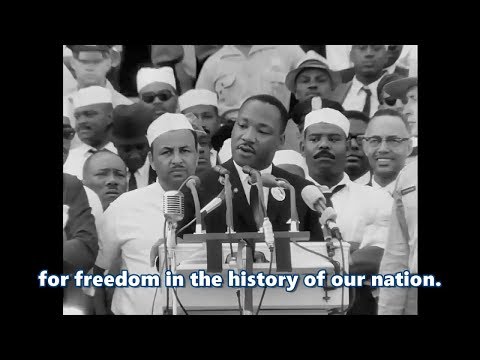
Martin Luther King Jr. famously stated that injustice anywhere is a threat to justice everywhere.
The documentary highlights the many injustices faced by migrant workers in the agricultural sector.
She dedicated her life to fighting injustice in all its forms, regardless of the personal cost.
Using the word injustice effectively requires an understanding of its grammatical versatility and its emotional resonance. As a noun, it can function as the subject of a sentence, the object of a verb, or the object of a preposition. Because it deals with heavy moral themes, it is often found in formal writing, speeches, and academic essays. However, it is also common in everyday conversation when people discuss news events or personal grievances that feel profoundly wrong. One of the most common ways to use 'injustice' is to pair it with strong verbs that indicate a reaction to the unfairness. For instance, one might 'fight against,' 'protest,' 'suffer,' or 'witness' an injustice. These verbs help to paint a picture of the relationship between the individual and the unfair situation. When you say someone 'suffered an injustice,' you are positioning them as a victim of a system that failed them. When you say someone 'fought an injustice,' you are highlighting their agency and moral courage.
- Grammatical Role
- Commonly used as a direct object with verbs like 'remedy,' 'correct,' or 'perpetuate.'
The new legislation aims to correct the historical injustice of land displacement.
Another important aspect of using 'injustice' is the use of adjectives to specify the type of unfairness being discussed. Common modifiers include 'social,' 'racial,' 'economic,' 'gross,' 'glaring,' and 'systemic.' For example, 'gross injustice' emphasizes the severity and obviousness of the wrong, while 'systemic injustice' suggests that the problem is built into the very fabric of an institution or society. This specificity is crucial in academic and professional contexts where precise language is required to diagnose and address complex problems. Furthermore, 'injustice' often appears in prepositional phrases such as 'a sense of injustice' or 'in the face of injustice.' These phrases describe the emotional or situational context. A 'sense of injustice' is that internal feeling that something is not right, which often serves as a primary motivator for social movements. To stand 'in the face of injustice' implies a brave confrontation with a powerful and unfair force.
- Collocations
- Adjectives like 'perceived,' 'manifest,' and 'profound' are frequently used to qualify the noun.
There was a glaring injustice in the way the two defendants were treated by the media.
In more complex sentence structures, 'injustice' can be used to link cause and effect. For instance, 'The prevailing injustice led to a widespread loss of faith in the government.' Here, the noun acts as the catalyst for a broader social consequence. It can also be used in comparative structures to highlight disparities: 'The injustice of the current tax system is evident when compared to the policies of the previous decade.' By using 'injustice' in these ways, a writer can build a persuasive argument that appeals to the reader's sense of morality and logic. It is also worth noting the difference between 'an injustice' (a specific act) and 'injustice' (the general concept). 'He committed an injustice' focuses on a single deed, while 'He fought against injustice' focuses on the broader struggle. Mastery of these nuances allows for more sophisticated and impactful communication, especially when discussing sensitive topics like human rights and social reform.
- Sentence Variation
- Use 'injustice' as a subject to give it more weight: 'Injustice thrives where transparency is lacking.'
The victims of this injustice are still waiting for a formal apology from the state.
To deny someone their basic rights is a grave injustice that cannot be overlooked.
The community felt a collective sense of injustice after the local school was closed without consultation.
The word injustice is a staple of public discourse, appearing frequently in news reports, political speeches, and legal discussions. When a journalist reports on a controversial court case, they might use the term to describe a verdict that has sparked public outcry. In the political arena, candidates often use 'injustice' to frame their platforms, promising to fight against economic or social inequities to win the hearts and minds of voters. This word is also deeply embedded in the language of activism. From the Civil Rights Movement in the United States to the anti-apartheid struggle in South Africa, 'injustice' has been the central theme around which people organize. You will hear it in chants at protests, read it on banners, and find it in the manifestos of organizations dedicated to human rights. It is a word that bridges the gap between personal feeling and public policy, turning individual pain into a collective demand for change.
- Media Usage
- Common in headlines regarding legal appeals, human rights abuses, and social inequality.
The evening news featured a segment on the injustice of the current housing crisis.
In academic settings, 'injustice' is a key term in departments of sociology, philosophy, and law. Professors and students analyze the roots of injustice, looking at how historical events and legal frameworks contribute to modern-day disparities. You might hear it during a lecture on 'environmental injustice,' which discusses how marginalized communities are disproportionately affected by climate change and pollution. In literature and film, 'injustice' is a primary theme that drives character development and plot. Whether it's a protagonist seeking revenge for a past wrong or a hero fighting for the rights of others, the concept of injustice provides the moral stakes that make a story compelling. Even in popular culture, such as superhero movies or graphic novels, the fight against injustice is a recurring motif. Characters like Batman or Wonder Woman are often portrayed as symbols of justice who stand against the 'injustice' of crime and corruption.
- Academic Context
- Used in critical theory and social sciences to describe structural barriers to equality.
The professor argued that the injustice was not accidental but a direct result of systemic bias.
Furthermore, 'injustice' is a word you might encounter in religious or spiritual contexts. Many faiths emphasize the importance of seeking justice and standing up for the oppressed. Sermons and religious texts often highlight the 'injustice' of poverty and the moral obligation of the faithful to address it. In everyday life, you might hear someone use the word in a more personal way, such as when discussing a workplace grievance or an unfair family situation. While the scale is smaller, the emotional core remains the same: a feeling that things are not as they should be. Whether it's a global crisis or a local dispute, the word 'injustice' provides a powerful way to articulate the gap between our ideals of fairness and the reality of our experiences. It is a word that resonates because it speaks to a universal human desire for equity and respect.
- Everyday Conversation
- Used to express deep frustration with unfair treatment in work or personal life.
'It's a total injustice that he got the promotion despite his poor performance,' she complained.
The activist spoke passionately about the injustice of denying children access to quality education.
The film explores the injustice of the Jim Crow era in the American South.
One of the most frequent mistakes learners make with the word injustice is confusing it with 'unfairness.' While they are related, 'injustice' is much stronger and more formal. Using 'injustice' to describe a small, trivial event—like not getting the last piece of cake—can sound overly dramatic or even sarcastic. It is best reserved for situations involving moral, legal, or systemic wrongs. Another common error is the misspelling 'unjustice.' Because many opposites in English are formed with the prefix 'un-' (like 'unhappy' or 'unfair'), it is a natural mistake to make. However, the correct prefix for 'justice' is 'in-,' following the Latin root. Remembering this distinction is key to maintaining a professional and accurate tone in your writing. Additionally, learners sometimes struggle with the countability of the word. 'Injustice' can be both countable and uncountable, and using the wrong form can slightly alter the meaning of a sentence.
- Common Error: Prefix
- Incorrect: 'The un-justice of the situation.' Correct: 'The in-justice of the situation.'
Many students mistakenly write 'unjustice' when they mean injustice.
Another mistake involves the preposition that follows 'injustice.' Learners often use 'of' when 'to' or 'against' would be more appropriate. For example, 'the injustice of the poor' could be misinterpreted as the poor being unjust, whereas 'the injustice to the poor' clearly indicates that the poor are the victims. Precision with prepositions is vital for clarity. Furthermore, there is a tendency to overuse the word in contexts where 'bias' or 'prejudice' might be more specific. While an injustice can be the result of bias, the words are not interchangeable. 'Bias' refers to a leaning or preference, while 'injustice' refers to the unfair outcome or action itself. Using the more specific term can make your writing more precise and insightful. Finally, some writers forget to use an article when referring to a specific instance. Saying 'He committed injustice' sounds like he committed the general concept, whereas 'He committed an injustice' points to a specific act.
- Preposition Pitfall
- Use 'injustice to' or 'injustice against' when identifying the victim.
It was a grave injustice to the families who lost their homes.
Lastly, be careful with the word's register. 'Injustice' is a high-register word. In very casual settings, it can feel out of place. If you are talking to a friend about a minor annoyance, 'unfair' or 'messed up' is usually better. However, if you are discussing a serious topic, 'injustice' is the correct choice. Understanding the 'weight' of the words you choose is a key part of reaching an advanced level of English. Misusing 'injustice' in a lighthearted context can make you seem like you don't understand the gravity of the word, while failing to use it in a serious context can make your argument seem weak. By paying attention to these common pitfalls, you can use 'injustice' with confidence and precision, ensuring that your message is both clear and appropriately impactful.
- Register Check
- Avoid using 'injustice' for trivial matters; it is a serious word for serious problems.
The speaker avoided the word 'unfair' and instead used injustice to emphasize the severity of the situation.
Correcting an injustice often requires a change in the law itself.
The report detailed the injustices inherent in the old voting system.
While injustice is a powerful word, there are several synonyms and related terms that can be used to provide more nuance or to avoid repetition. Understanding the subtle differences between these words is essential for effective communication. 'Unfairness' is the most common synonym, but it is less formal and often refers to smaller, less systemic issues. 'Inequity' is a more academic term, frequently used in discussions about economics and social policy to describe an unfair distribution of resources. 'Wrong' or 'wrongdoing' can be used to describe an unjust act, but they focus more on the action itself rather than the lack of justice. 'Grievance' refers to a real or imagined wrong that causes a person to complain or take action. 'Oppression' is a much stronger word, describing a situation where a group is kept down by the cruel or unjust exercise of authority. Each of these words carries its own specific connotations and is best suited for different contexts.
- Comparison: Injustice vs. Inequity
- 'Injustice' often implies a violation of rights or law, while 'inequity' specifically refers to a lack of fairness in distribution or opportunity.
While the injustice was clear, the underlying inequity in the system was harder to address.
Other alternatives include 'bias' and 'prejudice,' which describe the attitudes that often lead to injustice. 'Partiality' refers to a tendency to favor one side over another, which is a form of injustice in a judicial or refereeing context. 'Iniquity' is a somewhat archaic but very strong word for a gross injustice or a wicked act. In a legal context, you might hear the term 'miscarriage of justice,' which specifically refers to a failure of the court system, such as a wrongful conviction. For more informal situations, phrases like 'a raw deal' or 'a dirty trick' might be used, though these lack the moral weight of 'injustice.' When choosing an alternative, consider the tone you want to set and the specific type of unfairness you are describing. If you want to sound objective and academic, 'inequity' or 'disparity' might be better. If you want to sound passionate and morally driven, 'injustice' or 'oppression' are more effective choices.
- Comparison: Injustice vs. Bias
- 'Bias' is the internal inclination; 'injustice' is the external, unfair result of that inclination.
The judge's personal bias led to a manifest injustice in the sentencing.
Furthermore, the word 'disparity' is often used in social sciences to describe a difference that is unfair but not necessarily illegal. For example, 'the disparity in healthcare outcomes' refers to an injustice that is the result of many complex factors. 'Discrimination' is another related term, focusing on the unfair treatment of a person or group based on specific characteristics. While all discrimination is an injustice, not all injustice is discrimination. For instance, a general failure of the legal system might be an injustice but not necessarily discriminatory if it affects everyone equally. By expanding your vocabulary to include these related terms, you can describe the world with greater precision and depth. This not only improves your English skills but also enhances your ability to engage in meaningful discussions about the complex issues facing our society today.
- Comparison: Injustice vs. Grievance
- An 'injustice' is the objective fact of unfairness; a 'grievance' is the formal complaint or feeling of resentment resulting from it.
The workers filed a formal grievance to protest the injustice of their low wages.
The documentary compared the injustice of the past with the challenges of the present.
Addressing the injustice of the current system will require significant political will.
چقدر رسمی است؟
نکته جالب
The root word 'jus' in Latin also gave us words like 'jury,' 'judge,' and 'abjure.' It originally referred to a religious formula or a ritual law.
راهنمای تلفظ
- Pronouncing the 'i' like 'eye' (incorrect: eye-n-justice).
- Putting the stress on the first syllable (incorrect: IN-justice).
- Missing the 't' sound in the middle.
- Pronouncing the 'c' like a 'k' sound.
- Confusing the ending with '-tious' (incorrect: in-jus-tious).
سطح دشواری
The word itself is common, but it often appears in complex academic or legal texts.
Requires an understanding of formal register and correct preposition usage.
Easy to pronounce, but should be used carefully to avoid sounding overly dramatic.
Frequently heard in news and documentaries, usually with clear context.
بعداً چه یاد بگیریم؟
پیشنیازها
بعداً یاد بگیرید
پیشرفته
گرامر لازم
Prefix 'in-' for negation
justice -> injustice, active -> inactive, capable -> incapable
Noun countability
He fought injustice (uncountable). He committed an injustice (countable).
Adjective formation with '-just'
The decision was unjust (adjective).
Prepositional phrases with 'of'
The injustice of the situation was clear.
Gerunds as subjects
Fighting injustice is a noble goal.
مثالها بر اساس سطح
It is an injustice that he has no toys.
C'est une injustice qu'il n'ait pas de jouets.
Use 'an' before 'injustice' because it starts with a vowel.
The teacher said injustice is bad.
Le professeur a dit que l'injustice est mauvaise.
'Injustice' is the subject of the sentence.
We want to stop injustice.
Nous voulons arrêter l'injustice.
'Stop' is the verb, 'injustice' is the object.
Is this an injustice?
Est-ce une injustice ?
This is a simple question form.
I feel the injustice.
Je ressens l'injustice.
'The' is used for a specific feeling.
No more injustice!
Plus d'injustice !
A common short phrase for protests.
That is a big injustice.
C'est une grande injustice.
'Big' is an adjective modifying 'injustice'.
They fight injustice every day.
Ils combattent l'injustice chaque jour.
Present simple tense for a regular action.
The movie was about a great injustice.
Le film portait sur une grande injustice.
'About' is the preposition connecting the movie to the topic.
She wrote a letter about the injustice.
Elle a écrit une lettre au sujet de l'injustice.
'The' refers to a specific injustice mentioned before.
They are protesting against the injustice.
Ils protestent contre l'injustice.
Present continuous tense for an ongoing action.
It is an injustice to treat people this way.
C'est une injustice de traiter les gens de cette façon.
'To treat' is an infinitive phrase acting as the real subject.
He suffered an injustice at his old job.
Il a subi une injustice à son ancien travail.
'Suffered' is a common verb used with 'injustice'.
We must not ignore injustice.
Nous ne devons pas ignorer l'injustice.
'Must not' expresses a strong obligation.
The book explains many injustices in history.
Le livre explique de nombreuses injustices dans l'histoire.
Plural form 'injustices' for multiple examples.
Can we fix this injustice together?
Pouvons-nous réparer cette injustice ensemble ?
A question using the modal verb 'can'.
The community was outraged by the manifest injustice of the court's decision.
La communauté a été révoltée par l'injustice manifeste de la décision du tribunal.
'Manifest' is a formal adjective meaning 'obvious'.
Social injustice remains a significant challenge in many modern societies.
L'injustice sociale reste un défi important dans de nombreuses sociétés modernes.
'Social injustice' is a common compound noun.
He dedicated his life to redressing the injustices faced by the poor.
Il a consacré sa vie à réparer les injustices subies par les pauvres.
'Redressing' is a formal verb meaning 'to set right'.
The report highlights the systemic injustice within the healthcare system.
Le rapport souligne l'injustice systémique au sein du système de santé.
'Systemic' means affecting the entire system.
She felt a deep sense of injustice when she was passed over for the promotion.
Elle a ressenti un profond sentiment d'injustice lorsqu'elle a été écartée pour la promotion.
'Sense of injustice' is a common idiomatic phrase.
To remain silent in the face of injustice is to take the side of the oppressor.
Rester silencieux face à l'injustice, c'est prendre le parti de l'oppresseur.
A complex sentence using 'to remain' and 'to take' as subjects.
The lawyer argued that his client had been a victim of a grave injustice.
L'avocat a soutenu que son client avait été victime d'une grave injustice.
'Grave' is an adjective meaning 'very serious'.
The documentary explores the historical injustices committed against indigenous peoples.
Le documentaire explore les injustices historiques commises contre les peuples autochtones.
'Historical injustices' refers to wrongs from the past.
The pervasive nature of economic injustice often leads to social unrest.
La nature omniprésente de l'injustice économique mène souvent à des troubles sociaux.
'Pervasive' means spreading widely throughout an area or group.
Correcting this injustice will require more than just a change in policy.
Corriger cette injustice nécessitera plus qu'un simple changement de politique.
The gerund 'Correcting' acts as the subject.
The activists are calling for an end to the institutional injustice that plagues the city.
Les militants appellent à la fin de l'injustice institutionnelle qui ronge la ville.
'Plagues' is used metaphorically to mean 'causes trouble to'.
There is a glaring injustice in the way the law is applied to different social classes.
Il y a une injustice flagrante dans la façon dont la loi est appliquée aux différentes classes sociales.
'Glaring' means highly obvious or conspicuous.
The victims of the injustice are seeking legal recourse through the high court.
Les victimes de l'injustice cherchent un recours juridique auprès de la haute cour.
'Legal recourse' means the right to seek help from a court.
The philosopher's work focuses on the intersection of morality and injustice.
Le travail du philosophe se concentre sur l'intersection de la moralité et de l'injustice.
'Intersection' is used here to mean the point where two things meet.
He spoke about the injustice of a system that prioritizes profit over people.
Il a parlé de l'injustice d'un système qui privilégie le profit par rapport aux personnes.
'Prioritizes' means to treat something as more important than others.
The documentary was a powerful indictment of the injustices of the prison system.
Le documentaire était un réquisitoire puissant contre les injustices du système carcéral.
'Indictment' is a formal charge or accusation of a serious crime.
The manifest injustice of the verdict sparked a nationwide debate on judicial reform.
L'injustice manifeste du verdict a déclenché un débat national sur la réforme judiciaire.
'Sparked' is a vivid verb meaning 'to trigger or initiate'.
Structural injustice is often invisible to those who benefit from the status quo.
L'injustice structurelle est souvent invisible pour ceux qui bénéficient du statu quo.
'Status quo' is a Latin phrase meaning the existing state of affairs.
The author explores how language can be used to mask or perpetuate injustice.
L'auteur explore comment le langage peut être utilisé pour masquer ou perpétuer l'injustice.
'Mask' and 'perpetuate' are sophisticated verbs in this context.
The reparations were intended to address the profound injustices of the colonial era.
Les réparations étaient destinées à remédier aux profondes injustices de l'ère coloniale.
'Reparations' refers to making amends for a wrong done.
There is an inherent injustice in any system that denies individuals their basic agency.
Il y a une injustice inhérente à tout système qui refuse aux individus leur libre arbitre fondamental.
'Inherent' means existing in something as a permanent, essential attribute.
The NGO works tirelessly to expose the injustices hidden within global supply chains.
L'ONG travaille sans relâche pour dénoncer les injustices cachées au sein des chaînes d'approvisionnement mondiales.
'Tirelessly' is an adverb emphasizing persistent effort.
The film serves as a poignant reminder of the injustices suffered by political dissidents.
Le film sert de rappel poignant des injustices subies par les dissidents politiques.
'Poignant' means evoking a keen sense of sadness or regret.
The critique focused on the epistemological injustice of ignoring indigenous knowledge.
La critique s'est concentrée sur l'injustice épistémologique consistant à ignorer les savoirs autochtones.
'Epistemological' relates to the theory of knowledge.
The legal scholar argued that the statute represented a grotesque injustice that contravened fundamental human rights.
Le juriste a soutenu que le statut représentait une injustice grotesque qui contrevenait aux droits de l'homme fondamentaux.
'Grotesque' and 'contravened' are high-level vocabulary choices.
The pervasive sense of injustice served as the primary catalyst for the revolutionary fervor that swept the nation.
Le sentiment d'injustice omniprésent a servi de catalyseur principal à la ferveur révolutionnaire qui a balayé la nation.
'Catalyst' and 'fervor' are used to describe intense social change.
To deconstruct the mechanisms of systemic injustice, one must first understand the historical contingencies that shaped them.
Pour déconstruire les mécanismes de l'injustice systémique, il faut d'abord comprendre les contingences historiques qui les ont façonnés.
'Deconstruct' and 'contingencies' are common in academic analysis.
The report provides a meticulous account of the injustices perpetrated under the guise of national security.
Le rapport fournit un compte rendu méticuleux des injustices perpétrées sous le couvert de la sécurité nationale.
'Meticulous' and 'perpetrated' add a layer of formal precision.
The inherent injustice of the global financial architecture is a recurring theme in his recent monographs.
L'injustice inhérente à l'architecture financière mondiale est un thème récurrent dans ses récentes monographies.
'Architecture' is used metaphorically to describe a system's structure.
The activist's rhetoric was designed to bridge the gap between abstract notions of justice and the visceral experience of injustice.
La rhétorique du militant était conçue pour combler le fossé entre les notions abstraites de justice et l'expérience viscérale de l'injustice.
'Visceral' means relating to deep inward feelings rather than to the intellect.
The judicial system's failure to provide adequate representation is a manifest injustice that undermines the rule of law.
L'incapacité du système judiciaire à fournir une représentation adéquate est une injustice manifeste qui mine l'état de droit.
'Undermines' means to lessen the effectiveness or power of something.
The philosopher posited that the perception of injustice is the foundational element of any viable social contract.
Le philosophe a postulé que la perception de l'injustice est l'élément fondateur de tout contrat social viable.
'Posited' is a formal way to say 'suggested as a fact'.
ترکیبهای رایج
عبارات رایج
— A failure of a court or judicial system to attain the ends of justice, especially one which results in the conviction of an innocent person.
The release of the prisoner after twenty years was a correction of a major miscarriage of justice.
— When confronted with or experiencing an unfair situation.
She remained brave even in the face of injustice.
— A loud or public protest against something perceived as unfair.
A cry of injustice rose from the crowd after the announcement.
— To correct or make up for a past unfair act.
The new administration promised to right the injustices of the past.
— An unfairness that is obvious and clear to everyone.
The judge's decision was a manifest injustice to the victims.
— To treat someone unfairly or to have an unfairly low opinion of them.
I think you are doing him an injustice by saying he didn't try.
— Unfairness related to the distribution of wealth and resources.
The protest focused on economic injustice and the wage gap.
— Unfair treatment based on a person's race or ethnicity.
The movement sought to end racial injustice in the legal system.
— The unfair exposure of marginalized communities to environmental hazards.
The building of the factory in the poor neighborhood was an example of environmental injustice.
— Refusing to see or acknowledge that something is unfair.
The authorities seemed blind to the injustice happening right in front of them.
اغلب اشتباه گرفته میشود با
Unfairness is more general and less formal; injustice implies a more serious moral or legal wrong.
Inequity specifically refers to unfairness in the distribution of resources or opportunities.
This is a common misspelling; the correct word is 'injustice'.
اصطلاحات و عبارات
— To make a bad situation even worse by doing something else that is unfair or upsetting.
They fired him, and then, to add insult to injury, they refused to pay his final salary.
informal/neutral— An instance of unfair treatment or a situation where someone is disadvantaged.
The workers felt they were getting a raw deal with the new contract.
informal— To receive the worst part of a deal or to be treated unfairly in a situation.
In the divorce settlement, she felt she was given the short end of the stick.
informal— To make a situation unfair by favoring one side over the other.
The new evidence tilted the scales of justice in favor of the defendant.
neutral— An action that is insulting or disappointing, especially when it feels like an injustice.
Not being invited to the wedding was a real slap in the face.
informal— To arrange things in an unfair way so that one person or side has an advantage.
It felt like the committee had stacked the deck against the local candidates.
informal— To treat one person or group better than others in an unfair way.
The manager was accused of playing favorites when it came to promotions.
neutral— An unofficial court or a trial that is conducted in an unfair or illegal way.
The hearing was nothing more than a kangaroo court with a predetermined outcome.
informal— To trick or deceive someone in an unfair way.
He tried to pull a fast one by changing the terms of the contract at the last minute.
informal— To do or say something that is very unfair or cruel.
Bringing up his personal problems during the debate was hitting below the belt.
informalبهراحتی اشتباه گرفته میشود
Both start with 'in-' and relate to harm.
An injury is physical or emotional harm to a person; an injustice is a violation of rights or fairness.
He suffered a physical injury and a legal injustice.
Both are formal legal terms starting with 'in-'.
An indictment is a formal charge of a crime; an injustice is the unfair situation itself.
The indictment was a response to the perceived injustice.
Both describe lack of balance in society.
Inequality is the state of being unequal; injustice is the moral wrongness of that inequality.
Economic inequality is often seen as a form of social injustice.
Similar prefix and length.
Instability refers to a lack of steady state; injustice refers to a lack of fairness.
Political instability can often lead to widespread injustice.
Both involve negative treatment.
An insult is a disrespectful remark; an injustice is a systemic or legal unfairness.
The low settlement was an insult to the victims of the injustice.
الگوهای جملهسازی
It is an injustice.
It is an injustice that he has no lunch.
They fight against [noun].
They fight against injustice in the city.
A sense of [noun].
She felt a strong sense of injustice.
The [adjective] injustice of [something].
The systemic injustice of the law was revealed.
To redress the [noun] of [something].
The goal is to redress the injustices of the past.
[Noun] is a catalyst for [something].
Injustice is a catalyst for revolutionary change.
To be a victim of [noun].
He was a victim of a grave injustice.
To manifest as [noun].
The problem can manifest as a legal injustice.
خانواده کلمه
اسمها
فعلها
صفتها
مرتبط
نحوه استفاده
Common in news, law, and social sciences; less common in casual daily chat.
-
Using 'unjustice' instead of 'injustice'.
→
The injustice of the situation was clear.
'Unjustice' is not a word. The correct prefix for 'justice' is 'in-', following its Latin origin. This is a common error because many other opposites use 'un-'.
-
Using 'injustice' for minor, trivial problems.
→
It's unfair that I didn't get a turn.
'Injustice' is a strong, formal word. Using it for small things like not getting a turn in a game can sound overly dramatic or sarcastic. Use 'unfair' for smaller issues.
-
Confusing 'injustice' with 'injury'.
→
He suffered a legal injustice.
An 'injury' is physical or emotional harm, while an 'injustice' is a violation of rights or fairness. While an injustice can cause an injury, they are not the same thing.
-
Using the wrong preposition (e.g., 'injustice of someone' instead of 'to someone').
→
It was an injustice to the victims.
Using 'of' can be ambiguous. 'Injustice to' or 'injustice against' clearly identifies the person or group that is being treated unfairly.
-
Treating 'injustice' as only uncountable.
→
The report listed several injustices.
'Injustice' can be countable when referring to specific acts. Forgetting this can make your writing sound less precise when you are discussing multiple distinct events.
نکات
Use Specific Adjectives
To make your writing more precise, always try to qualify 'injustice' with an adjective like 'social,' 'economic,' or 'legal.' This tells the reader exactly what kind of unfairness you are talking about. For example, 'The economic injustice of the wage gap' is more descriptive than just 'the injustice of the wage gap.'
Learn the Word Family
Understanding related words like 'unjust' (adjective) and 'justly' (adverb) will help you use 'injustice' more effectively. For instance, if you know 'unjust,' you can say 'The law was unjust,' which is a more direct way of saying 'The law was an injustice.' This variety makes your English sound more natural.
Watch Your Prepositions
Remember that we usually say 'injustice to' a person or 'injustice against' a group. Using 'of' can sometimes be confusing. For example, 'the injustice to the workers' clearly shows who is suffering, whereas 'the injustice of the workers' could mean the workers are being unjust. Clear prepositions lead to clear meaning.
Tone Matters
Because 'injustice' is a heavy word, your tone of voice should reflect its seriousness. If you use it in a casual or joking way, it might be misunderstood. When discussing serious topics, speak clearly and with conviction to emphasize the importance of the word. This helps convey the moral weight of your message.
Context Clues
When you hear the word 'injustice' in a news report, look for the 'who,' 'what,' and 'why.' Who is suffering the injustice? What specific act occurred? Why is it considered unfair? Answering these questions will help you fully grasp the context and the speaker's perspective on the issue.
Identify Themes
In literature, 'injustice' is often a central theme. When you see the word, ask yourself how it drives the plot or the characters' motivations. Is the protagonist trying to right an injustice? Is the society depicted as fundamentally unjust? Recognizing these themes will deepen your understanding of the text.
Don't Overuse It
While it is a powerful word, overusing 'injustice' can make your writing feel repetitive or overly dramatic. Try to mix it up with synonyms like 'unfairness,' 'inequity,' or 'wrong' when appropriate. This keeps your language fresh and ensures that 'injustice' retains its impact when you do use it.
The 'In-' Prefix
Always remember the prefix is 'in-', not 'un-'. A good way to remember this is that 'injustice' is 'in' the legal system. If you find yourself wanting to write 'unjustice,' stop and remind yourself of the Latin root 'injustitia.' This simple check will prevent a common spelling error.
Global Perspective
Be aware that what is considered an 'injustice' can vary between cultures. While some things are universally recognized as wrong, other issues like property rights or social hierarchies might be viewed differently. Understanding these cultural nuances will help you communicate more effectively in international settings.
Practice with Examples
The best way to master 'injustice' is to write your own example sentences. Try to write one for each CEFR level or for different contexts like law, school, and home. This active practice helps move the word from your passive vocabulary to your active vocabulary, making it easier to use in real life.
حفظ کنید
روش یادسپاری
Think of 'IN' as 'NOT' and 'JUSTICE' as 'FAIR'. So, IN-JUSTICE is NOT FAIR. You can also imagine a person 'IN' a 'JUSTICE' system that is broken.
تداعی تصویری
Visualize a scale that is heavily tilted to one side, with a heavy weight of gold on one side and a small, poor person on the other.
شبکه واژگان
چالش
Try to use the word 'injustice' in three different sentences today: one about a news story, one about a book or movie, and one about a general social issue.
ریشه کلمه
The word 'injustice' comes from the Old French 'injustice', which was derived from the Latin 'injustitia'. The Latin term is composed of the prefix 'in-' (meaning 'not') and 'justitia' (meaning 'justice' or 'equity').
معنای اصلی: The original Latin meaning was 'unrighteousness' or 'unfairness', specifically in a legal or moral sense.
It belongs to the Romance branch of the Indo-European language family, entering English through French after the Norman Conquest.بافت فرهنگی
Be careful when using 'injustice' in personal arguments, as it is a very strong word that can escalate a conflict. In professional settings, ensure you have evidence to support a claim of injustice.
The term is frequently used in political rhetoric to highlight disparities in the legal and economic systems.
تمرین در زندگی واقعی
موقعیتهای واقعی
Legal System
- miscarriage of justice
- wrongful conviction
- legal recourse
- judicial bias
Social Activism
- fight for equality
- protest against injustice
- social reform
- marginalized groups
Economics
- wealth gap
- income inequality
- economic disparity
- unfair distribution
History
- historical wrongs
- colonial legacy
- past injustices
- reparations
Workplace
- unfair dismissal
- workplace grievance
- salary disparity
- nepotism
شروعکنندههای مکالمه
"What do you think is the biggest injustice facing our society today?"
"Have you ever witnessed an injustice in your workplace or school?"
"How can individuals help to fight against systemic injustice?"
"Do you think the legal system is effective at preventing injustice?"
"What is a famous historical injustice that everyone should know about?"
موضوعات نگارش
Describe a time when you felt a deep sense of injustice. What happened and how did you react?
Write about a character in a book or movie who fought against a great injustice.
How would you define 'justice' in your own words, and how does it differ from 'injustice'?
Research a current event that involves an injustice and write a summary of the situation.
If you had the power to fix one major injustice in the world, what would it be and why?
سوالات متداول
10 سوالYes, by definition, injustice refers to a lack of fairness or the violation of rights, which is considered morally and socially negative. It is the opposite of justice, which is a fundamental human ideal. For example, a wrongful conviction is an injustice because it harms an innocent person and fails to uphold the law.
No, 'unjustice' is not a word in English. While 'unfair' uses the 'un-' prefix, 'justice' uses the Latin-derived 'in-' prefix to form its opposite. Using 'injustice' is the only correct way to express this concept. For example, you would say 'the injustice of the law,' not 'the unjustice of the law.'
The main difference is the level of formality and the scale of the situation. 'Unfairness' is a general term used for any lack of fairness, including small things like a game. 'Injustice' is more formal and is usually reserved for serious moral, legal, or systemic issues. For example, 'The unfairness of the coin toss' vs. 'The injustice of the apartheid system.'
You can use it as a noun to describe a situation or an act. For example, 'She fought against the injustice of the new policy.' It can also be plural: 'The report detailed the many injustices faced by the community.' It often follows verbs like 'suffer,' 'witness,' or 'remedy.'
Social injustice refers to the unfair treatment of certain groups of people within a society. This can include discrimination based on race, gender, religion, or economic status. For example, denying someone a job because of their background is a form of social injustice. It often involves systemic barriers to equality.
It is both. As an uncountable noun, it refers to the general concept: 'He dedicated his life to fighting injustice.' As a countable noun, it refers to specific acts or instances: 'The lawyer listed three major injustices in the trial.' Both are common in English.
Common synonyms include 'unfairness,' 'inequity,' 'wrong,' and 'grievance.' For more extreme situations, you might use 'oppression' or 'iniquity.' The choice depends on the context and the level of formality you want to achieve. For example, 'inequity' is often used in economic discussions.
A 'miscarriage of justice' is a specific legal phrase that refers to a situation where the court system fails to achieve a fair result. This most commonly refers to an innocent person being convicted of a crime they did not commit. For example, 'The new DNA evidence proved that a miscarriage of justice had occurred.'
Think of the word 'justice' and simply add the prefix 'in-'. Remember that 'in-' often means 'not' in words of Latin origin, like 'inactive' or 'invisible.' If you can spell 'justice,' you can spell 'injustice' by just adding those two letters at the beginning.
It is powerful because it appeals to our fundamental sense of right and wrong. When we call something an 'injustice,' we are not just saying it is 'bad'; we are saying it is a violation of moral and legal principles. This makes it a very effective word for political speeches and social activism.
خودت رو بسنج 185 سوال
Write a short paragraph (3-4 sentences) about a social injustice you are aware of.
خوب نوشتید! تلاش خوبی بود! پاسخ نمونه را ببینید.
Use the word 'injustice' in a sentence about a book or movie.
خوب نوشتید! تلاش خوبی بود! پاسخ نمونه را ببینید.
Write a sentence using the phrase 'sense of injustice'.
خوب نوشتید! تلاش خوبی بود! پاسخ نمونه را ببینید.
Describe a 'miscarriage of justice' in your own words.
خوب نوشتید! تلاش خوبی بود! پاسخ نمونه را ببینید.
Write a formal sentence about 'economic injustice'.
خوب نوشتید! تلاش خوبی بود! پاسخ نمونه را ببینید.
How can a society remedy historical injustices?
خوب نوشتید! تلاش خوبی بود! پاسخ نمونه را ببینید.
Write a sentence using 'injustice' as the subject.
خوب نوشتید! تلاش خوبی بود! پاسخ نمونه را ببینید.
Create a dialogue between two people discussing an unfair rule.
خوب نوشتید! تلاش خوبی بود! پاسخ نمونه را ببینید.
Explain the difference between 'unfairness' and 'injustice' in two sentences.
خوب نوشتید! تلاش خوبی بود! پاسخ نمونه را ببینید.
Write a sentence about 'environmental injustice'.
خوب نوشتید! تلاش خوبی بود! پاسخ نمونه را ببینید.
Use 'injustice' in a sentence about history.
خوب نوشتید! تلاش خوبی بود! پاسخ نمونه را ببینید.
Write a sentence about 'racial injustice'.
خوب نوشتید! تلاش خوبی بود! پاسخ نمونه را ببینید.
What is the role of a lawyer in fighting injustice?
خوب نوشتید! تلاش خوبی بود! پاسخ نمونه را ببینید.
Write a sentence using the plural 'injustices'.
خوب نوشتید! تلاش خوبی بود! پاسخ نمونه را ببینید.
Use 'injustice' in a sentence about the workplace.
خوب نوشتید! تلاش خوبی بود! پاسخ نمونه را ببینید.
Write a sentence about 'systemic injustice'.
خوب نوشتید! تلاش خوبی بود! پاسخ نمونه را ببینید.
Use 'injustice' in a sentence about human rights.
خوب نوشتید! تلاش خوبی بود! پاسخ نمونه را ببینید.
Write a sentence using 'manifest injustice'.
خوب نوشتید! تلاش خوبی بود! پاسخ نمونه را ببینید.
How can education help to reduce injustice?
خوب نوشتید! تلاش خوبی بود! پاسخ نمونه را ببینید.
Write a concluding sentence for an essay about injustice.
خوب نوشتید! تلاش خوبی بود! پاسخ نمونه را ببینید.
Pronounce the word 'injustice' and identify the stressed syllable.
این را بلند بخوانید:
تو گفتی:
تشخیص گفتار در مرورگر شما پشتیبانی نمیشود. از کروم یا اج استفاده کنید.
Describe a situation that you think is an injustice.
این را بلند بخوانید:
تو گفتی:
تشخیص گفتار در مرورگر شما پشتیبانی نمیشود. از کروم یا اج استفاده کنید.
How would you explain 'injustice' to a child?
این را بلند بخوانید:
تو گفتی:
تشخیص گفتار در مرورگر شما پشتیبانی نمیشود. از کروم یا اج استفاده کنید.
Use the word 'injustice' in a sentence about your favorite book.
این را بلند بخوانید:
تو گفتی:
تشخیص گفتار در مرورگر شما پشتیبانی نمیشود. از کروم یا اج استفاده کنید.
What is 'social injustice' in your opinion?
این را بلند بخوانید:
تو گفتی:
تشخیص گفتار در مرورگر شما پشتیبانی نمیشود. از کروم یا اج استفاده کنید.
How can we fight injustice in our daily lives?
این را بلند بخوانید:
تو گفتی:
تشخیص گفتار در مرورگر شما پشتیبانی نمیشود. از کروم یا اج استفاده کنید.
Give an example of a 'miscarriage of justice'.
این را بلند بخوانید:
تو گفتی:
تشخیص گفتار در مرورگر شما پشتیبانی نمیشود. از کروم یا اج استفاده کنید.
What does the phrase 'in the face of injustice' mean to you?
این را بلند بخوانید:
تو گفتی:
تشخیص گفتار در مرورگر شما پشتیبانی نمیشود. از کروم یا اج استفاده کنید.
Discuss a historical injustice from your country.
این را بلند بخوانید:
تو گفتی:
تشخیص گفتار در مرورگر شما پشتیبانی نمیشود. از کروم یا اج استفاده کنید.
Why is 'injustice' a more powerful word than 'unfairness'?
این را بلند بخوانید:
تو گفتی:
تشخیص گفتار در مرورگر شما پشتیبانی نمیشود. از کروم یا اج استفاده کنید.
Use 'systemic injustice' in a sentence about education.
این را بلند بخوانید:
تو گفتی:
تشخیص گفتار در مرورگر شما پشتیبانی نمیشود. از کروم یا اج استفاده کنید.
What is the role of protest in addressing injustice?
این را بلند بخوانید:
تو گفتی:
تشخیص گفتار در مرورگر شما پشتیبانی نمیشود. از کروم یا اج استفاده کنید.
How does 'economic injustice' affect a community?
این را بلند بخوانید:
تو گفتی:
تشخیص گفتار در مرورگر شما پشتیبانی نمیشود. از کروم یا اج استفاده کنید.
Use 'manifest injustice' in a sentence about a court case.
این را بلند بخوانید:
تو گفتی:
تشخیص گفتار در مرورگر شما پشتیبانی نمیشود. از کروم یا اج استفاده کنید.
What is the opposite of 'injustice'?
این را بلند بخوانید:
تو گفتی:
تشخیص گفتار در مرورگر شما پشتیبانی نمیشود. از کروم یا اج استفاده کنید.
Can you name a famous person who fought against injustice?
این را بلند بخوانید:
تو گفتی:
تشخیص گفتار در مرورگر شما پشتیبانی نمیشود. از کروم یا اج استفاده کنید.
Use 'injustice' in a sentence about a workplace.
این را بلند بخوانید:
تو گفتی:
تشخیص گفتار در مرورگر شما پشتیبانی نمیشود. از کروم یا اج استفاده کنید.
What is 'environmental injustice'?
این را بلند بخوانید:
تو گفتی:
تشخیص گفتار در مرورگر شما پشتیبانی نمیشود. از کروم یا اج استفاده کنید.
How do you feel when you see an injustice?
این را بلند بخوانید:
تو گفتی:
تشخیص گفتار در مرورگر شما پشتیبانی نمیشود. از کروم یا اج استفاده کنید.
Summarize why 'injustice' is an important word to know.
این را بلند بخوانید:
تو گفتی:
تشخیص گفتار در مرورگر شما پشتیبانی نمیشود. از کروم یا اج استفاده کنید.
Listen for the word 'injustice' in a news clip and summarize the story.
What adjective was used to describe 'injustice' in the recording? (e.g., 'gross', 'social', 'systemic')
In the audio, who was the victim of the injustice?
What was the speaker's tone when they said 'injustice'?
Did the speaker use 'injustice' as a countable or uncountable noun?
What was the proposed solution to the injustice mentioned in the clip?
Listen to the pronunciation: Is the stress on the first or second syllable?
What other related words did the speaker use? (e.g., 'fairness', 'law', 'rights')
How many times did the speaker use the word 'injustice'?
What was the main message of the speech regarding injustice?
Identify the phrase used: 'a sense of injustice' or 'a cry of injustice'.
Was the context of the listening piece formal or informal?
What was the historical injustice mentioned in the podcast?
What verb did the speaker pair with 'injustice'? (e.g., 'suffer', 'remedy', 'ignore')
Summarize the speaker's definition of 'social injustice'.
/ 185 درست
نمره کامل!
Summary
Injustice is a serious noun used to describe deep-seated unfairness or the violation of human rights. For example, 'The systemic injustice in the housing market has left many families homeless,' highlights a profound societal failure.
- Injustice is the lack of fairness or the violation of rights, often involving systemic or legal failures that cause moral outrage.
- It can be used as a countable noun for specific acts or an uncountable noun for the general concept of unfairness.
- Commonly associated with social, legal, and economic contexts, it is a powerful word used to demand change and reform.
- Synonyms include unfairness and inequity, but injustice is more formal and carries greater moral and legal weight.
Use Specific Adjectives
To make your writing more precise, always try to qualify 'injustice' with an adjective like 'social,' 'economic,' or 'legal.' This tells the reader exactly what kind of unfairness you are talking about. For example, 'The economic injustice of the wage gap' is more descriptive than just 'the injustice of the wage gap.'
Learn the Word Family
Understanding related words like 'unjust' (adjective) and 'justly' (adverb) will help you use 'injustice' more effectively. For instance, if you know 'unjust,' you can say 'The law was unjust,' which is a more direct way of saying 'The law was an injustice.' This variety makes your English sound more natural.
Watch Your Prepositions
Remember that we usually say 'injustice to' a person or 'injustice against' a group. Using 'of' can sometimes be confusing. For example, 'the injustice to the workers' clearly shows who is suffering, whereas 'the injustice of the workers' could mean the workers are being unjust. Clear prepositions lead to clear meaning.
Tone Matters
Because 'injustice' is a heavy word, your tone of voice should reflect its seriousness. If you use it in a casual or joking way, it might be misunderstood. When discussing serious topics, speak clearly and with conviction to emphasize the importance of the word. This helps convey the moral weight of your message.