lion 30秒で
- A lion is a large, powerful wild cat known for its social nature and majestic appearance.
- It is a major symbol of courage, strength, and royalty in many cultures worldwide.
- Lions live in groups called prides and are found primarily in the African savanna.
- The male lion is easily identified by its thick mane, while the female is the main hunter.
The word 'lion' refers to one of the most iconic and formidable members of the Felidae family, scientifically known as Panthera leo. In its most literal sense, a lion is a massive carnivorous mammal native to parts of Africa and a small region in India. It is uniquely distinguished among cats by its social behavior and the striking physical differences between males and females. When people use the word 'lion,' they are often invoking an image of the 'King of Beasts,' a title earned through the animal's sheer physical presence, its thunderous roar that can be heard up to five miles away, and its position at the very top of the food chain. In a conversational context, 'lion' is used to describe the physical creature found in savannas and grasslands, but it also carries a heavy weight of metaphorical meaning. Because lions are perceived as brave, strong, and regal, the term is frequently applied to humans who exhibit these qualities. For instance, a person might be described as having the 'heart of a lion' if they show extraordinary courage in the face of adversity. Historically, the lion has been a symbol of royalty and power for thousands of years, appearing on the coats of arms of numerous European monarchies and as a sacred figure in various African and Asian cultures. In modern usage, you will encounter the word in biological discussions, wildlife documentaries, and literature, as well as in idiomatic expressions that describe social hierarchies or personal character traits.
- Biological Classification
- The lion belongs to the genus Panthera, which includes other big cats like tigers, leopards, and jaguars. It is the only cat species that lives in organized social groups called prides.
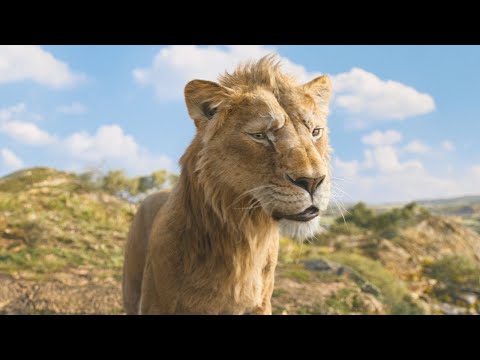
The majestic lion surveyed the vast African savanna from the top of a rocky outcrop, its golden coat shimmering in the midday sun.
Beyond the biological definition, the word 'lion' is deeply embedded in our linguistic landscape to represent dominance. When we speak of the 'lion's share' of something, we are referring to the largest or best portion, a phrase derived from Aesop's Fables where the lion claimed the majority of the spoils for itself. This usage highlights the lion's role as a dominant force that others must defer to. Furthermore, the term is used in the context of 'social lions,' referring to individuals who are celebrities or highly sought-after guests in high-society circles. The versatility of the word allows it to shift from a strictly zoological term to a complex descriptor of human social dynamics. Whether you are watching a nature program about the Serengeti or reading a political commentary about a 'lionized' leader, the word carries an inherent sense of respect and formidable power. It is a word that demands attention, much like the animal itself. In environmental circles, the lion is often discussed as a 'keystone species,' meaning its presence is vital for maintaining the balance of its ecosystem. Without the lion to control the populations of herbivores like zebras and wildebeests, the entire habitat would suffer. Thus, the word 'lion' encompasses themes of leadership, biological necessity, and cultural mythos.
- Symbolic Meaning
- In many cultures, the lion represents the sun and the gold of the spirit, embodying solar energy and the divine right of kings to rule over their subjects.
Richard the Lionheart was a king known for his incredible bravery on the battlefield, earning him a nickname that compared him to the most courageous lion.
In the realm of conservation, the word 'lion' is frequently paired with adjectives like 'vulnerable' or 'endangered' to highlight the precarious state of their populations in the wild. Habitat loss and human-wildlife conflict have significantly reduced their numbers, making the word a rallying cry for environmentalists. When people use the word in this context, it is often with a sense of urgency and a desire to protect a global treasure. Additionally, the lion is a central figure in children's literature and animation, most notably in 'The Lion King,' which has shaped the modern perception of these animals for generations. In these stories, the lion is often portrayed as a wise but flawed ruler, adding layers of personality to the biological entity. The word 'lion' also appears in the zodiac as 'Leo,' representing those born between late July and late August, further extending its reach into the world of astrology and personality archetypes. People born under this sign are often said to possess 'lion-like' qualities such as confidence, loyalty, and a flair for the dramatic. This multifaceted nature of the word—spanning biology, history, literature, and astrology—makes it one of the most rich and evocative nouns in the English language.
The documentary filmmaker spent years tracking a single lion to understand how it survived the harsh conditions of the Kalahari Desert.
- Cultural Archetype
- The lion is often used as a literary archetype for the 'noble warrior' or the 'just king,' contrasting with the 'sly fox' or the 'greedy wolf.'
During the safari, the tourists were lucky enough to see a lion hunting a buffalo, a rare and intense display of nature's power.
The stone lion statues guarding the entrance to the library are meant to symbolize the strength and endurance of knowledge.
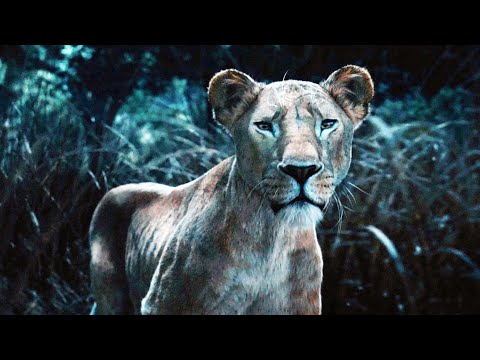
Using the word 'lion' in a sentence requires an understanding of its various grammatical roles and the contexts in which it appears. Most commonly, 'lion' functions as a countable noun. You can speak of 'a lion,' 'the lion,' or 'lions' in the plural. When describing the animal's behavior, it is often the subject of powerful verbs like 'roar,' 'hunt,' 'prowl,' or 'command.' For example, 'The lion roared at the intruders' uses the word as a direct subject performing a characteristic action. Because lions are social animals, you will frequently use the collective noun 'pride' when referring to a group of them. Sentences like 'A pride of lions rested under the acacia tree' are standard in both scientific and descriptive writing. It is also important to distinguish between the male and female of the species if precision is required; while 'lion' can be a general term for the species, 'lioness' specifically refers to the female, who is the primary hunter of the pride. Using 'lioness' adds a layer of descriptive accuracy to your writing, especially when discussing the dynamics of a pride or the nurturing of cubs.
- Subject-Verb Agreement
- When 'lion' is the subject, ensure the verb matches its number. 'The lion hunts' (singular) versus 'Lions hunt' (plural).
The young lion practiced its pouncing skills on a fallen log, preparing for its first real hunt.
In metaphorical usage, 'lion' often acts as a predicate nominative or part of a comparative phrase. If you say, 'He was a lion in the boardroom,' you are using a metaphor to suggest that the person was dominant, brave, or perhaps aggressive in a professional setting. Similes are also very common, such as 'brave as a lion' or 'strong as a lion.' These comparisons are deeply ingrained in the English language and are used to provide vivid imagery. When using 'lion' as an adjective (though technically it remains a noun acting as a modifier), it often appears in compound words or phrases like 'lion-hearted' or 'lion-like.' These descriptors help to transfer the qualities of the animal to other subjects. For instance, 'His lion-like mane of hair' uses the animal's physical characteristics to describe a person's appearance. It is also worth noting the use of 'lion' in idiomatic expressions. Phrases like 'throwing someone to the lions' or 'entering the lion's den' are used to describe putting someone in a dangerous or difficult situation where they are likely to be attacked or criticized. These idioms are highly effective in narrative writing to convey tension and risk.
- Adjectival Use
- The word 'leonine' is the formal adjective derived from 'lion,' used to describe things that resemble or relate to a lion.
The athlete showed the heart of a lion as she sprinted toward the finish line despite her injury.
When writing about lions in a scientific or academic context, you might use the word in the possessive form to discuss specific traits. 'The lion's mane serves as protection during fights' or 'The lion's roar is a method of territorial marking.' In these cases, the apostrophe-s indicates ownership of a physical or behavioral characteristic. You should also be aware of the word 'lion' in titles and proper nouns. From 'The Lion, the Witch and the Wardrobe' to 'The Lion King,' the word often serves as a central pillar of the title, signaling themes of courage, leadership, or epic struggle. In more informal settings, 'lion' might be used as a nickname for a sports team (e.g., the Detroit Lions or the British and Irish Lions), where it signifies strength and competitive spirit. Whether you are constructing a simple sentence for a beginner or a complex, metaphorical passage for an advanced reader, the word 'lion' provides a sturdy and evocative foundation. Its clear imagery and strong associations make it a versatile tool for any writer looking to convey power, bravery, or natural majesty.
After winning the championship, the coach was lionized by the local media and fans alike.
- Collective Nouns
- While 'pride' is the standard collective noun, you might also hear 'sault' or 'troop' in very specific or archaic contexts.
The explorer felt like he was walking into the lion's den when he entered the enemy's camp alone.
The mountain lion, also known as a cougar, is a different species entirely from the African lion.
The word 'lion' is ubiquitous in English-speaking environments, appearing in a wide array of contexts from the educational to the entertainment-driven. One of the most common places you will hear the word is in the context of wildlife and nature documentaries. Narrators like David Attenborough have made the 'lion' a central character in the story of the natural world, discussing their hunting habits, social structures, and the challenges they face in the wild. In these settings, the word is used with a mix of scientific precision and reverent awe. You will also hear the word frequently in zoos and safari parks, where it is a primary attraction for visitors. Educational settings, such as biology or geography classes, use the 'lion' as a prime example of a predator, a mammal, or a species native to the African continent. Children encounter the word early in their development through alphabet books ('L is for Lion'), nursery rhymes, and animated films. The cultural footprint of the lion in media is massive, ensuring that the word is familiar to even the youngest speakers of the language.
- Media and Entertainment
- Movies like 'The Lion King' and 'The Chronicles of Narnia' (featuring Aslan the lion) have cemented the word's association with leadership and sacrifice.
The crowd erupted in cheers as the Detroit Lions scored a touchdown in the final minutes of the game.
In the world of sports, the word 'lion' is a popular choice for team names and mascots, symbolizing strength, ferocity, and team pride. You will hear it mentioned in sports broadcasts, news reports, and by fans in stadiums. For example, the British and Irish Lions is a famous rugby union team, and the 'Three Lions' is the nickname for the England national football team, derived from the crest on their jerseys. In these contexts, the word is used to evoke a sense of national or local identity and competitive prowess. Beyond sports, you will hear the word in political and business discourse, often used metaphorically. A 'lion of the Senate' refers to a long-serving, influential, and respected politician. In business, a 'lion' might be a powerful investor or a dominant company in a particular market. These metaphorical uses are common in news articles, opinion pieces, and professional speeches, where the speaker wants to convey a sense of gravitas and dominance. The word also appears in religious and spiritual contexts, such as the 'Lion of Judah' in Judeo-Christian traditions, representing strength and divine protection.
- Idiomatic Speech
- In everyday conversation, you might hear someone say they got the 'lion's share' of the work, meaning they did most of it.
The historian described the fallen leader as a lion in winter, still powerful but past his physical prime.
In literature and the arts, the word 'lion' is a recurring motif. From Aesop's Fables to the poetry of William Blake, the lion is used to explore themes of nature, power, and the human condition. You will hear the word discussed in book clubs, literature classes, and art galleries. In architecture, 'lion' is often heard when describing decorative elements, such as the famous stone lions outside the New York Public Library or the Trafalgar Square lions in London. These physical representations of the word serve as landmarks and symbols of civic pride. Furthermore, in the field of astronomy and astrology, the word is heard during discussions of the night sky or personality traits. 'Leo' is one of the most recognizable constellations, and its name is the Latin word for lion. Whether you are looking at the stars, reading a classic novel, or watching a football match, the word 'lion' is a constant presence in the English language, bridging the gap between the natural world and human culture. Its frequency in speech and text is a testament to the enduring power of the animal it describes.
The speaker warned that we should not wake a sleeping lion, advising against provoking a powerful opponent.
- Astrological Context
- People often ask, 'Are you a Leo?' referring to the lion sign of the zodiac, which is associated with fire and leadership.
The guide pointed out the lion tracks in the soft mud near the watering hole, signaling that the pride was nearby.
The poet compared the setting sun to a golden lion retreating into its den for the night.
While 'lion' is a relatively straightforward word, there are several common mistakes and areas of confusion that learners and even native speakers might encounter. One of the most frequent errors is the confusion between a 'lion' and other big cats, particularly the tiger. While both are members of the Panthera genus, they have distinct physical and behavioral differences. A lion has a uniform tawny coat and, in the case of males, a mane, whereas a tiger has stripes. Confusing these in writing or speech can undermine the accuracy of your description. Another common mistake involves the gender-specific terms. While 'lion' can be used as a general term for the species, it is often used specifically for the male. The female is a 'lioness.' Using 'lion' to describe a female cat in a context where gender is important (such as discussing hunting or cub-rearing) can be seen as imprecise. Additionally, the plural of 'lion' is 'lions,' but when referring to a group, many people forget to use the correct collective noun, 'pride.' Saying 'a group of lions' is grammatically correct but less sophisticated than using 'a pride of lions.'
- Spelling Confusion
- Be careful not to confuse 'lion' with 'loin' (a cut of meat). This is a common typo that can lead to very different meanings in a sentence.
Incorrect: The loin is the king of the jungle. Correct: The lion is the king of the jungle.
In metaphorical usage, mistakes often occur with idiomatic expressions. For instance, the phrase 'the lion's share' is sometimes misused to mean 'the whole thing.' In reality, it means the largest or best part, implying that others may still have smaller portions. Another area of confusion is the term 'mountain lion.' A mountain lion (also known as a cougar, puma, or panther) is a completely different species from the African or Asiatic lion. They belong to different subfamilies and have very different physical traits and habitats. Referring to a cougar simply as a 'lion' in a scientific or geographic context can be misleading. Furthermore, the verb 'to lionize' is often misunderstood. Some might think it relates to being brave like a lion, but it actually means to treat someone as a celebrity. Using it incorrectly can lead to confusion in formal writing. For example, saying 'He lionized his way through the battle' is incorrect; the correct usage would be 'The public lionized the hero after the battle.'
- Pronunciation Errors
- Some learners might pronounce 'lion' as 'lee-on.' The correct pronunciation is 'ly-un' (/ˈlaɪ.ən/).
Incorrect: She has a lion heart. Correct: She is lion-hearted (using the correct compound adjective).
Finally, there is the issue of the 'king of the jungle' misnomer. Lions actually live in savannas and grasslands, not jungles. While this is a culturally accepted phrase, using it in a strictly biological or geographical context is technically an error. When writing for an audience that values scientific accuracy, it is better to refer to the lion's actual habitat. Another subtle mistake is the use of 'lion' as a synonym for 'brave' in every situation. While the association is strong, overusing it can lead to cliché. Good writing often seeks more varied and specific adjectives. Lastly, ensure you are using the correct possessive form. 'The lions roar' (plural, no possession) vs. 'The lion's roar' (singular possession) vs. 'The lions' roar' (plural possession). Misplacing the apostrophe is a common grammatical slip that can change the meaning of your sentence. By being mindful of these distinctions, you can use the word 'lion' with greater precision and impact.
Incorrect: The lions mane was tangled. Correct: The lion's mane was tangled.
- Misusing 'Lionize'
- 'Lionize' is a transitive verb. You lionize *someone*. You cannot 'lionize' as an action of being brave yourself.
The zoologist corrected the student, explaining that the lion is a savanna dweller, not a jungle animal.
The novelist avoided the cliché of the lion as a hero, instead portraying it as a complex predator.
When you want to describe a lion or the qualities associated with it without using the word itself, there are several synonyms and related terms you can employ. If you are focusing on its biological nature, terms like 'big cat,' 'feline,' or 'predator' are useful. 'Big cat' is a general term that includes lions, tigers, leopards, and jaguars, often used in conservation and wildlife contexts. 'Feline' is a more formal, scientific term derived from the Latin 'felinus,' referring to any member of the cat family. If you are describing the lion's role in the ecosystem, 'apex predator' is a powerful alternative, emphasizing that it has no natural predators of its own. For the male lion's most distinctive feature, you might use 'mane' or describe him as 'maned.' When referring to a group, 'pride' is the specific collective noun, but in more general terms, you might use 'troop' or 'coalition' (the latter often used specifically for a group of male lions).
- Lion vs. Tiger
- Lions are social and live in prides; tigers are solitary. Lions have manes; tigers have stripes. Lions live in savannas; tigers live in forests and jungles.
The feline stalked through the tall grass, its movements silent and purposeful.
In a metaphorical sense, if you want to describe someone's courage, you might use 'valiant,' 'intrepid,' 'gallant,' or 'heroic.' These adjectives capture the 'lion-hearted' quality without directly mentioning the animal. If you are referring to someone's dominance or leadership, 'titan,' 'behemoth,' or 'powerhouse' can serve as strong alternatives. In the context of the verb 'to lionize,' synonyms include 'exalt,' 'glorify,' 'venerate,' or 'celebrate.' These words all convey the idea of treating someone with great respect and importance. If you are looking for a more poetic or archaic term, 'king of beasts' or 'lord of the jungle' (despite the geographical inaccuracy) can add a touch of grandeur to your writing. For the physical appearance of a lion, the adjective 'leonine' is the most direct and sophisticated choice. It can describe anything from a person's facial features to their majestic bearing.
- Lion vs. Leopard
- Lions are much larger and social; leopards are smaller, solitary, and famous for their spots (rosettes) and ability to climb trees.
His leonine features and deep voice gave him an air of natural authority.
It is also useful to know the names of related species that are often discussed alongside lions. The 'Asiatic lion' is a subspecies found only in India's Gir Forest, and it is slightly smaller than its African counterpart. The 'Barbary lion' and 'Cape lion' are extinct subspecies that are often mentioned in historical or scientific texts. Understanding these distinctions allows for more precise communication. When comparing the lion to other predators, you might use terms like 'competitor' (e.g., hyenas are the lion's main competitors for food). In terms of behavior, 'nocturnal' or 'crepuscular' (active at dawn and dusk) are accurate descriptors for their activity patterns. By expanding your vocabulary to include these alternatives and related terms, you can describe the lion and its many associations with greater nuance and variety, avoiding repetitive language and enriching your overall expression.
The apex predator plays a crucial role in maintaining the health of the ecosystem by culling the weak from the herds.
- Lion vs. Panther
- 'Panther' is a broad term. A 'black panther' is actually a melanistic leopard or jaguar, not a separate species of lion.
The city exalted the returning soldiers, treating them with the same reverence usually reserved for royalty.
The coalition of two male lions successfully defended their territory against a younger rival.
How Formal Is It?
豆知識
The Greek word 'leon' might have even older roots in a non-Indo-European language of the Near East, reflecting the animal's long history of interaction with humans.
発音ガイド
- Pronouncing it as 'lee-on'
- Making the 'o' sound too strong like 'ly-on'
- Confusing it with 'loin'
- Swallowing the 'n' sound
- Adding an extra syllable
難易度
The word is very common and easy to recognize in text.
Simple spelling, though 'lionize' and 'leonine' are more advanced.
Pronunciation is usually easy, but the 'i' sound can be tricky for some.
The word is distinct and usually easy to hear in conversation.
次に学ぶべきこと
前提知識
次に学ぶ
上級
知っておくべき文法
Collective Nouns
A *pride* of lions is resting.
Similes
He is as *brave as a lion*.
Possessive Nouns
The *lion's* mane is very long.
Gender-specific Nouns
The *lioness* hunts for the pride.
Compound Adjectives
He is a *lion-hearted* leader.
レベル別の例文
The lion is big and yellow.
Le lion est grand et jaune.
Simple subject-verb-adjective structure.
I see a lion at the zoo.
Je vois un lion au zoo.
Use of the indefinite article 'a'.
The lion says roar!
Le lion fait rugir !
Onomatopoeia used as a verb.
Lions eat meat.
Les lions mangent de la viande.
Plural subject with a base verb.
The lion has a long tail.
Le lion a une longue queue.
Use of 'has' for possession.
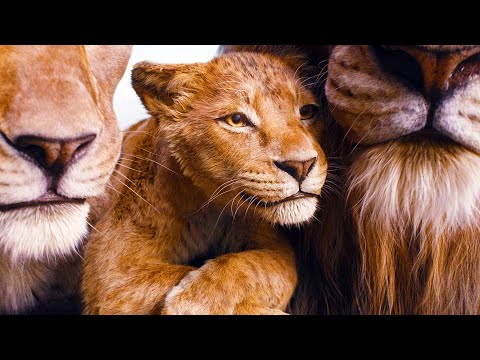
A baby lion is a cub.
Un bébé lion est un lionceau.
Introducing specific vocabulary (cub).
The lion is the king.
Le lion est le roi.
Definite article 'the' for a unique title.
Lions live in Africa.
Les lions vivent en Afrique.
Present simple for general facts.
The male lion has a thick mane around its neck.
Le lion mâle a une crinière épaisse autour du cou.
Using 'thick' and 'around' to add detail.
Lions are very strong and can run fast.
Les lions sont très forts et peuvent courir vite.
Use of modal 'can' for ability.
A pride of lions is sleeping in the shade.
Une troupe de lions dort à l'ombre.
Collective noun 'pride' followed by a singular verb.
The lioness is hunting for her cubs.
La lionne chasse pour ses lionceaux.
Gender-specific term 'lioness'.
He is as brave as a lion.
Il est courageux comme un lion.
Common simile 'as... as'.
Lions usually hunt at night or early in the morning.
Les lions chassent généralement la nuit ou tôt le matin.
Adverb of frequency 'usually'.
The lion's roar is very loud.
Le rugissement du lion est très fort.
Possessive 's' for a characteristic.
We saw three lions during our safari trip.
Nous avons vu trois lions pendant notre safari.
Past simple tense 'saw'.
The lion is often used as a symbol of courage in literature.
Le lion est souvent utilisé comme symbole de courage dans la littérature.
Passive voice 'is used'.
She took the lion's share of the credit for the project.
Elle s'est taillé la part du lion pour le projet.
Idiomatic expression 'lion's share'.
Lions are apex predators, meaning they are at the top of the food chain.
Les lions sont des superprédateurs, ce qui signifie qu'ils sont au sommet de la chaîne alimentaire.
Defining a technical term (apex predator).
The documentary explained how lions protect their territory.
Le documentaire expliquait comment les lions protègent leur territoire.
Indirect question 'how lions protect'.
It felt like I was entering the lion's den when I walked into the meeting.
J'avais l'impression d'entrer dans la fosse aux lions en entrant dans la réunion.
Idiomatic expression 'lion's den'.
Conservationists are working hard to save the African lion from extinction.
Les écologistes travaillent dur pour sauver le lion d'Afrique de l'extinction.
Present continuous for ongoing actions.
The lion-hearted soldier refused to give up.
Le soldat au cœur de lion a refusé d'abandonner.
Compound adjective 'lion-hearted'.
Many cultures have stories about the lion being the king of beasts.
De nombreuses cultures racontent des histoires sur le lion, roi des animaux.
Gerund phrase 'being the king'.
The male lion's mane is thought to be a sign of health and genetic quality.
On pense que la crinière du lion mâle est un signe de santé et de qualité génétique.
Complex passive structure 'is thought to be'.
After his heroic act, the young man was lionized by the entire town.
Après son acte héroïque, le jeune homme a été porté aux nues par toute la ville.
Use of the verb 'lionize'.
Lions exhibit significant sexual dimorphism, with males being much larger than females.
Les lions présentent un dimorphisme sexuel important, les mâles étant beaucoup plus grands que les femelles.
Technical vocabulary (sexual dimorphism).
The 'Three Lions' on the English football crest have a long historical tradition.
Les « Trois Lions » sur l'écusson du football anglais ont une longue tradition historique.
Proper noun usage in a cultural context.
He was a lion in winter, still possessing a sharp mind despite his physical frailty.
C'était un lion en hiver, possédant toujours un esprit vif malgré sa fragilité physique.
Metaphorical idiom 'lion in winter'.
The pride's social structure is unique among feline species.
La structure sociale de la troupe est unique parmi les espèces félines.
Possessive 'pride's' and 'feline species'.
They were thrown to the lions by their manager when the project failed.
Ils ont été jetés aux lions par leur manager quand le projet a échoué.
Idiomatic expression 'thrown to the lions'.
The lion's roar can be heard from several kilometers away, serving as a warning to rivals.
Le rugissement du lion peut être entendu à plusieurs kilomètres de distance, servant d'avertissement aux rivaux.
Participial phrase 'serving as a warning'.
The lion's symbolic resonance across disparate cultures is a testament to its primal power.
La résonance symbolique du lion à travers des cultures disparates témoigne de sa puissance primordiale.
Sophisticated vocabulary (resonance, disparate, primal).
In the poem, the lion serves as a complex allegory for both destruction and creation.
Dans le poème, le lion sert d'allégorie complexe à la fois pour la destruction et la création.
Literary analysis terminology (allegory).
The decline of the lion population has profound implications for the biodiversity of the region.
Le déclin de la population de lions a des implications profondes pour la biodiversité de la région.
Academic tone and structure.
His leonine features were accentuated by the harsh lighting of the stage.
Ses traits léonins étaient accentués par l'éclairage cru de la scène.
Adjective 'leonine' used descriptively.
The treaty was signed, but it was clear that the larger nation had taken the lion's share of the resources.
Le traité a été signé, mais il était clair que la plus grande nation s'était taillé la part du lion des ressources.
Using an idiom in a formal political context.
The lionized author found the constant media attention to be increasingly suffocating.
L'auteur porté aux nues trouvait l'attention constante des médias de plus en plus étouffante.
Participial adjective 'lionized'.
The pride's success in hunting is contingent upon the seamless cooperation of the lionesses.
Le succès de la troupe à la chasse dépend de la coopération sans faille des lionnes.
Advanced structure 'contingent upon'.
The lion rampant on the shield indicated the family's noble and warrior lineage.
Le lion rampant sur le bouclier indiquait la lignée noble et guerrière de la famille.
Heraldic terminology (lion rampant).
The lion, as a Jungian archetype, embodies the shadow side of the solar ego.
Le lion, en tant qu'archétype jungien, incarne la part d'ombre de l'ego solaire.
Highly specialized psychological context.
The socio-biological dynamics of a lion pride offer a fascinating study in altruism and competition.
La dynamique socio-biologique d'une troupe de lions offre une étude fascinante sur l'altruisme et la compétition.
Interdisciplinary academic language.
To lionize the past is often to ignore the complexities and failures of those we now revere.
Porter le passé aux nues, c'est souvent ignorer les complexités et les échecs de ceux que nous vénérons aujourd'hui.
Philosophical use of the verb 'lionize'.
The lion's roar is not merely a vocalization but a sophisticated acoustic tool for territorial hegemony.
Le rugissement du lion n'est pas seulement une vocalisation mais un outil acoustique sophistiqué pour l'hégémonie territoriale.
Advanced noun phrases (territorial hegemony).
The poem explores the 'Tyger' and the 'Lion' as dialectical forces in the human soul.
Le poème explore le « Tigre » et le « Lion » comme des forces dialectiques dans l'âme humaine.
Literary criticism terminology (dialectical forces).
The king's leonine majesty was undercut by his evident inability to govern effectively.
La majesté léonine du roi était sapée par son incapacité évidente à gouverner efficacement.
Nuanced use of 'leonine' and 'undercut'.
The conservation of the lion is inextricably linked to the socio-economic stability of the surrounding communities.
La conservation du lion est inextricablement liée à la stabilité socio-économique des communautés environnantes.
Complex adverbial phrase 'inextricably linked'.
In the heraldic tradition, the lion's posture—whether passant, rampant, or statant—conveyed specific meanings.
Dans la tradition héraldique, la posture du lion — qu'il soit passant, rampant ou statant — transmettait des significations spécifiques.
Highly technical heraldic adjectives.
よく使う組み合わせ
よく使うフレーズ
— The largest or best part of something.
He did the lion's share of the work on the group project.
— In a dangerous or threatening place or situation.
Walking into the boss's office felt like entering the lion's den.
— A person who was once powerful but is now old and past their prime.
The retired general was like a lion in winter.
— To sacrifice someone or put them in a difficult situation to save oneself.
The politician threw his assistant to the lions when the scandal broke.
— To confront a powerful or dangerous person in their own territory.
He decided to beard the lion in his den and ask for a raise.
— To start something in a loud, strong, or aggressive way.
The month of March often comes in like a lion.
— A person who is very popular and sought after at social events.
The famous actor was the social lion of the party.
— To provoke someone who is powerful and currently peaceful.
By suing the company, he might be waking a sleeping lion.
よく混同される語
A common spelling error; loin is a cut of meat, lion is the animal.
Often confused by children; tigers have stripes, lions have manes.
A city in France; spelled with a 'y' and always capitalized.
慣用句と表現
— The majority or the largest portion of something, often unfairly taken.
The eldest son received the lion's share of the inheritance.
informal/neutral— To go into a place where you are likely to be attacked or criticized.
I felt like I was entering the lion's den during the interview.
neutral— To allow someone to be criticized or treated badly without helping them.
They threw the intern to the lions when the client complained.
informal— An obstacle or danger, real or imagined, that prevents someone from acting.
He always sees a lion in the way whenever he has to make a decision.
literary— It is better to be the leader of a small group than a follower in a large one.
He chose to run his own small business rather than work for a giant corporation.
proverbial— Possessing great courage and bravery.
The lion-hearted explorers crossed the frozen tundra.
literary— A situation where traditionally hostile groups live together in peace.
The peace treaty brought the lion and the lamb together.
biblical/literary— To speak or act in a very loud, powerful, or angry manner.
The coach roared like a lion when the team missed the goal.
neutral— A disguise of bravery or importance used by someone who is not actually brave or important.
He wears a lion's skin, but he's actually very timid.
literary— To deliberately put yourself in a very dangerous situation.
Going to that neighborhood alone is like placing your head in the lion's mouth.
informal間違えやすい
It has 'lion' in the name.
A mountain lion is a cougar, a different species that doesn't live in prides and has no mane.
We saw a mountain lion in the Rockies, not an African lion.
It has 'lion' in the name.
A sea lion is a marine mammal with flippers, not a cat.
The sea lions were sunbathing on the rocks at the beach.
Both are big cats in Africa.
Leopards have spots and are solitary; lions are plain-colored and social.
The leopard climbed the tree, but the lion stayed on the ground.
Both are big cats in Africa.
Cheetahs are built for speed and have black 'tear' marks; lions are much heavier.
The cheetah is faster, but the lion is much stronger.
A general term for big cats.
Panther usually refers to black leopards or jaguars, not lions.
The black panther moved silently through the dark forest.
文型パターン
The lion is [adjective].
The lion is big.
Lions live in [place].
Lions live in Africa.
He is as [adjective] as a lion.
He is as brave as a lion.
The [noun] took the lion's share of [something].
The company took the lion's share of the profit.
The [person] was lionized for [action].
The doctor was lionized for her research.
His [feature] was quite leonine.
His facial structure was quite leonine.
Walking into [place] was like entering the lion's den.
Walking into the courtroom was like entering the lion's den.
The lion serves as an allegory for [concept].
The lion serves as an allegory for divine justice.
語族
名詞
動詞
形容詞
関連
使い方
Very high in both literal and metaphorical contexts.
-
The lion lives in the jungle.
→
The lion lives in the savanna.
Lions are not jungle animals; they prefer open grasslands.
-
I saw a pride of tigers.
→
I saw a pride of lions.
Only lions live in prides; tigers are solitary animals.
-
He lionized the battle.
→
He was lionized after the battle.
'Lionize' means to treat a person like a celebrity, not to act bravely.
-
The lions mane is beautiful.
→
The lion's mane is beautiful.
You need an apostrophe to show that the mane belongs to the lion.
-
She is a lion heart.
→
She is lion-hearted.
Use the compound adjective 'lion-hearted' to describe a person's character.
ヒント
Collective Noun
Always use 'pride' when talking about a group of lions to sound more natural in English.
Gender Terms
Use 'lioness' for the female and 'cub' for the baby to show a higher level of vocabulary.
Lion vs Loin
Remember: L-I-O-N is the animal, L-O-I-N is meat. Don't mix them up in your writing!
Lion's Share
Use this phrase in business or social contexts to describe someone taking the most of something.
King of the Jungle
Know that this is a common phrase, but be ready to explain that they actually live in savannas.
Leonine
Use the adjective 'leonine' to describe a person's majestic or powerful appearance.
Pronunciation
Focus on the 'ly' sound at the beginning of the word to avoid the 'lee' error.
Latin Roots
Knowing that 'leo' is the Latin root can help you remember words like 'leonine' and 'Leo'.
Big Cat
In formal wildlife contexts, 'big cat' is a great alternative to avoid repeating 'lion' too often.
Visual Aid
Associate the word with the color gold and the sound of a loud roar to lock it in your memory.
暗記しよう
記憶術
Imagine a **L**arge **I**ntelligent **O**range **N**ight-hunter. The first letters spell LION.
視覚的連想
Picture a golden cat with a huge, shaggy mane sitting on a rock under the hot sun.
Word Web
チャレンジ
Try to use the word 'lion' in three different ways today: as an animal, as a symbol of courage, and in an idiom like 'lion's share'.
語源
The word 'lion' comes from the Old French 'lion,' which in turn comes from the Latin 'leo' (genitive 'leonis'). The Latin term was borrowed from the Ancient Greek 'leon.' It has been part of the English language since the 12th century.
元の意味: The word has always referred to the large feline predator known as the 'king of beasts.'
Indo-European (via Latin and Greek).文化的な背景
Be aware that while 'king of the jungle' is a common phrase, it is factually incorrect as lions live in savannas.
In the UK, the lion is a national symbol, often seen on coins and official documents.
実生活で練習する
実際の使用場面
Wildlife Documentary
- apex predator
- natural habitat
- pride dynamics
- territorial marking
Literature/Storytelling
- king of beasts
- brave as a lion
- noble creature
- lion-hearted
Business/Politics
- lion's share
- lion of the Senate
- lionized by the press
- entering the lion's den
Astrology
- born under Leo
- fire sign
- natural leader
- loyal and proud
Heraldry/History
- lion rampant
- royal crest
- symbol of the monarchy
- ancient emblem
会話のきっかけ
"Have you ever seen a real lion at a zoo or on a safari?"
"What do you think is the most impressive quality of a lion?"
"Do you think the lion deserves the title 'King of the Jungle'?"
"Which movie character is your favorite lion—Simba or Aslan?"
"If you were an animal, would you want to be a lion? Why?"
日記のテーマ
Describe a time when you had to be as brave as a lion to face a difficult situation.
Write a short story about a lion who decides he doesn't want to be the king anymore.
If you could talk to a lion, what three questions would you ask it about its life?
Reflect on the phrase 'the lion's share.' Have you ever felt you did the lion's share of a task?
Imagine you are a lion cub exploring the savanna for the first time. What do you see and hear?
よくある質問
10 問Actually, lions live in savannas and grasslands. The title 'king of the jungle' is a popular myth, likely coming from the Hindi word 'jangal' which can mean wasteland or wild place, not just a tropical forest.
A group of lions is called a 'pride.' Prides usually consist of related females, their cubs, and a few resident males.
While the lionesses do most of the hunting for the pride, male lions are capable hunters and will hunt to defend their territory or when they are living alone.
Manes protect the lion's neck during fights with other males and serve as a sign of health and strength to attract females.
Lions are currently listed as 'vulnerable' by the IUCN, meaning their population is decreasing and they face a high risk of extinction in the wild.
Yes, lions can climb trees, although they are not as agile as leopards. Some populations, like those in Tanzania, are famous for their tree-climbing habits.
A lion's roar can reach up to 114 decibels and can be heard from as far as 8 kilometers (5 miles) away.
Asiatic lions are slightly smaller, have a longitudinal fold of skin along their bellies, and the males have shorter manes than African lions.
To lionize someone means to treat them as a very important person or a celebrity, often giving them a lot of public attention.
It is an idiom that refers to the largest or best part of something that is being divided up among several people.
自分をテスト 200 問
Describe the physical appearance of a male lion.
Well written! Good try! Check the sample answer below.
Explain the meaning of the idiom 'the lion's share' and give an example.
Well written! Good try! Check the sample answer below.
Write a short paragraph about the social structure of a lion pride.
Well written! Good try! Check the sample answer below.
Compare and contrast a lion and a tiger.
Well written! Good try! Check the sample answer below.
Why is the lion often used as a symbol of royalty?
Well written! Good try! Check the sample answer below.
Write a creative story about a lion cub's first hunt.
Well written! Good try! Check the sample answer below.
Discuss the conservation challenges facing lions today.
Well written! Good try! Check the sample answer below.
What does it mean to 'lionize' someone? Provide a modern-day example.
Well written! Good try! Check the sample answer below.
Describe a situation where you felt like you were 'entering the lion's den.'
Well written! Good try! Check the sample answer below.
Explain the biological importance of the lion's mane.
Well written! Good try! Check the sample answer below.
How has the image of the lion in media (like 'The Lion King') affected our perception of the animal?
Well written! Good try! Check the sample answer below.
Write a dialogue between two people visiting a lion enclosure at a zoo.
Well written! Good try! Check the sample answer below.
What are the differences between African and Asiatic lions?
Well written! Good try! Check the sample answer below.
Discuss the symbolism of the lion in heraldry.
Well written! Good try! Check the sample answer below.
Write a poem about a lion's roar at night.
Well written! Good try! Check the sample answer below.
Should lions be kept in captivity? Argue for or against.
Well written! Good try! Check the sample answer below.
Describe the role of the lioness in the pride.
Well written! Good try! Check the sample answer below.
What is a 'keystone species' and why is the lion considered one?
Well written! Good try! Check the sample answer below.
Write a formal letter to a conservation group about protecting lion habitats.
Well written! Good try! Check the sample answer below.
Explain the phrase 'a lion in winter' and how it might apply to a historical figure.
Well written! Good try! Check the sample answer below.
Talk about your favorite movie or book that features a lion.
Read this aloud:
あなたの回答:
Speech recognition is not supported in your browser. Try Chrome or Edge.
Explain why you think the lion is called the 'king of beasts.'
Read this aloud:
あなたの回答:
Speech recognition is not supported in your browser. Try Chrome or Edge.
Describe a lion to someone who has never seen one.
Read this aloud:
あなたの回答:
Speech recognition is not supported in your browser. Try Chrome or Edge.
Discuss the pros and cons of zoos having lions.
Read this aloud:
あなたの回答:
Speech recognition is not supported in your browser. Try Chrome or Edge.
Use the idiom 'lion's share' in a sentence about your life.
Read this aloud:
あなたの回答:
Speech recognition is not supported in your browser. Try Chrome or Edge.
How would you feel if you saw a lion in the wild?
Read this aloud:
あなたの回答:
Speech recognition is not supported in your browser. Try Chrome or Edge.
Explain the meaning of 'lion-hearted' and name someone you think is lion-hearted.
Read this aloud:
あなたの回答:
Speech recognition is not supported in your browser. Try Chrome or Edge.
Talk about the importance of protecting endangered species like the lion.
Read this aloud:
あなたの回答:
Speech recognition is not supported in your browser. Try Chrome or Edge.
What are some common myths about lions?
Read this aloud:
あなたの回答:
Speech recognition is not supported in your browser. Try Chrome or Edge.
Describe the differences between a male and female lion.
Read this aloud:
あなたの回答:
Speech recognition is not supported in your browser. Try Chrome or Edge.
If you were a lion, what would your daily routine be like?
Read this aloud:
あなたの回答:
Speech recognition is not supported in your browser. Try Chrome or Edge.
Discuss the symbolic meaning of lions in different cultures.
Read this aloud:
あなたの回答:
Speech recognition is not supported in your browser. Try Chrome or Edge.
What does the phrase 'entering the lion's den' mean to you?
Read this aloud:
あなたの回答:
Speech recognition is not supported in your browser. Try Chrome or Edge.
How do lions communicate with each other?
Read this aloud:
あなたの回答:
Speech recognition is not supported in your browser. Try Chrome or Edge.
Talk about the 'Lion King' and its cultural impact.
Read this aloud:
あなたの回答:
Speech recognition is not supported in your browser. Try Chrome or Edge.
Why do you think the lion is such a popular mascot for sports teams?
Read this aloud:
あなたの回答:
Speech recognition is not supported in your browser. Try Chrome or Edge.
Explain the concept of a 'pride' and how it works.
Read this aloud:
あなたの回答:
Speech recognition is not supported in your browser. Try Chrome or Edge.
What would you do if you were 'thrown to the lions' in a work situation?
Read this aloud:
あなたの回答:
Speech recognition is not supported in your browser. Try Chrome or Edge.
Discuss the physical adaptations that make lions successful predators.
Read this aloud:
あなたの回答:
Speech recognition is not supported in your browser. Try Chrome or Edge.
How does the lion represent power in modern society?
Read this aloud:
あなたの回答:
Speech recognition is not supported in your browser. Try Chrome or Edge.
Listen to a description of a lion's mane and identify its purpose.
Listen to a short story about a lion cub and answer: what was the cub's name?
Listen to a news report about lion conservation and identify the main threat mentioned.
Listen to a narrator describing a lion's roar and identify how far it can be heard.
Listen to a discussion about the 'lion's share' and identify who got the most.
Listen to a guide on a safari and identify the three things they tell you to do if you see a lion.
Listen to a poem about a lion and identify the adjectives used to describe its eyes.
Listen to a lecture on heraldry and identify what a 'lion rampant' looks like.
Listen to a child talking about their trip to the zoo and identify what the lion was doing.
Listen to a scientific podcast about feline genetics and identify the lion's closest relative.
Listen to an interview with a 'lionized' celebrity and identify how they feel about the fame.
Listen to a weather report using the phrase 'in like a lion' and identify the predicted weather.
Listen to a description of a lioness hunting and identify her target.
Listen to a talk about the 'Lion of Judah' and identify its cultural significance.
Listen to a debate about lions in captivity and identify the speaker's main argument.
/ 200 correct
Perfect score!
Summary
The word 'lion' represents both a powerful biological predator and a deep cultural symbol of leadership and bravery. Example: 'The lion's roar announced its presence to the entire savanna.'
- A lion is a large, powerful wild cat known for its social nature and majestic appearance.
- It is a major symbol of courage, strength, and royalty in many cultures worldwide.
- Lions live in groups called prides and are found primarily in the African savanna.
- The male lion is easily identified by its thick mane, while the female is the main hunter.
Collective Noun
Always use 'pride' when talking about a group of lions to sound more natural in English.
Gender Terms
Use 'lioness' for the female and 'cub' for the baby to show a higher level of vocabulary.
Lion vs Loin
Remember: L-I-O-N is the animal, L-O-I-N is meat. Don't mix them up in your writing!
Lion's Share
Use this phrase in business or social contexts to describe someone taking the most of something.