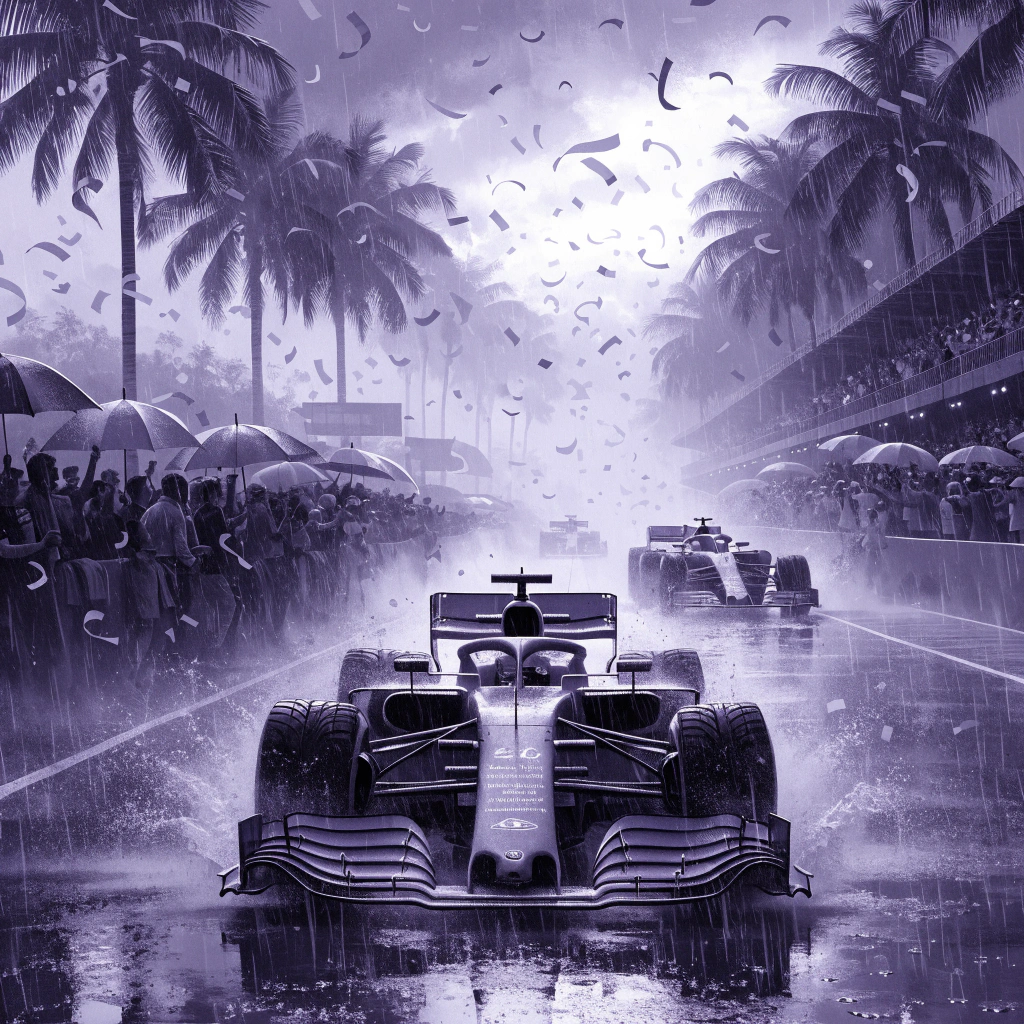
Formula 1 in Brazil
Brazil loves racing. Every year, many people go to São Paulo. They watch the Grand Prix. It is a big car race. The race is at the Interlagos track.
The track is very special. It is between two lakes. Drivers drive very fast. There are many turns. Fans wear green and yellow clothes. They cheer for their favorite drivers.
Brazil has famous drivers like Ayrton Senna. He is a hero in the country. Racing is part of life here. It is a very exciting day for everyone.
语法聚焦
句型: Present Simple (General Truths)
"Brazil loves racing."
We use the present simple to talk about things that are always true or habits. For 'Brazil' (it), we add an 's' to the verb 'love'.
句型: Plural Nouns
"There are many turns."
We add an 's' to most nouns to make them plural. We use 'there are' when we talk about more than one thing.
测试你的理解
10 个问题 · A1 初学 · 1 次免费预览
测试你从这篇文章中学到的知识。回答所有问题即可获得经验值!
Where do many people go to watch the race?
题目详情
Where do many people go to watch the race?
你的回答:
正确答案: São Paulo
The race is a big car race.
你的回答:
正确答案: 正确
What is a 'track'?
你的回答:
正确答案: The road where cars drive
Every year, many people go to _____ Paulo.
你的回答:
正确答案: São
Racing in São Paulo: The Brazilian Grand Prix
The Brazilian Grand Prix is a very famous Formula 1 race. It takes place in São Paulo at a track called Interlagos. This track is special because it is between two big lakes. It is also one of the few tracks where drivers go anticlockwise.
Brazilians love motorsport because they had many great drivers. Ayrton Senna was the most famous driver in Brazil. He won many races and people still love him today. When the race starts, the fans are very loud. They wear yellow and green clothes to support their favorite teams.
The Interlagos circuit is more difficult than other tracks. It has many hills, so the cars go up and down quickly. The weather can also change fast. Sometimes it is sunny, but then it rains suddenly. This makes the race more exciting for the fans. It is a wonderful weekend for everyone in the city.
语法聚焦
句型: Comparatives with 'more'
"The Interlagos circuit is more difficult than other tracks."
We use 'more' before long adjectives to compare two things. After the adjective, we use 'than' to name the second thing.
句型: Past Simple (to be)
"Ayrton Senna was the most famous driver in Brazil."
We use 'was' to talk about a singular person or situation in the past. It is the past form of 'is'.
测试你的理解
11 个问题 · A2 基础 · 1 次免费预览
测试你从这篇文章中学到的知识。回答所有问题即可获得经验值!
Where does the Brazilian Grand Prix take place?
题目详情
Where does the Brazilian Grand Prix take place?
你的回答:
正确答案: São Paulo
The Interlagos track is located between two lakes.
你的回答:
正确答案: 正确
What does 'track' mean in this article?
你的回答:
正确答案: A road for racing
The weather can _____ fast during the race.
你的回答:
正确答案: change
Why do fans wear yellow and green clothes?
你的回答:
正确答案: To support their favorite teams
The Passion of the São Paulo Grand Prix
Brazil has always had a deep love for motorsport. This passion has been passed down through generations, largely because of legendary drivers like Emerson Fittipaldi and the late Ayrton Senna. For Brazilians, Formula 1 is not just a sport; it is a significant part of their national culture.
The race, which is officially known as the São Paulo Grand Prix, is held at the Autódromo José Carlos Pace. Most people simply call it Interlagos. The circuit is located in a natural bowl between two large lakes. This unique geography provides fans with an excellent view of almost the entire track. Interlagos is famous because it is one of the few circuits on the F1 calendar that runs anticlockwise. This direction puts a lot of physical pressure on the drivers, who must train specifically for this challenge.
The track also features significant elevation changes. This means the cars are constantly going up and down hills, which makes the racing very fast and unpredictable. Over the years, many dramatic finishes have been witnessed by the local crowds. The weather in São Paulo also plays a big role. It can change very quickly, and heavy rain has often turned the race into a chaotic event.
Since the first race in 1973, the Brazilian Grand Prix has been a favorite for both drivers and fans. Even though the names of the winners change, the energy in the stadium stays the same. The fans are known for being some of the loudest and most enthusiastic in the world. For any racing fan, visiting Interlagos is a dream that should come true.
语法聚焦
句型: Passive Voice
"The race, which is officially known as the São Paulo Grand Prix, is held at the Autódromo José Carlos Pace."
The passive voice is used when the focus is on the action rather than the person performing it. It is formed using the verb 'to be' followed by the past participle of the main verb.
句型: Relative Clauses
"This direction puts a lot of physical pressure on the drivers, who must train specifically for this challenge."
Relative clauses provide extra information about a noun. Non-defining relative clauses, like this one using 'who', are separated by commas and add extra but not essential details.
测试你的理解
11 个问题 · B1 中级 · 1 次免费预览
测试你从这篇文章中学到的知识。回答所有问题即可获得经验值!
What makes the Interlagos circuit physically difficult for drivers?
题目详情
What makes the Interlagos circuit physically difficult for drivers?
你的回答:
正确答案: The anticlockwise direction
The Interlagos circuit is located between two large lakes.
你的回答:
正确答案: 正确
What is the meaning of 'elevation'?
你的回答:
正确答案: The height of a place
The fans are known for being some of the loudest and most _____ in the world.
你的回答:
正确答案: enthusiastic
Who is mentioned as a legendary driver and national hero in Brazil?
你的回答:
正确答案: Ayrton Senna
The Cultural Pulse of Interlagos: A Deep Dive into the São Paulo Grand Prix
Motorsport is not merely a sport in Brazil; it is a deeply ingrained cultural phenomenon that has shaped the nation's sporting identity for generations. This profound connection is largely attributed to the enduring legacies of iconic drivers such as Emerson Fittipaldi, Nelson Piquet, and the legendary Ayrton Senna, whose triumphs on the global stage brought immense pride to the country. Today, the centerpiece of this passion is the São Paulo Grand Prix, hosted at the historic Autódromo José Carlos Pace, more commonly referred to as Interlagos.
Situated in a natural bowl between two large reservoirs, the Interlagos circuit presents a set of technical challenges that are unique within the Formula 1 calendar. Most notably, the track is one of the few that runs in an anticlockwise direction, which places significant physical strain on the drivers' necks. Furthermore, the circuit is characterized by dramatic elevation changes and a sequence of high-speed corners and heavy braking zones. These features, combined with the unpredictable weather conditions often experienced in São Paulo, ensure that every race is an exhilarating spectacle where strategy and skill are tested to their limits.
In recent years, the event has undergone a transition, officially being renamed the São Paulo Grand Prix to reflect the city's significant investment in the race's infrastructure and organization. This shift highlights the economic and social importance of the event to the metropolitan area. Beyond the technical aspects, the atmosphere at Interlagos is legendary. Brazilian fans are renowned for their exuberant support, creating an environment that is often described as more akin to a football stadium than a typical racing venue.
For any driver, winning at Interlagos is considered a prestigious achievement. It requires not only mechanical endurance and speed but also the mental fortitude to navigate the complexities of the track while under immense pressure. As Formula 1 continues to evolve with new technologies and global venues, the São Paulo Grand Prix remains a cornerstone of the championship, preserving a rich history while embracing the future of high-performance racing.
语法聚焦
句型: Present Perfect Simple
"Motorsport is not merely a sport in Brazil; it is a deeply ingrained cultural phenomenon that has shaped the nation's sporting identity for generations."
The present perfect (have/has + past participle) is used here to describe an action that started in the past and continues to have an effect or relevance in the present.
句型: Passive Voice
"This profound connection is largely attributed to the enduring legacies of iconic drivers..."
The passive voice (be + past participle) is used to shift the focus from the person performing the action to the action itself or the recipient of the action, which is common in formal writing.
句型: Relative Clauses
"...the legendary Ayrton Senna, whose triumphs on the global stage brought immense pride to the country."
A non-defining relative clause starting with 'whose' provides additional information about a person (Senna) by indicating possession or a direct relationship with the following noun (triumphs).
测试你的理解
11 个问题 · B2 中高级 · 1 次免费预览
测试你从这篇文章中学到的知识。回答所有问题即可获得经验值!
What makes the Interlagos track physically demanding for drivers?
题目详情
What makes the Interlagos track physically demanding for drivers?
你的回答:
正确答案: The fact that it runs in an anticlockwise direction
The race was recently renamed to reflect the city's investment in infrastructure.
你的回答:
正确答案: 正确
What does 'prestigious' mean in the context of the article?
你的回答:
正确答案: Highly respected and admired
The circuit is situated in a natural _____ between two large reservoirs.
你的回答:
正确答案: bowl
Which driver is NOT mentioned as a reason for Brazil's passion for motorsport?
你的回答:
正确答案: Lewis Hamilton
The Crucible of Interlagos: A Socio-Cultural Analysis of the São Paulo Grand Prix
Seldom has a sporting event mirrored the soul of a nation as poignantly as the Brazilian Grand Prix. Nestled within the sprawling urban landscape of São Paulo, the Autódromo José Carlos Pace—colloquially known as Interlagos—serves as more than a mere asphalt loop; it is a repository of national identity. For Brazil, motorsport is not merely a pastime but a deeply ingrained cultural pillar, forged through the triumphs of Emerson Fittipaldi and Nelson Piquet, and immortalized by the transcendental legacy of Ayrton Senna.
The technical specifications of the circuit itself contribute to its legendary status. It is the undulating terrain of Interlagos, situated in a natural bowl between two lakes, that distinguishes it from the sterile, flat tracks increasingly common on the modern Formula 1 calendar. Running anticlockwise, the circuit exerts unique physical demands on drivers’ necks, while the significant elevation changes demand a sophisticated aerodynamic compromise. Not only does the circuit test the limits of mechanical endurance, but it also provides a theater for the unpredictable weather that frequently shifts the competitive landscape, transforming certainties into chaotic gambles.
However, the event’s significance transcends the technical. The recent rebranding to the 'São Paulo Grand Prix' reflects a nuanced shift in the commercial landscape of the sport. This nominalization represents the increasing regionalization of Formula 1’s economic model, where city-state funding becomes paramount. Critics argue that such a shift risks the commodification of heritage, yet proponents suggest it secures the race's longevity in an era of global expansion. What remains constant, however, is the fervent atmosphere generated by the 'Torcida'—the Brazilian fans whose vocal support creates a palpable intensity unmatched in most European venues.
Central to this atmosphere is the enduring specter of Ayrton Senna. Decades after his untimely passing, his influence remains ubiquitous, a testament to the intersection of sport and national mourning. The 'Senna S' curves are not just a sequence of corners; they are a site of pilgrimage. The collective sentimentality of the Brazilian public ensures that the race is viewed through a lens of historical reverence, where every local driver is measured against a standard of excellence that borders on the mythic.
Ultimately, the São Paulo Grand Prix stands as a perennial reminder of the sport's visceral roots. While Formula 1 continues its trajectory toward high-tech, sanitized spectacles, Interlagos retains a raw, formidable character. It is a place where the past and future collide, where the technical prowess of modern engineering is humbled by the capricious nature of the elements and the weight of a nation’s expectations. To understand the Brazilian Grand Prix is to understand the complex interplay between commercial evolution and the preservation of a visceral, collective passion.
语法聚焦
句型: Inversion
"Seldom has a sporting event mirrored the soul of a nation as poignantly as the Brazilian Grand Prix."
Inversion occurs when the auxiliary verb comes before the subject, usually after negative or restrictive adverbs. It is used here to add emphasis and a formal, literary tone to the introduction.
句型: Cleft Sentences
"It is the undulating terrain of Interlagos... that distinguishes it from the sterile, flat tracks."
A cleft sentence focuses on specific information by splitting the sentence into two clauses, starting with 'It is/was'. This structure highlights 'the undulating terrain' as the primary reason for the track's uniqueness.
句型: Nominalisation
"This nominalization represents the increasing regionalization of Formula 1’s economic model."
Nominalisation is the use of a word which is not a noun as a noun, or as the head of a noun phrase. In this C1 context, it allows for a more abstract and academic discussion of complex concepts like economic shifts.
测试你的理解
12 个问题 · C1 高级 · 1 次免费预览
测试你从这篇文章中学到的知识。回答所有问题即可获得经验值!
What is the primary reason the author considers Interlagos more than just a race track?
题目详情
What is the primary reason the author considers Interlagos more than just a race track?
你的回答:
正确答案: Its role as a repository of Brazilian national identity.
The Interlagos circuit follows the standard clockwise direction found on most F1 tracks.
你的回答:
正确答案: 错误
What does the word 'formidable' mean in the context of the article?
你的回答:
正确答案: Impressively powerful and challenging
The circuit's unique _____ presents physical challenges due to its rising and falling nature.
你的回答:
正确答案: topography
What does the rebranding to the 'São Paulo Grand Prix' signify according to the text?
你的回答:
正确答案: A shift toward regionalized, city-state economic funding.
The author argues that modern F1 tracks are often less sterile than Interlagos.
你的回答:
正确答案: 错误
The Interlagos Crucible: A Socio-Cultural Anatomy of the São Paulo Grand Prix
To perceive the São Paulo Grand Prix as merely a logistical feat of automotive engineering is to overlook the visceral connection between the Brazilian populace and the asphalt of Interlagos. For decades, the Autódromo José Carlos Pace has served as a secular cathedral where the ephemeral nature of speed meets the enduring hagiography of national icons. While many modern Formula 1 circuits have succumbed to a certain clinical uniformity, Interlagos remains a topographical defiance—a counter-clockwise anomaly nestled within a natural bowl that demands as much from the driver’s psyche as it does from their physical endurance. Should the heavens open, as they so frequently do in the Paulistano spring, the track is transformed into a treacherous stage where the hegemony of superior machinery is often dismantled by sheer individual brilliance.
The historical weight of the event is inextricably linked to the legacies of Emerson Fittipaldi, Nelson Piquet, and the transcendent Ayrton Senna. These figures were not merely athletes; they were avatars of national prestige during periods of significant sociopolitical transition. Senna, in particular, remains the zenith of this cultural devotion. His victories at Interlagos were not merely sporting triumphs but were perceived as cathartic affirmations of Brazilian resilience. Even now, decades after his untimely demise, the 'Senna S' curves represent a sacred geometry to the local spectators. Be that as it may, the event’s recent rebranding to the São Paulo Grand Prix signals a nuanced shift in the intersection of municipal identity and global sport, emphasizing the city’s role as the primary benefactor and host of this idiosyncratic spectacle.
Technically, the circuit is a study in juxtaposition. The high-speed start-finish straight, which climbs steeply towards the first corner, contrasts sharply with the labyrinthine middle sector. This undulating terrain necessitates a delicate compromise in aerodynamic setup; teams must balance the need for low-drag efficiency with the high-downforce requirements of the twisty inner sections. Furthermore, the altitude of São Paulo—sitting some 800 meters above sea level—presents a subtle but persistent challenge to internal combustion engines and cooling systems alike. Lest the significance of these variables be understated, it is often the case that the championship is decided or dramatically altered within these very confines. The track’s propensity for producing high-drama finales is unparalleled, a fact underscored by the legendary 2008 season climax where the title changed hands in the final seconds of the final lap.
Critically, one must also consider the socioeconomic tapestry that surrounds the circuit. Interlagos is situated in a region characterized by stark disparities, where the opulence of Formula 1 sits in immediate proximity to the favelas of the city's periphery. This proximity creates a poignant tension, reflecting the broader complexities of Brazilian society. Yet, during the race weekend, these divisions are often momentarily eclipsed by a collective euphoria. Whether this represents a genuine bridging of social strata or merely a fleeting escapism remains a subject of scholarly debate. Nevertheless, the Grand Prix continues to be a cornerstone of the Brazilian sporting calendar, a testament to the enduring allure of a circuit that refuses to be tamed by the march of modernization. It is, in every sense, a crucible of emotion, engineering, and national identity.
语法聚焦
句型: Inverted First Conditional
"Should the heavens open, as they so frequently do in the Paulistano spring, the track is transformed into a treacherous stage."
This formal structure replaces 'If the heavens should open'. It is used in academic or literary English to express a hypothetical situation with a more sophisticated tone.
句型: Negative Subjunctive with 'Lest'
"Lest the significance of these variables be understated, it is often the case that the championship is decided within these very confines."
The word 'lest' is followed by the base form of the verb (subjunctive). It is used to express an intention to prevent a particular negative outcome.
句型: Concessive Clause with 'Be that as it may'
"Be that as it may, the event’s recent rebranding to the São Paulo Grand Prix signals a nuanced shift."
This fixed expression is used to acknowledge a previous point while introducing a contrasting or more important statement. It functions similarly to 'nevertheless' but carries a higher register.
测试你的理解
12 个问题 · C2 精通 · 1 次免费预览
测试你从这篇文章中学到的知识。回答所有问题即可获得经验值!
What does the author suggest about the clinical uniformity of modern circuits in comparison to Interlagos?
题目详情
What does the author suggest about the clinical uniformity of modern circuits in comparison to Interlagos?
你的回答:
正确答案: Interlagos is an exception to the trend of standardized track designs.
The author argues that the technical setup of the cars at Interlagos requires no compromise.
你的回答:
正确答案: 错误
Which word is synonymous with 'the highest point' in the context of the article?
你的回答:
正确答案: Zenith
The track is described as a _____ of emotion, engineering, and national identity.
你的回答:
正确答案: crucible
According to the text, what was the significance of Ayrton Senna's victories for the Brazilian public?
你的回答:
正确答案: They provided a sense of cathartic national resilience.
The altitude of São Paulo has a negligible effect on Formula 1 engines.
你的回答:
正确答案: 错误

